Edge Metal
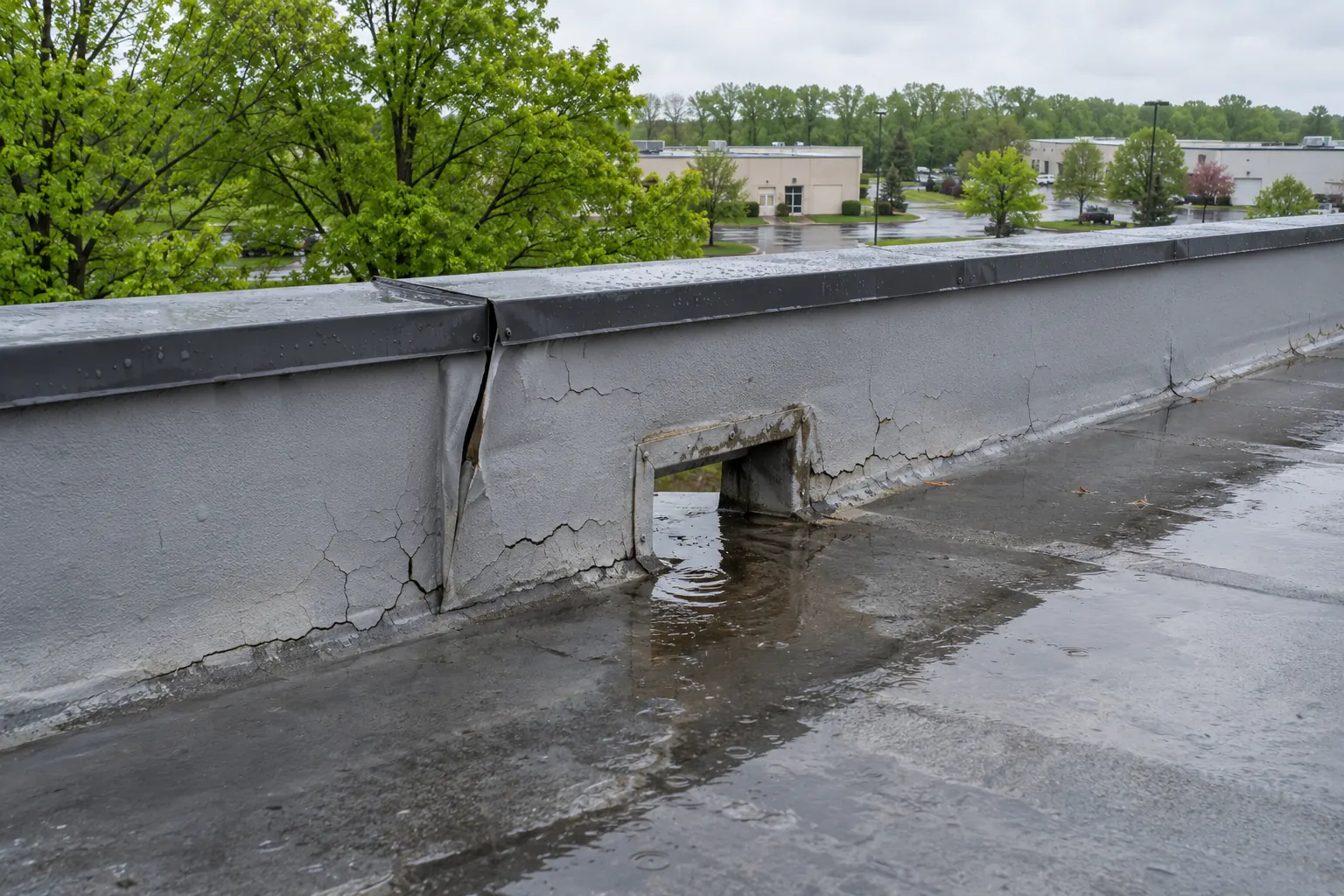
Peeled Edge Metal
High wind gets under loose edge metal and peels it back along the eave. The membrane behind it lifts next, and rain enters at the open perimeter of the roof.
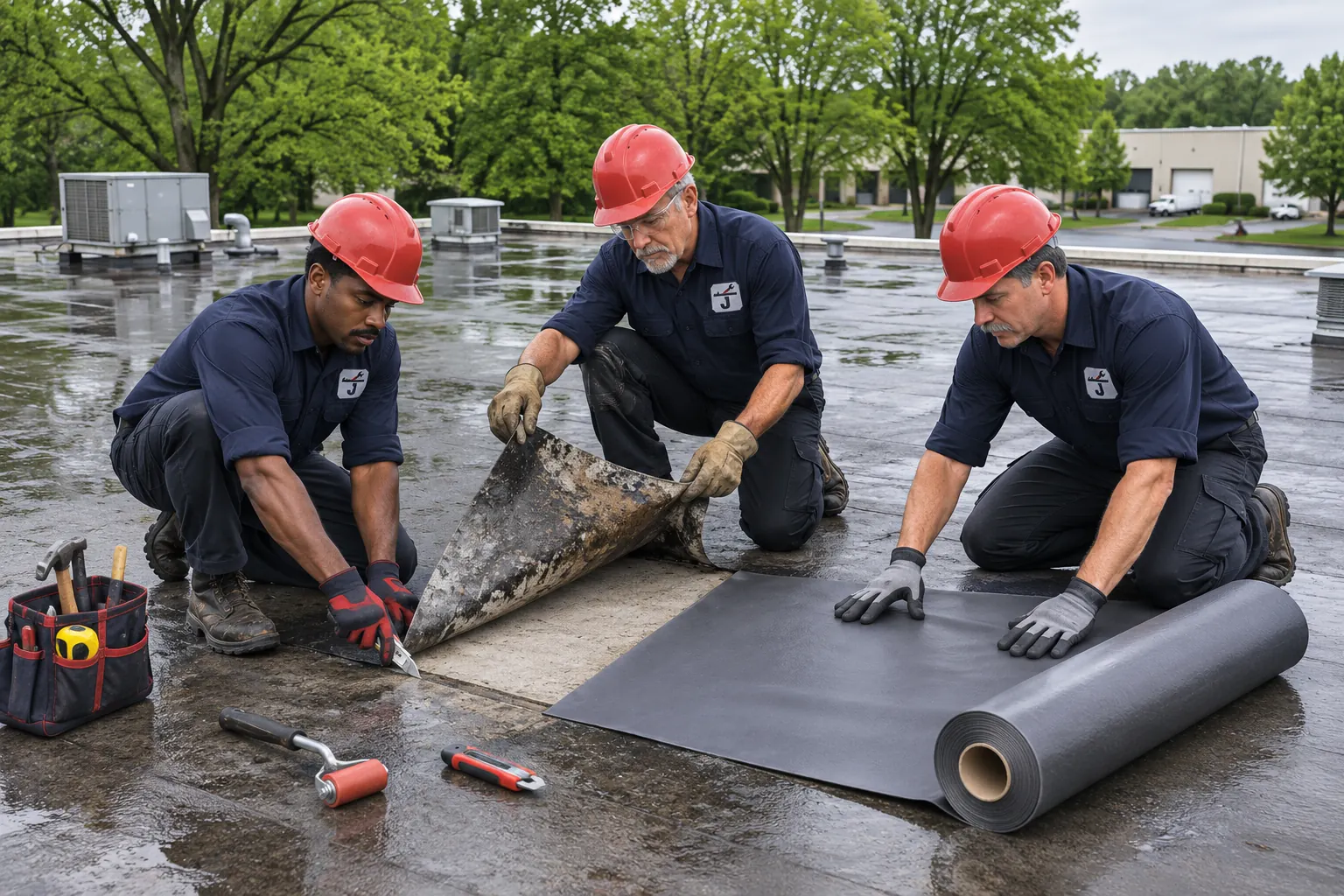
After a storm, we take on West Buechel commercial roof repair for lifted edge metal, torn membrane, dented panels, and shifted rooftop units.
West Buechel commercial roof repair after a storm begins at the roof edge. Wind lifts edge metal and coping first, while hail bruises membrane and dents the tops of panel ribs and rooftop unit fins.
Before larger repairs, the owner calls West Buechel City Hall. Louisville Metro's permit page tells owners in small cities to contact their city ahead of a Metro application, and Construction Review works with those cities when needed.
Wind and hail leave different marks. These four areas get looked at on every storm visit.
High wind gets under loose edge metal and peels it back along the eave. The membrane behind it lifts next, and rain enters at the open perimeter of the roof.
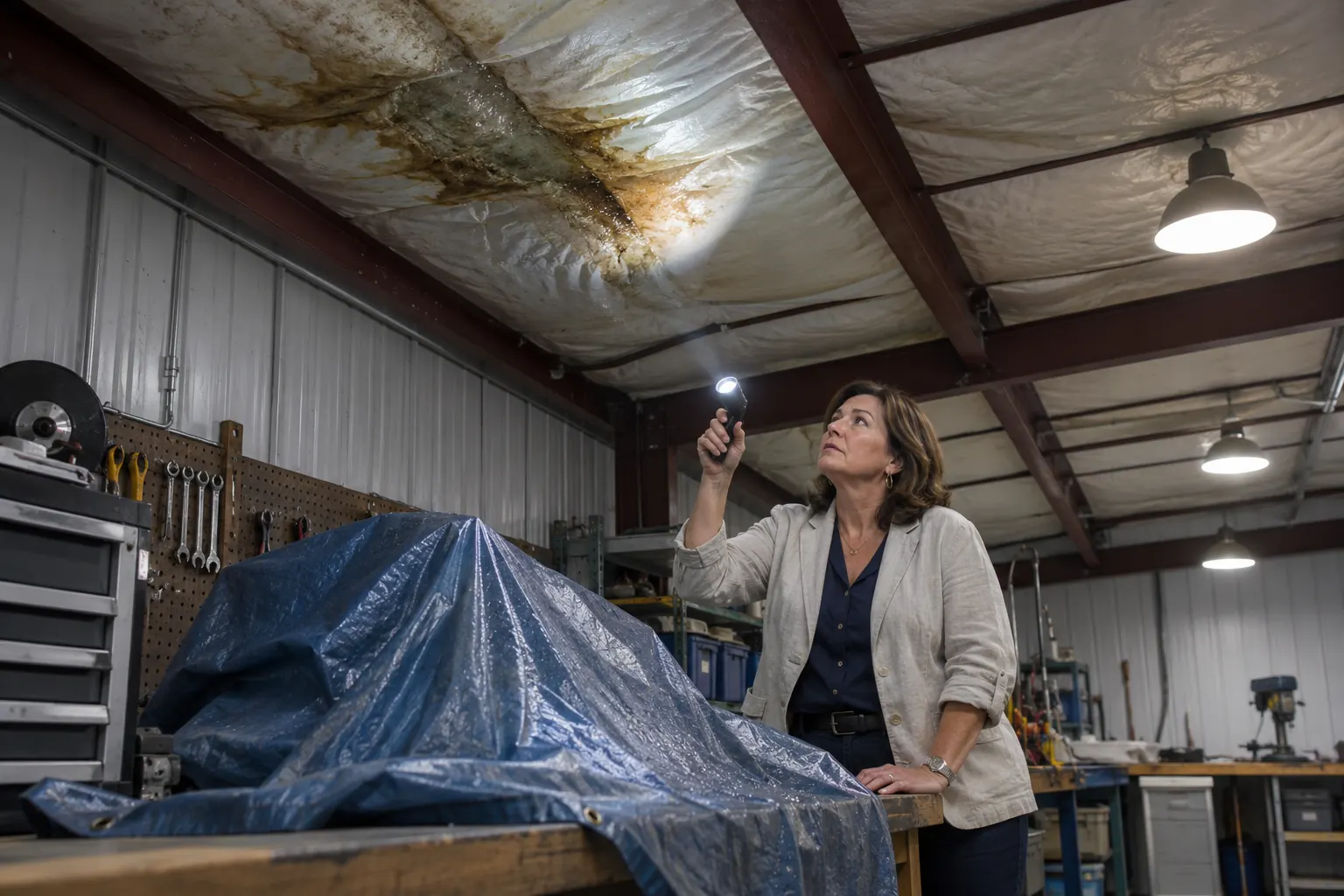
Hailstones bruise and crack membrane in the open field of the roof. Some breaks are clear holes, while others show as soft spots that split under the next round of foot traffic.
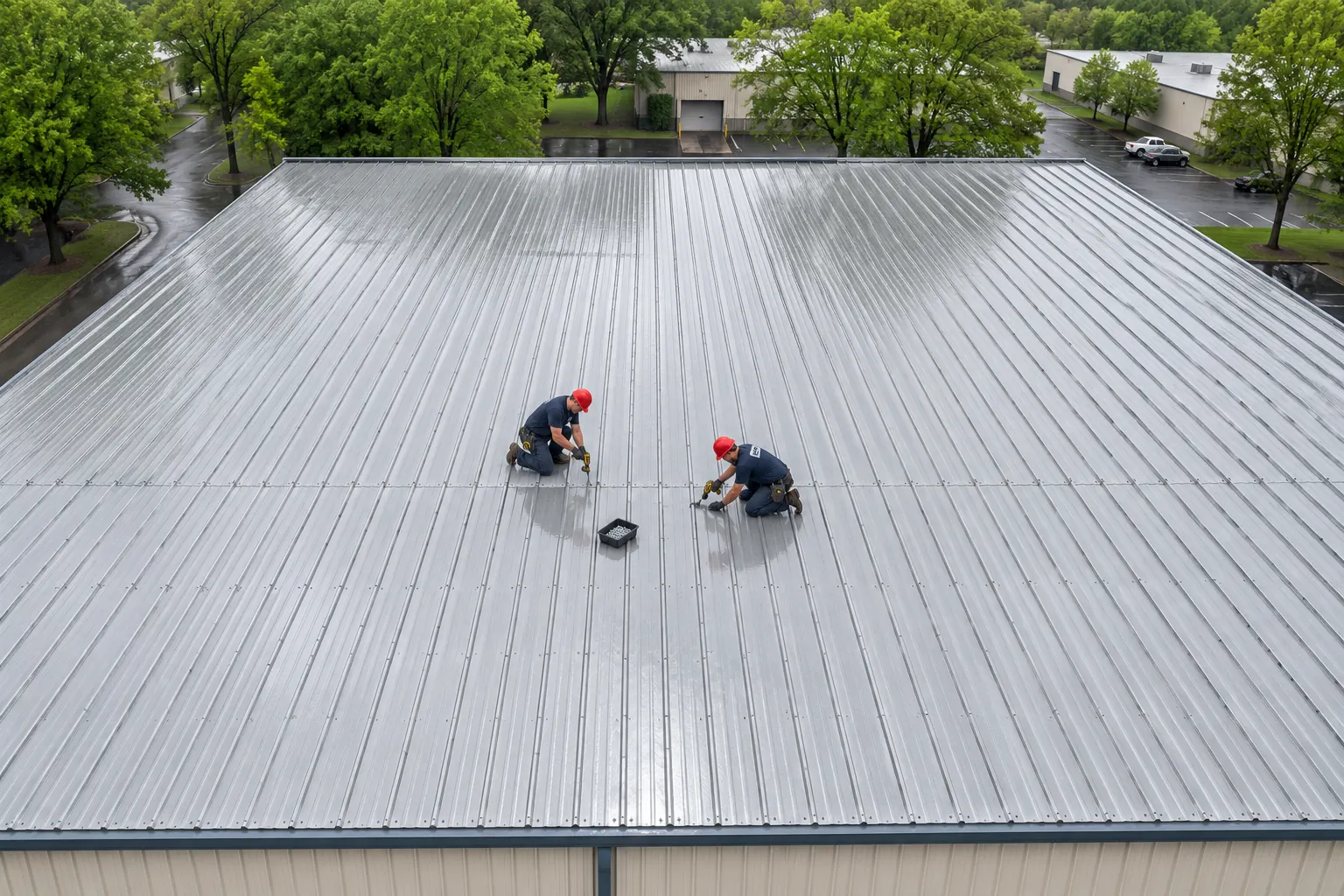
Metal panels take dents at the rib tops in hail and lose screws in wind. Lifted panels then let rain blow sideways under the laps and onto the insulation.
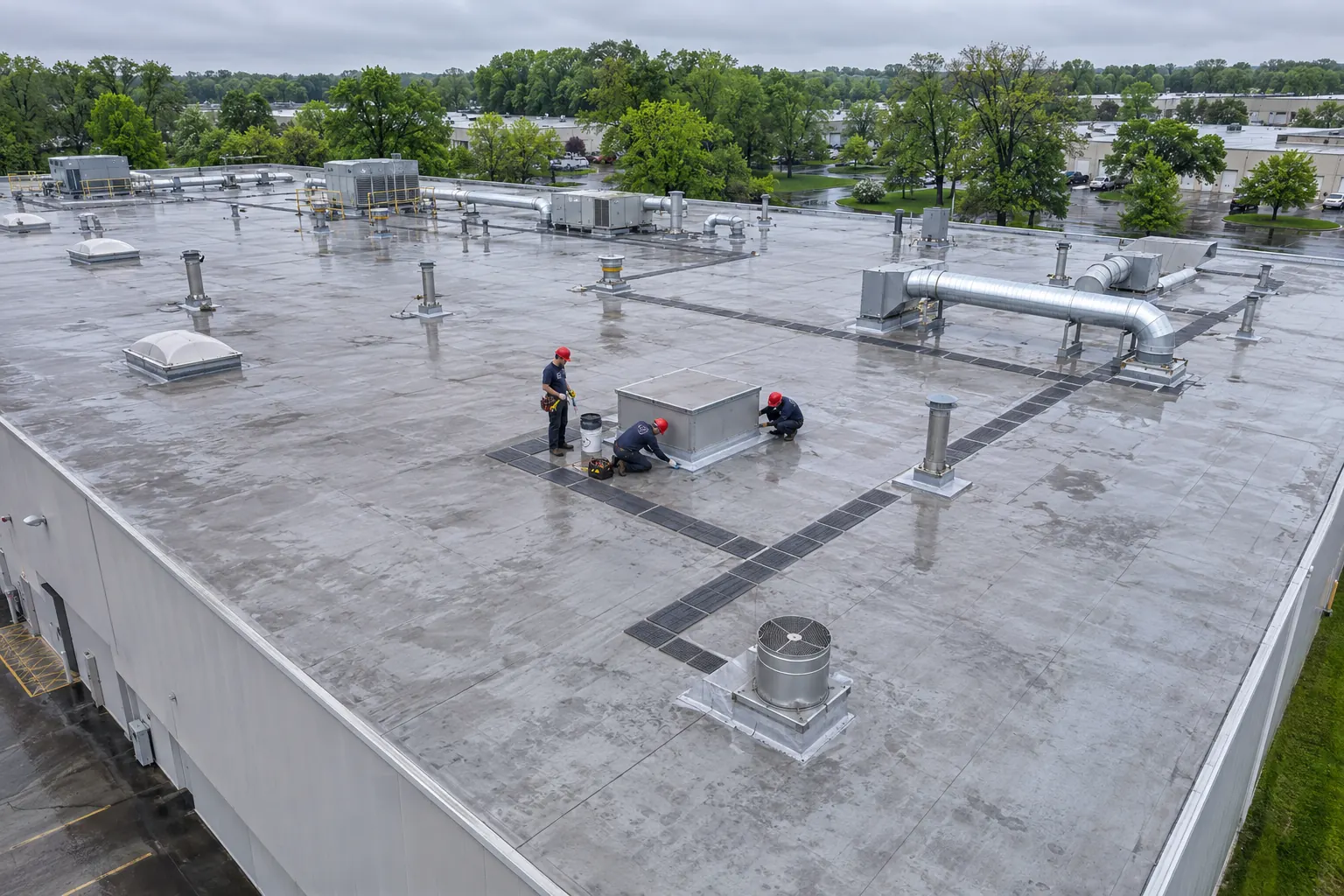
Strong gusts can shift rooftop units and tear the flashing at their curbs. Hail cracks the coil fins and skylight panels next to them, opening more paths for water.
Sealing storm openings early limits how far water spreads. A planned permanent repair then follows on a dry day.
Temporary seals over torn membrane keep rain off stock, equipment, and ceilings until the permanent patch goes in.
Fast sealing keeps water from spreading through the boards, so cutouts stay small around each storm opening in the membrane.
Dated photos taken right after the storm document the edge, panel, and membrane damage for an insurance claim.
Reattached edge metal and coping set on new cleats close the perimeter openings the wind created.
A written list of damaged edges, panels, and membrane lets West Buechel City Hall decide whether any step needs a Louisville Metro permit.
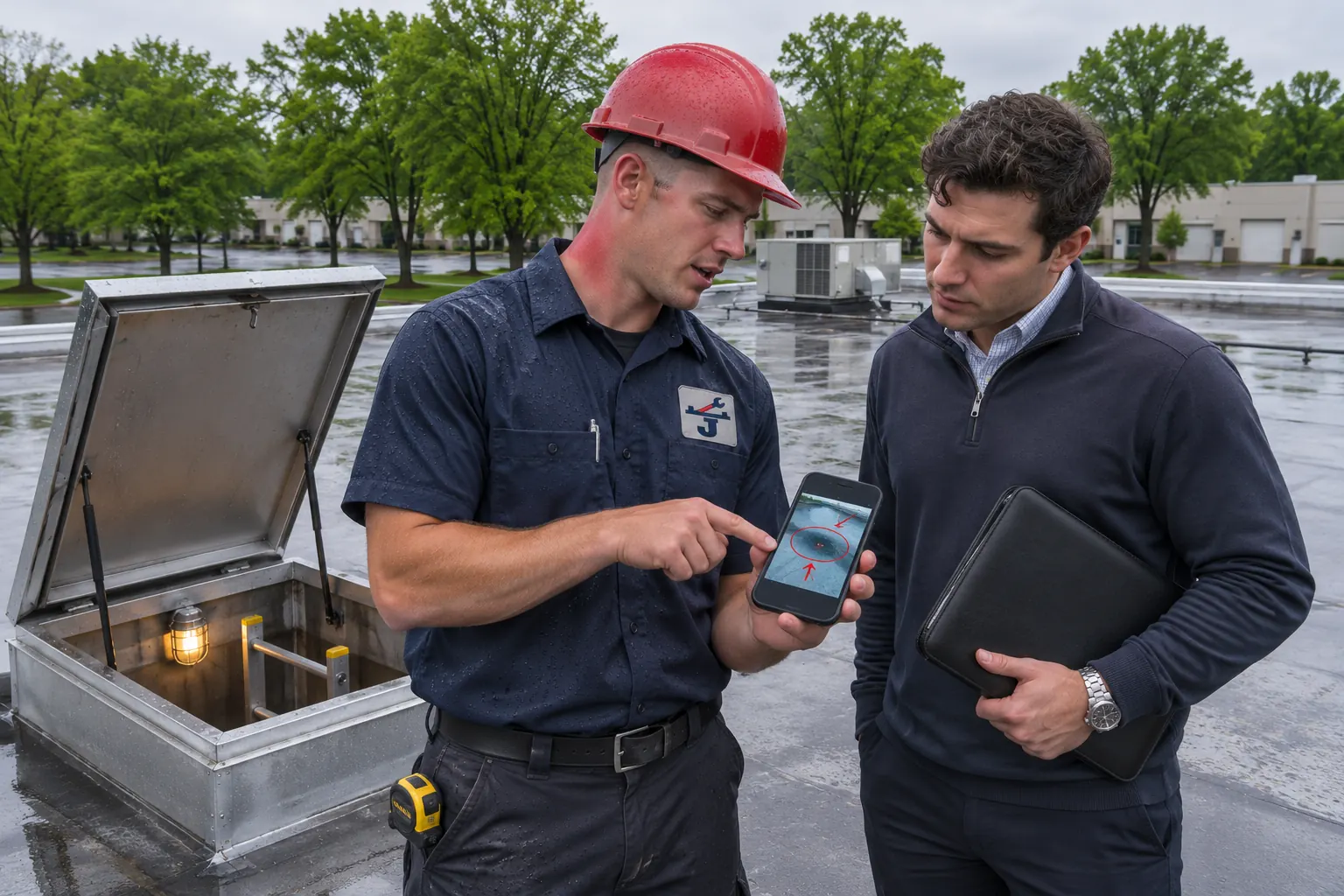
Storm calls here usually involve more than one roof part. These are the three kinds of repair that come up most.
Tracing new storm leaks from the ceiling back to a torn sheet, lifted edge, or shifted curb, then setting a temporary seal until the roof is dry.
Storm leak repair detailsWelded or taped patches over hail cuts, edge metal and coping reset on new cleats, and wet insulation replaced under each opening on low-slope roofs.
Flat roof storm repairsDented or lifted panels replaced in the same profile, missing screws reinstalled with fresh washers, and ridge caps and gutters pulled loose by wind refastened.
Metal roof storm repairsCall with the address and what you can see from the ground. Loose edge metal and torn membrane get a temporary seal first, then a permanent repair once dry.
Storm work runs in two stages, a quick seal and a permanent repair. Each step shows where it happens.
A roofer walks the edges first, then the open field, panels, and every unit, skylight, and gutter, photographing hail marks, lifted metal, and torn flashing with the date shown.
Torn membrane, lifted edges, and open laps get roof cement, tape, or a tarp to hold back water. These temporary seals come off later when the permanent repair goes in.
The owner calls West Buechel City Hall with the damage list. Small sealing work rarely needs review, while edge metal, deck, or panel replacement can lead to a Louisville Metro permit.
Once the roof dries, temporary materials are removed, wet boards are cut out and replaced, matching patches go down, and edge metal and coping are reset on new cleats.
Ceilings and walls below each repair get a final look for new stains after the next rain. The owner receives photos of every finished area for the claim file and building records.
Ready to talk about a nearby building? Call us or send us a message. Storm and leak repairs on commercial roofs also cover these towns around West Buechel.
Answers about wind and hail damage, temporary seals, and city calls in West Buechel.
Start with West Buechel City Hall, then Louisville Metro if the work needs a permit. Metro's building permit page asks owners in small cities to contact their city before applying. Tell the city what failed: lifted edge metal, torn membrane, dented panels, or a damaged unit. Sealing work seldom needs review, while edge metal, deck, or panel replacement can.
Photograph every damaged area with the date visible. Shoot the roof edge, coping, the membrane field, panel ribs, rooftop units, skylights, and gutters, plus any ceiling stains inside. Wide shots show location, and close shots show the dent, cut, or lifted seam for the claim.
Only until the roof dries and a permanent repair can go in. Roof cement, tape, and tarps hold water back for a short time, but they bond poorly to most membranes and trap moisture. Each one is removed and replaced with matching material during the permanent repair.
Rarely. Bruises in membrane, small cracks, and dents along panel rib tops are hard to see without walking the roof. Dented gutters and edge metal are the clues most often visible from the lot, and they suggest the roof field took hits too.
Yes. A sheet that billowed during the storm can settle back down with its fasteners or adhesive pulled loose underneath. Walking the field, pressing near the edges, and checking for loose plates or soft spots shows where the sheet has lost its hold.
Widespread wet insulation or rusted-through panels in many bays point past repair. A moisture survey after the storm shows how far water traveled. Isolated cuts and lifted edges on an otherwise solid roof stay in repair territory, and the survey tells which case applies.
Send the address, the storm date, and a few ground photos. We will walk the roof, seal open areas, and list every repair for your records.
Leave a name and number and we will call you about the leak, seam, or panel you are dealing with.
Or call now: (502) 323-6989