If Your Roof
Dry Insulation, Isolated Leaks
Damage sits near fans, curbs, or service routes.
Start WithRepair Now
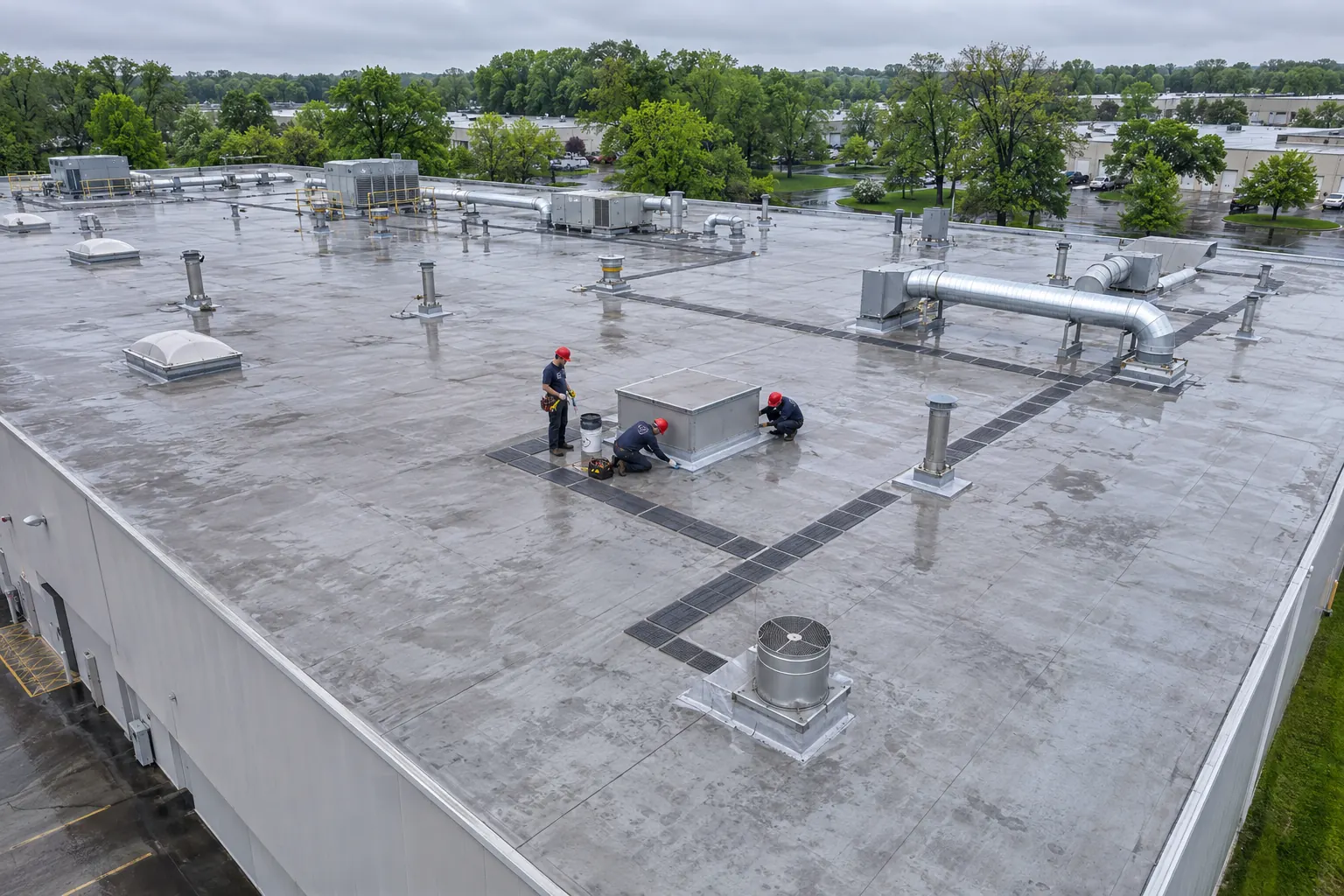
Jeffersontown industrial roof repair is planned around air intakes, crane lifts, and dock traffic, so production keeps running while the roof gets fixed.
Jeffersontown industrial roof repair fits sections with dry insulation and isolated leaks. Sections with wet boards or deck rust move to a later phase.
Damage sits near fans, curbs, or service routes.
Wear is spread out, but readings stay dry.
The membrane has softened near the discharge.
Moisture readings show water spread through the section.
Industrial roof damage clusters around the equipment that sits on the roof and passes through it.
Grease or chemical residue from exhaust fans softens the membrane around the discharge until it splits or blisters.
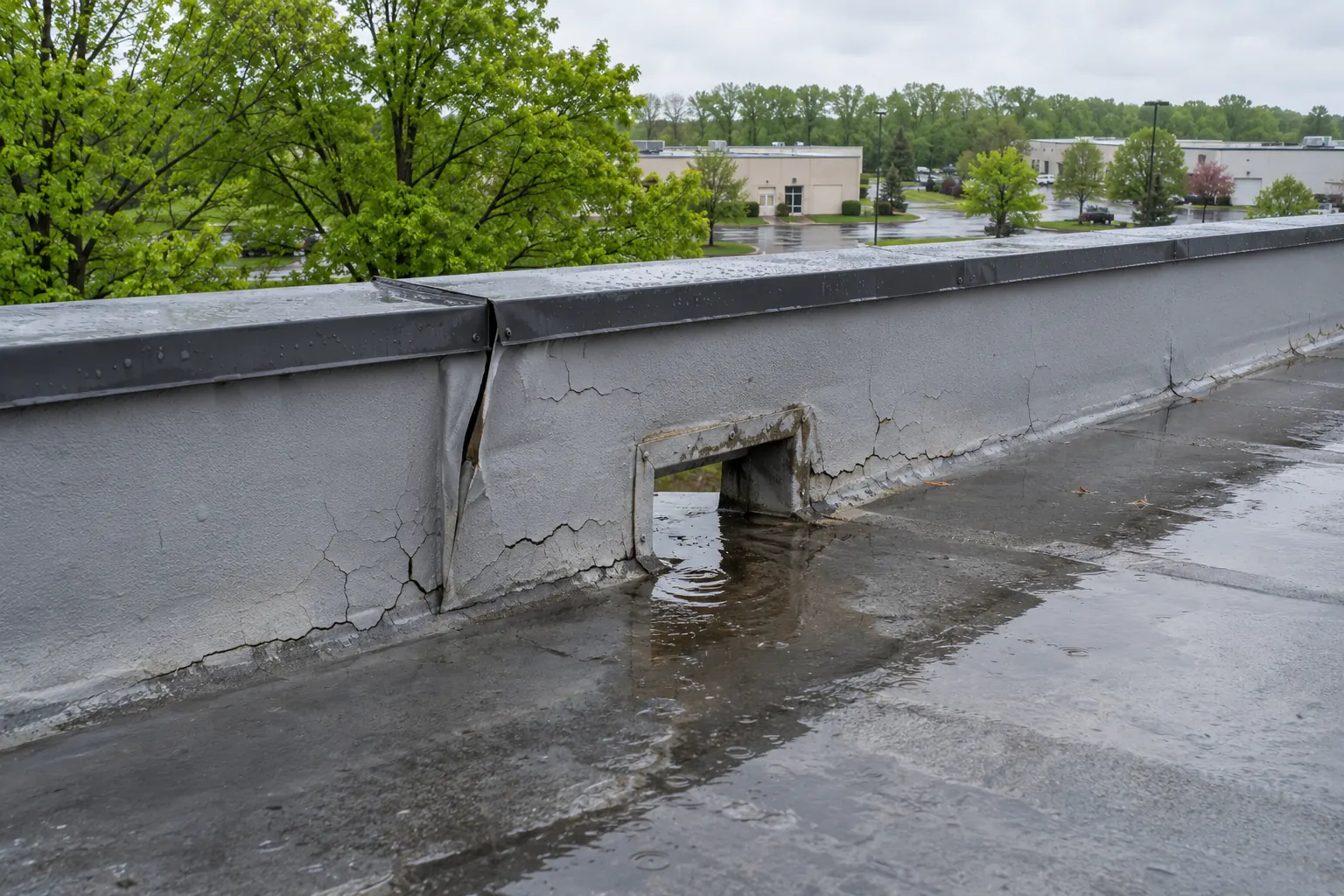
Vibrating rooftop units work the flashing at curb corners loose. Cracks open where the base flashing turns up the curb.
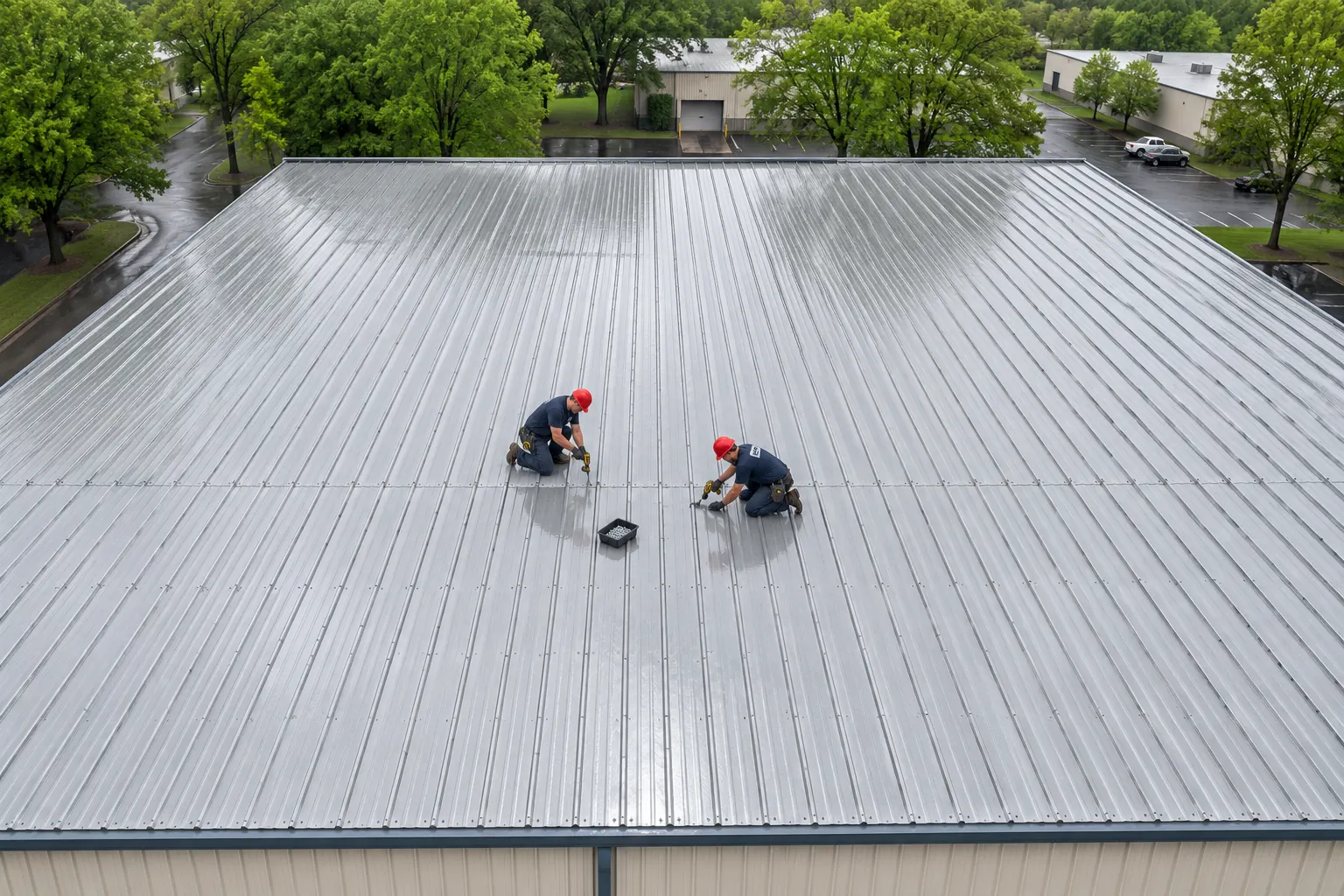
Foot traffic along pipe racks and service routes scuffs seams and leaves punctures where parts and tools get dropped.
Filler in pitch pans pulls away from the pipe as it ages, and split rubber boots let water run down the penetration.
Points settled with the plant team before work begins keep the repair and the production floor apart.
Fans and intakes near the roof patch get shut down so fumes from torching or membrane adhesives stay out of the building.
Membrane rolls and insulation boards are staged clear of truck routes and dock doors, with lifts set around shift changes.
Rooftop units are disconnected by the plant's staff or mechanical contractor before any curb flashing is rebuilt.
Torching a modified bitumen patch follows the plant's own hot work permit system, and covers go up inside over food, clean, or electrical rooms.
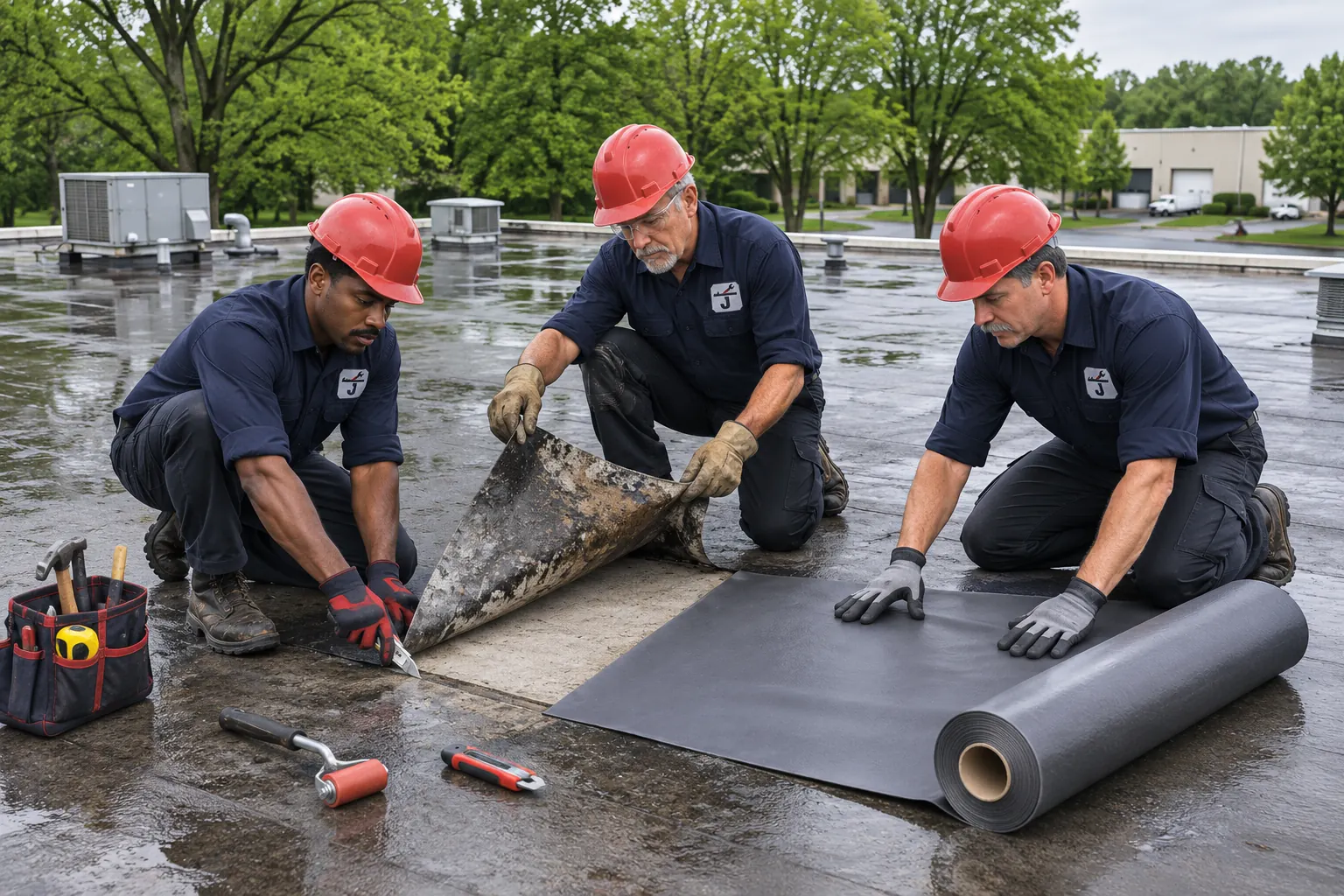
Industrial repairs pair the patch with a fix for whatever caused the damage, so the same spot stops failing.
A section-by-section survey turns a large roof into a list ranked by leak risk that the plant can schedule.
Grease catch boxes, isolation pads, and walkway pads go in alongside the patch near fans, units, and routes.
Most repairs happen from the roof surface, so the lines below keep running while each area is fixed.
Expansion joints and area dividers give natural break lines between sections repaired now and sections replaced later.
Pitch pans, pipe boots, and storm collars get checked on every roof walk, since plant roofs carry dozens of them.
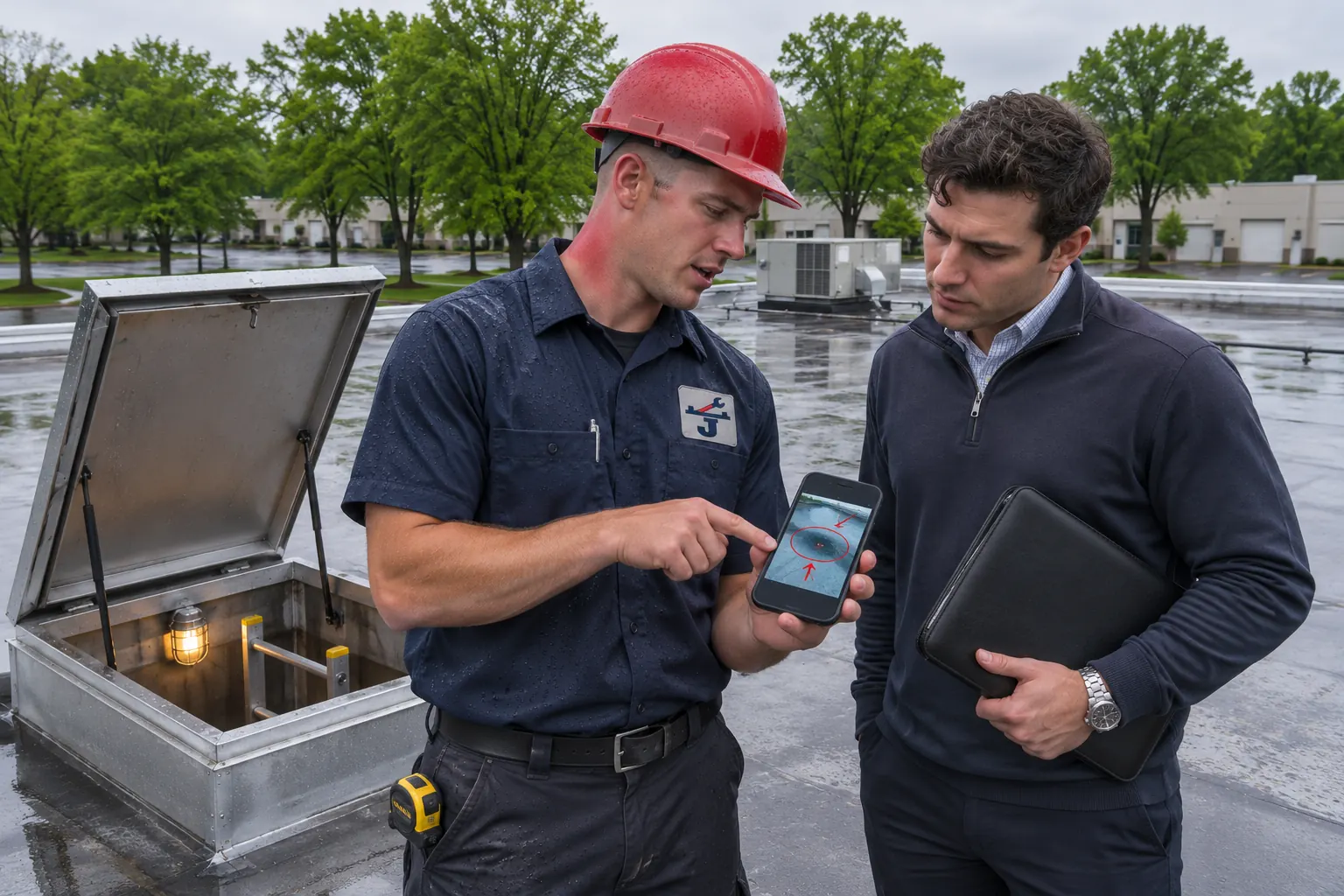
Tell us where the fans sit and what the process vents discharge. A patch alone keeps failing there, so the catch box gets planned with it.
Each step is planned with the plant team so repairs fit around shifts, deliveries, and equipment.
The roof is walked section by section. Every defect is photographed, numbered, and marked on a roof plan, with moisture readings taken on a grid.
Shutdowns for fans and intakes, staging spots, unit disconnects, and hot work permits are agreed with the plant team before the first cut.
Core samples in suspect areas confirm the roof layers and whether insulation is wet, which decides repair now or a later replacement phase.
Sections with the highest leak risk get fixed first, with patches paired to cause fixes such as catch boxes or walkway pads.
Plant staff get the updated roof plan and photo log, so the remaining sections can wait for a planned window.
Plant roofs often combine systems, so these repairs come up on the same visit.
Office and warehouse sections with TPO, EPDM, or built-up membranes get matched patches and rebuilt base flashing.
Flat roof repairMetal panel wings, canopies, and storage buildings need fastener rows, end laps, and ridge caps resealed.
Commercial metal roof repairDrips over production lines or electrical rooms get traced to their source before anything is patched.
Commercial roof leak repairQuestions plant and maintenance managers ask before a roof repair.
Each repair area is planned around air intakes, crane lifts, and dock traffic so production keeps running. The plant team and crew settle fan shutdowns, staging spots clear of truck routes, unit disconnects, hot work rules under the plant's permit system, and interior protection. Repairs over food, clean, or electrical rooms get extra protection inside before any cutting begins.
Exhaust residue, vibration, foot traffic, and dropped parts cause most of it. Grease softens membrane near fans, vibrating units crack curb flashing, pipe supports wear spots, process vents cause heat damage, and service traffic scuffs seams. Repairs there pair the patch with a fix for the cause, such as a grease catch box, isolation pads, or walkway pads.
Section by section, with every defect photographed, numbered, and marked on a roof plan. The survey takes moisture readings on a grid, core samples in suspect areas, and checks each drain, scupper, curb, and expansion joint. Owners get a repair list ranked by leak risk, so urgent sections get fixed first and others wait for a planned window.
Yes. Large roofs are often handled in sections: repair where insulation is dry and leaks are isolated, restoration where the surface is aging over dry insulation, and replacement in a later phase where boards are wet or the deck has rusted. Expansion joints make natural break lines, and tie-ins between old and new need careful detailing.
Shrunken filler is cleaned out, the pan is topped with fresh pourable sealer, and the flange is sealed to the membrane, or the pan is swapped for a prefabricated boot where the pipe allows. Split rubber boots and clamps get replaced, hot vent stacks get storm collars, and conduit clusters get a curb with new flashing.
A licensed mechanical contractor or the plant's own maintenance staff handles the disconnect and the reset. The roofing crew rebuilds the curb flashing once the unit is safely off, and running both in one sequence gets the unit back in service sooner.
Tell us the roof size, the equipment on it, and the production hours. We will plan the repair around them.
Leave a name and number and we will call you about the leak, seam, or panel you are dealing with.
Or call now: (502) 323-6989