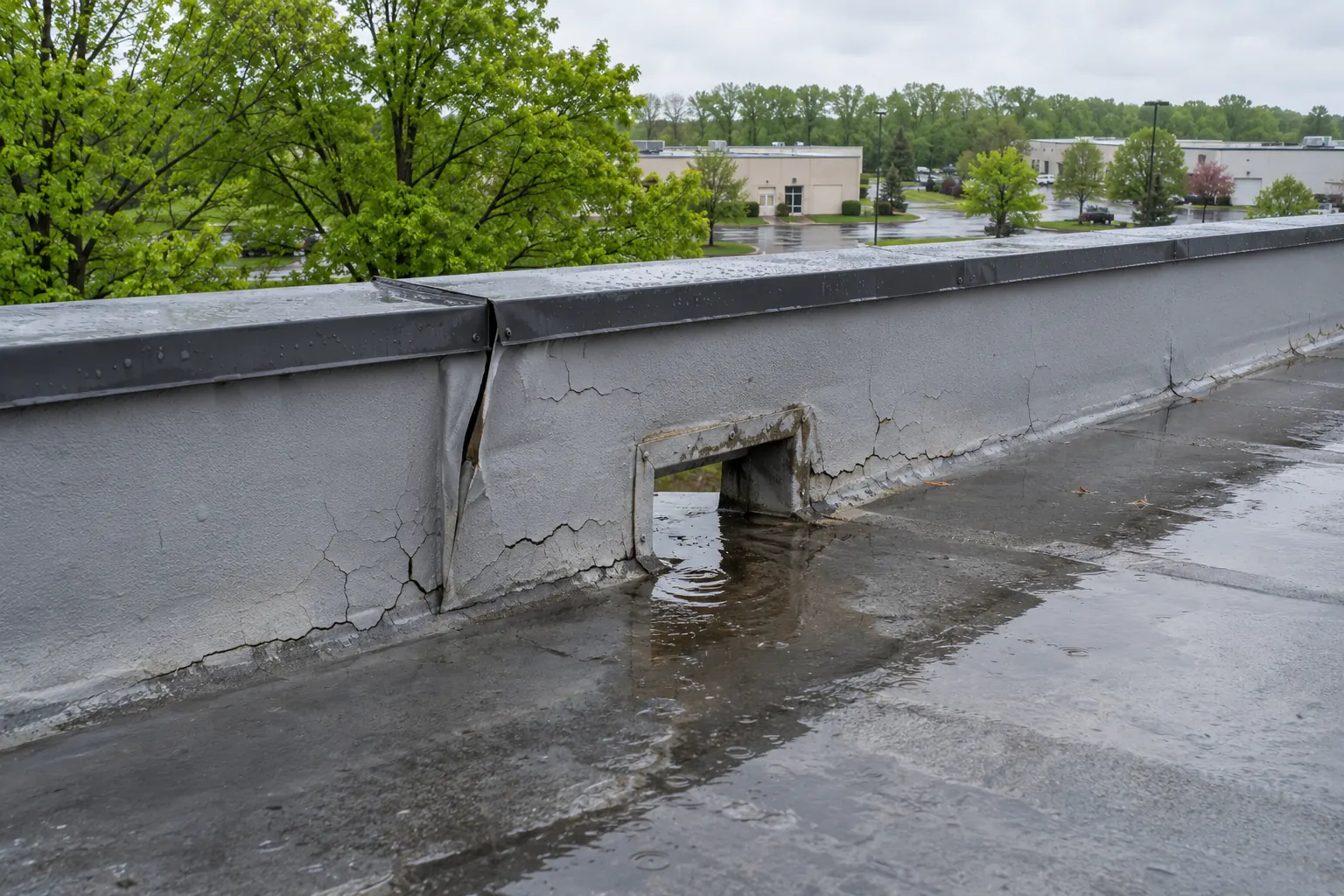
Curb Flashing
Cracked Curb Corners
Corners are the weakest part of curb flashing. The membrane folds there, heat cycles stress the fold, and a hairline split lets water run down inside the curb.

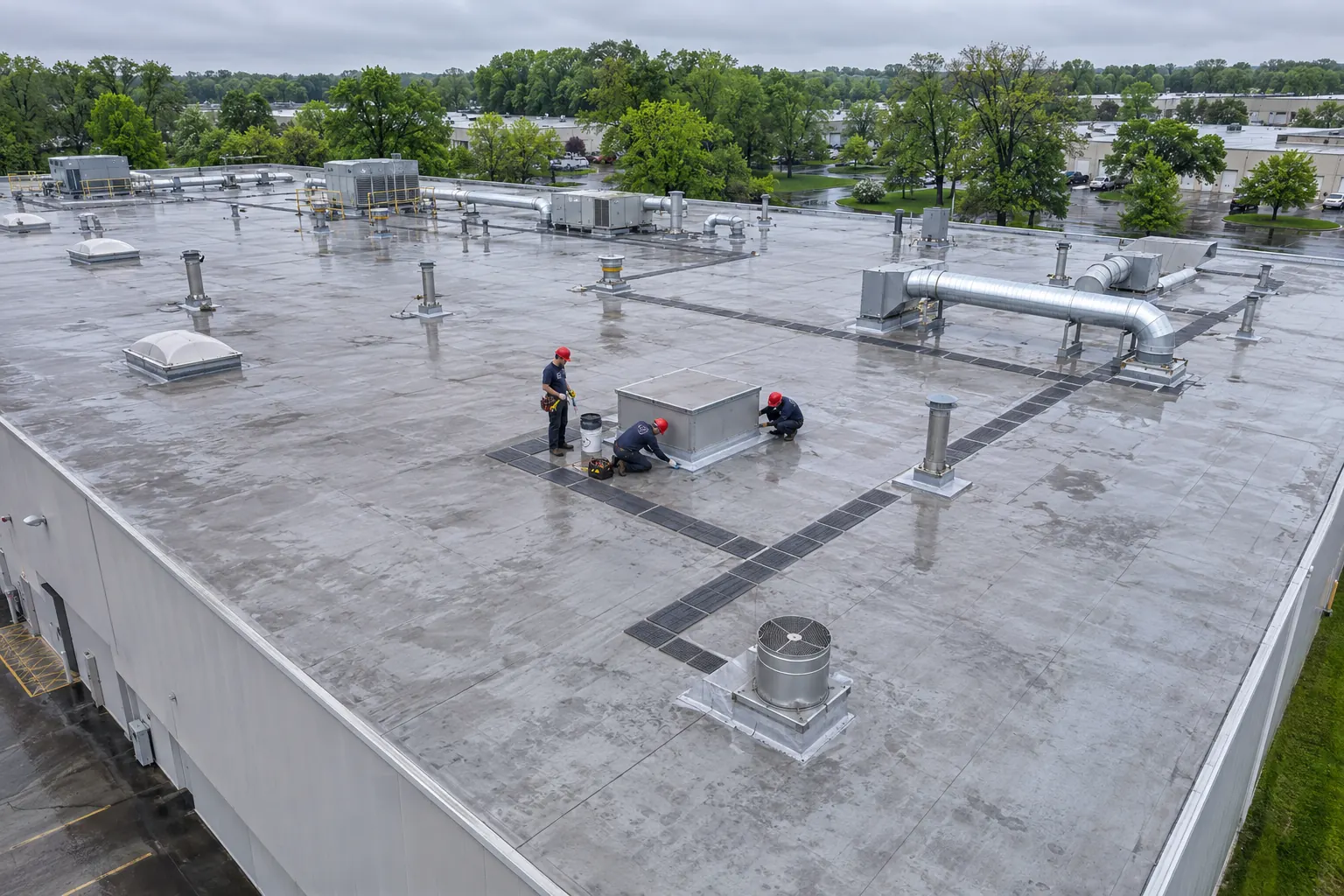
We carry out Highview commercial roof repair on leaking unit curbs, rebuilding the flashing while a licensed mechanical contractor lifts and resets each unit for Metro inspection.
Highview commercial roof repair often centers on the curbs under rooftop units. When curb flashing fails, the lasting fix means lifting the unit, rebuilding the flashing around the curb, and setting the unit back down.
Two trades share that job. A licensed mechanical contractor handles the disconnect and reset, the roofing crew rebuilds the flashing, and Louisville Metro inspects the HVAC work, since Highview has no city government of its own.
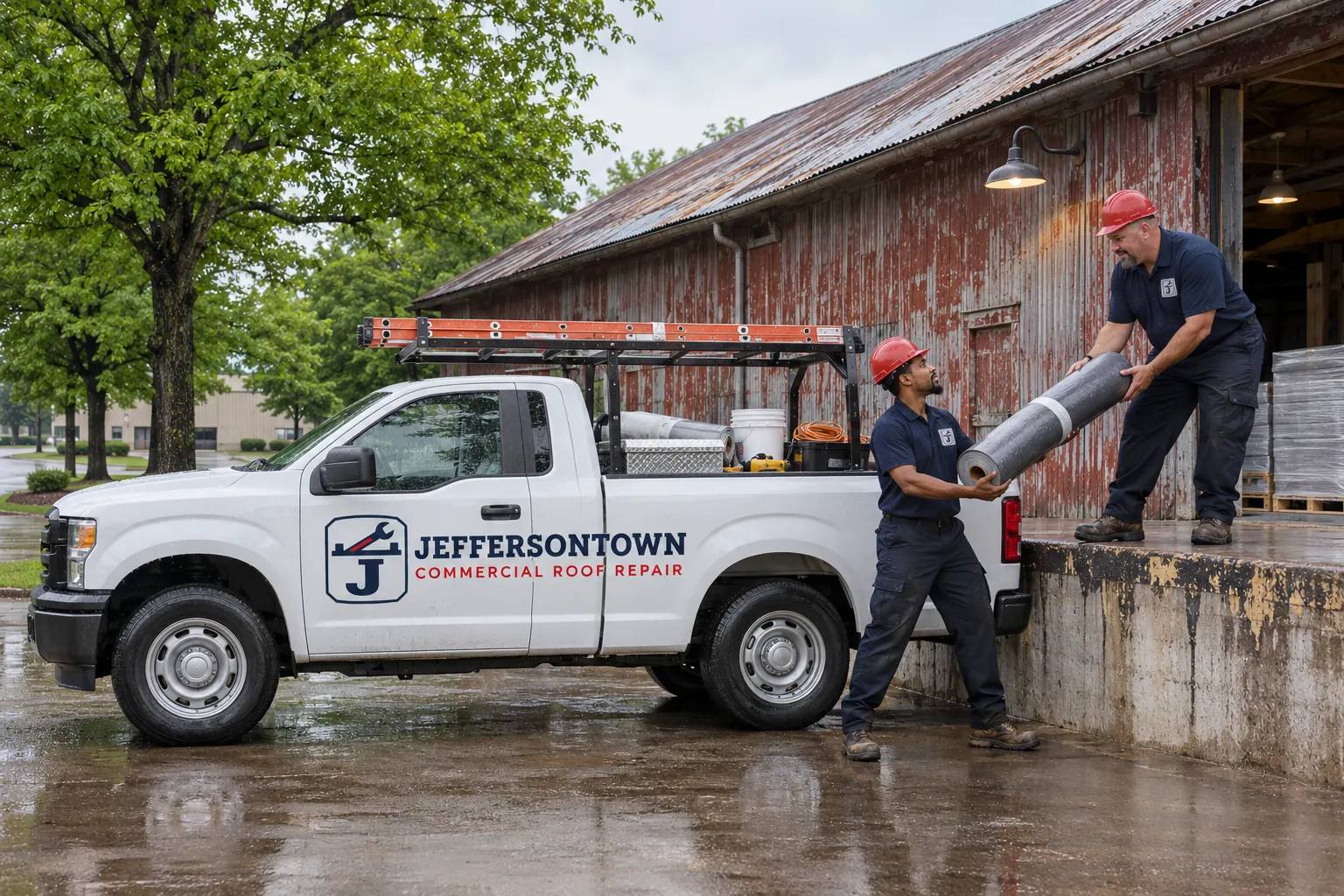
Rooftop units gather foot traffic, fasteners, and openings in one spot. Leaks around them follow a handful of patterns.
Corners are the weakest part of curb flashing. The membrane folds there, heat cycles stress the fold, and a hairline split lets water run down inside the curb.
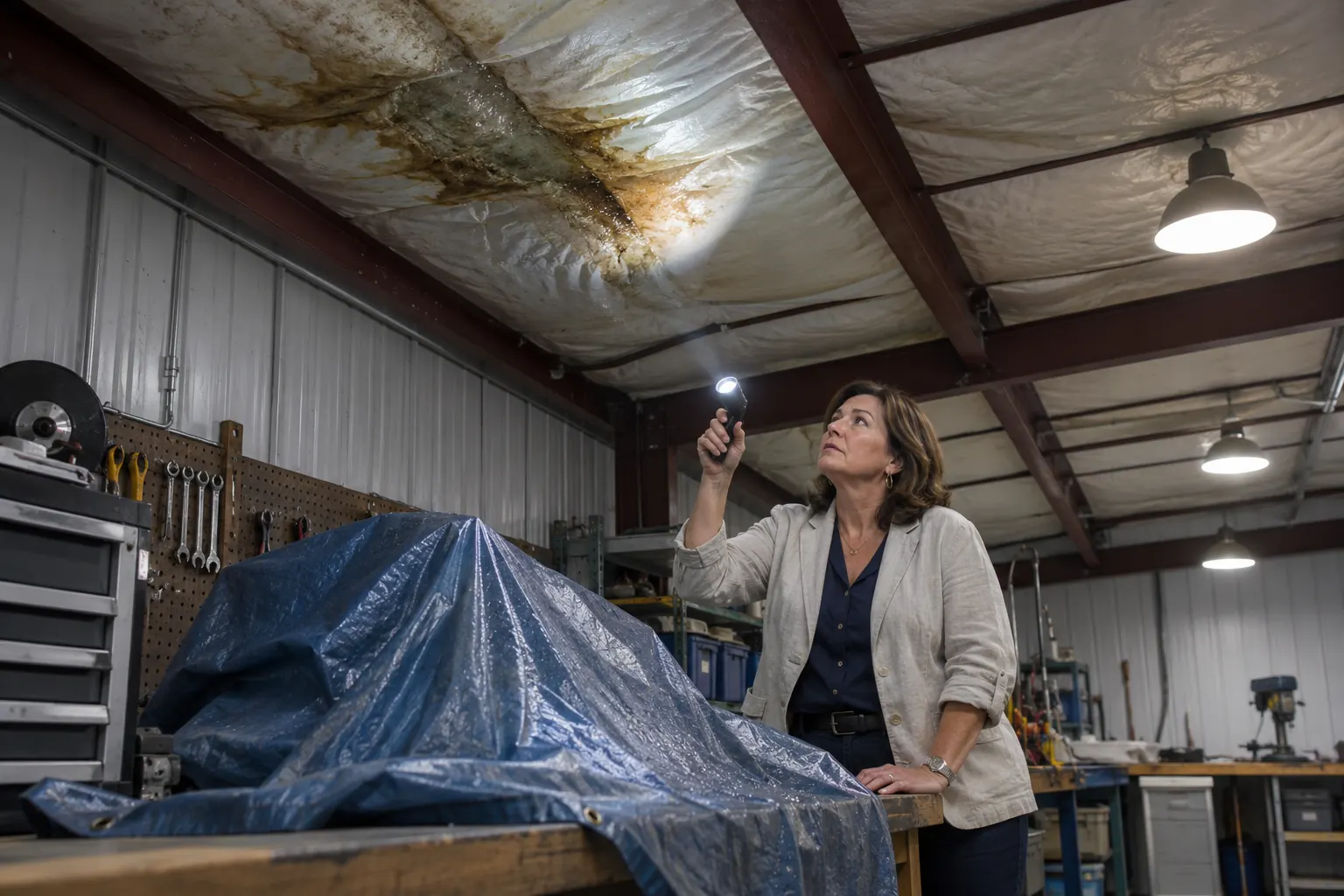
Dropped screws, panels, and tools from HVAC visits puncture the membrane near each unit. Small holes hide under debris until a stain forms on the ceiling below.
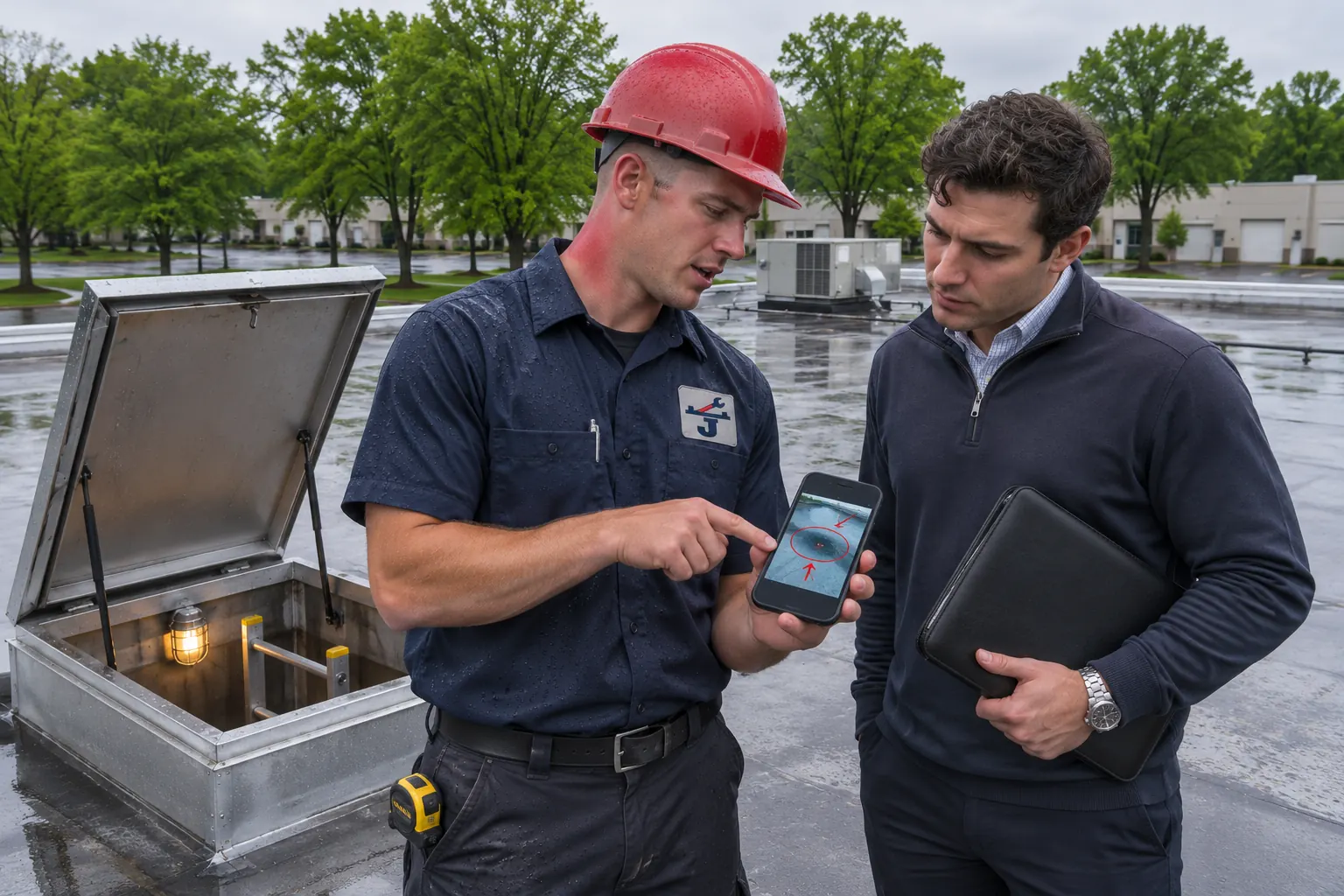
Gas lines and conduit feeding a unit often pass through pitch pans. The filler shrinks away from the pipe over time and leaves a gap that fills with rain.
Condensate lines that drip onto the membrane beside the curb keep that spot wet all year. Seams and flashing in a constantly damp area wear out sooner than the rest.
Fixing a curb correctly takes two trades and one plan. Here is what that work protects.
Sealed curb flashing stops the drips that land on ceiling tiles, equipment, and stock directly under each rooftop unit.
Wet boards found around the curb get cut out and replaced while the unit is off, before the new flashing goes on.
Resetting the unit on a rebuilt, flashed curb keeps its weight even and its seal tight against the curb top.
Metro's HVAC inspection, the roof photos, and the curb repair notes stay together in one file for the property.
Pads set along the service route steer technicians off the membrane and cut down on new punctures around curbs.
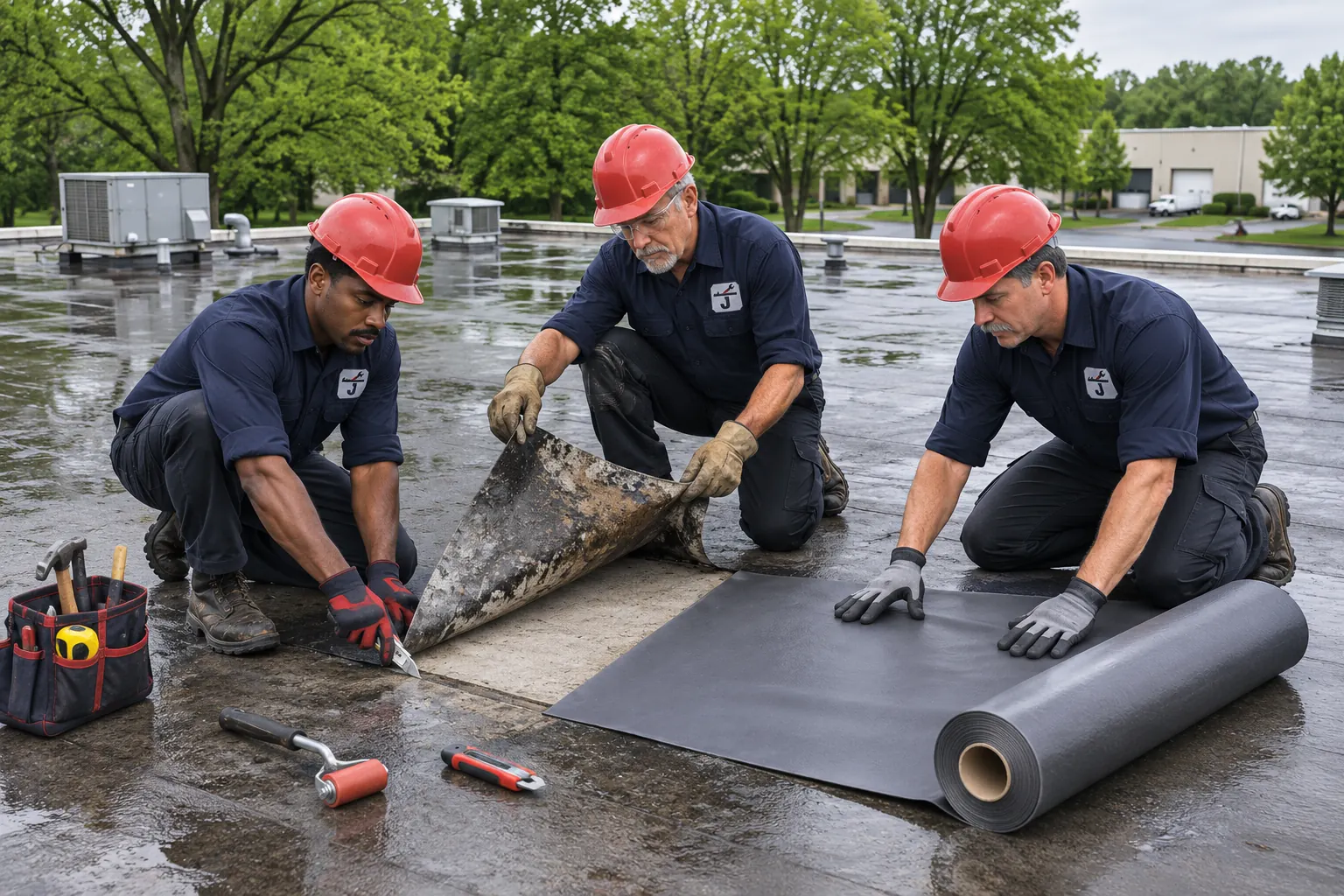
Curb work is the main call here, along with the punctures and penetrations that cluster around rooftop equipment.
Rebuilding flashing at unit curbs, refilling or replacing pitch pans, and adding storm collars to hot vent stacks on roofs carrying several pieces of equipment.
Industrial roof repair detailsMatching patches on TPO, EPDM, and modified bitumen around rooftop units, extended past the damage on every side and protected with walkway pads afterward.
Flat roof membrane repairFinding where water enters at or near a unit, whether the curb, a pipe pan, a condensate drip, or a puncture, before any flashing is removed.
Tracing leaks around rooftop unitsCall with the address and the unit number or tenant it serves. We will check the parcel's jurisdiction and line up the curb visit with your mechanical contractor.
Curb repairs pass between the roofer and the mechanical contractor. Each step shows where it takes place.
A roofer walks the roof, probes the membrane around each curb for wet insulation, checks pitch pans and condensate lines, and photographs every opening near the unit tied to the leak.
The parcel record is checked before scheduling, since many Highview addresses look like they belong to Jeffersontown. Highview work goes to Louisville Metro, which inspects the HVAC side of the job.
A licensed mechanical contractor shuts down, disconnects, and lifts the unit off its curb. The roofer stands by so the curb stays open for as short a time as the work allows.
Old flashing comes off, wet boards around the curb are replaced, and new membrane flashing goes up the curb with reinforced corners sealed to the roof field.
The mechanical contractor sets the unit back on the curb and reconnects it. Louisville Metro inspects the HVAC work, and the owner gets photos of the finished curb.
If your building sits close to Highview, call us or send us a message to confirm we can reach it. These nearby towns are part of our commercial roof repair area.
Answers about curb leaks, unit resets, and inspections for Highview buildings.
Louisville Metro does. Highview has no city government and sits outside Jeffersontown city limits, so Metro inspects the HVAC work, while Jeffersontown's own inspector covers the same job a short drive away. A licensed mechanical contractor disconnects and resets the unit, and the roofing crew rebuilds the curb flashing. Check the parcel first, because many Highview addresses look like Jeffersontown.
Small corner splits can sometimes be patched in place. When the flashing has pulled away along a full side, or insulation under the curb is wet, the lasting repair needs the unit lifted so new flashing can run up and over the curb top.
Repeat leaks often mean the source was never fixed. Patches stacked over old patches lose their bond, and service traffic keeps puncturing the membrane around the curb. Rebuilding the flashing and adding a walkway pad route to the unit breaks that cycle.
Often it comes from somewhere else. Water entering at a pitch pan, a condensate drip, or a puncture several feet away can run along the deck before it falls. Tracing starts at the stain and checks every opening upslope from it.
Route them to a drain or gutter. A line that drips straight onto the membrane keeps one spot wet constantly, which wears the surface and hides small cracks. Securing the line on supports and directing it to a drain keeps the curb area dry between rains.
Agree on the order before anyone climbs up. The mechanical contractor handles the shutdown, disconnect, and reset, and the roofer handles curb flashing and any wet insulation. Setting the date together keeps the curb uncovered for as little time as possible.
Tell us which unit is leaking and the parcel address. We will confirm who inspects the work and plan the curb repair with your HVAC contractor.
Leave a name and number and we will call you about the leak, seam, or panel you are dealing with.
Or call now: (502) 323-6989