If Your Roof
Drips Right After Heavy Rain
Water backs up at a slow drain or scupper and spills over the flashing.
Start WithDrain and Scupper Check

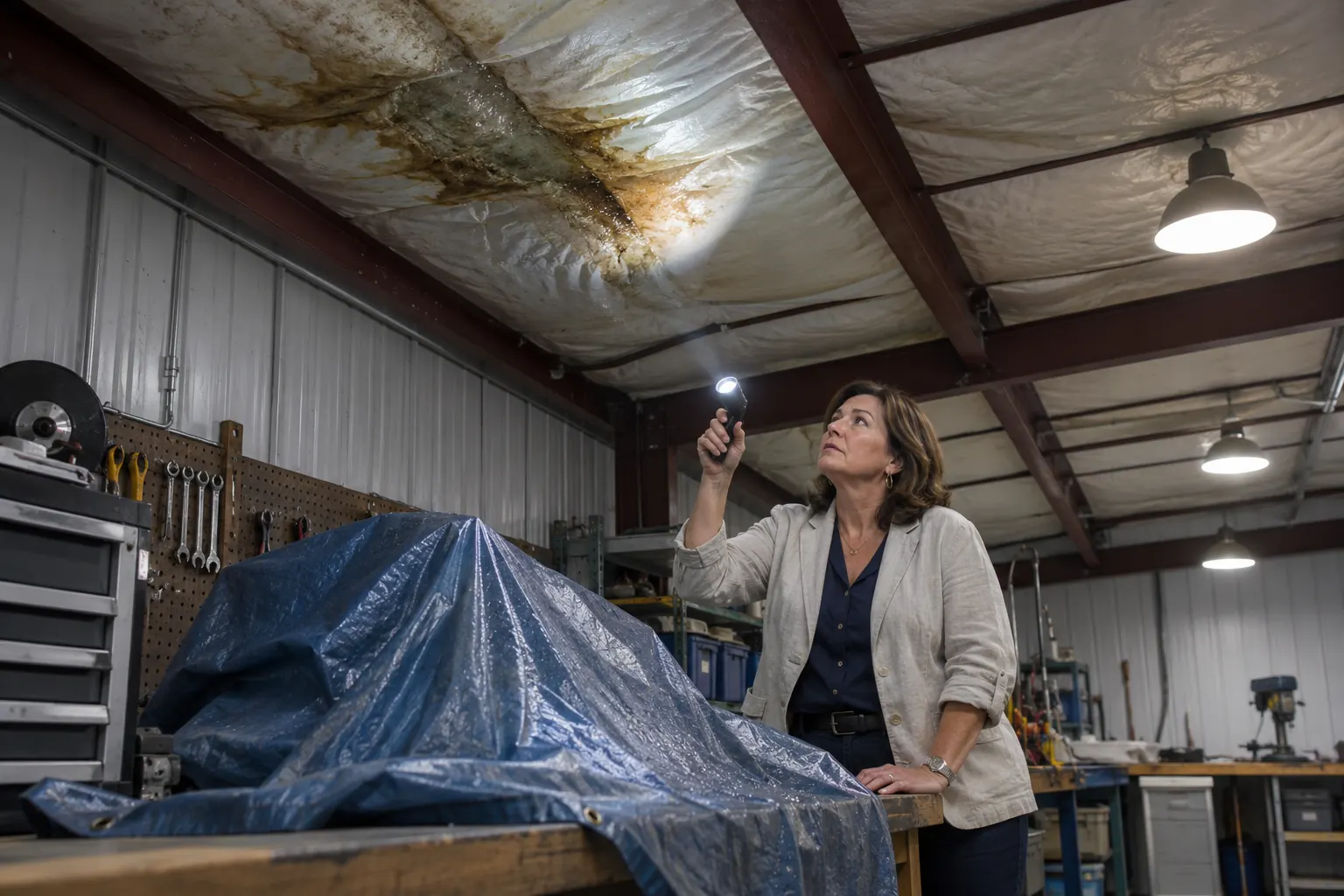
Jeffersontown commercial roof leak repair starts under the stain, follows the water back along the deck, and ends with a repair at the true opening.
Jeffersontown commercial roof leak repair fits any building with water inside and no obvious opening above it. These patterns point the search.
Water backs up at a slow drain or scupper and spills over the flashing.
Rain pushed sideways reaches wall flashing and parapet caps.
Ice at gutters or blocked drains backs meltwater under laps.
Warm indoor air condenses on a cold deck or panel.
Each roof type has its own short list of places where leaks begin.
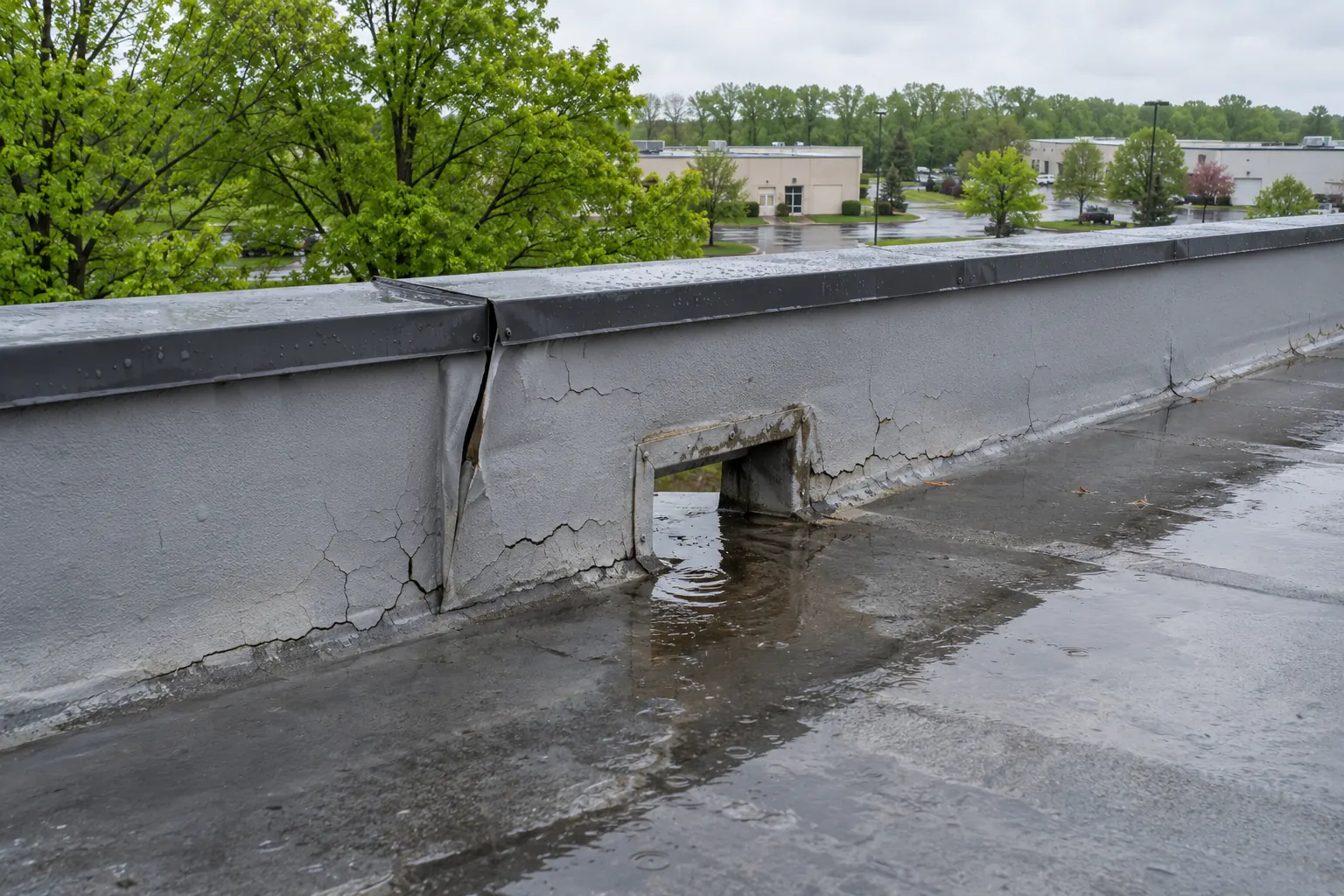
Seam edges that never fully welded, curb corners, and pipe boots are where single-ply roofs start leaking. Water follows the lap until it finds the gap.
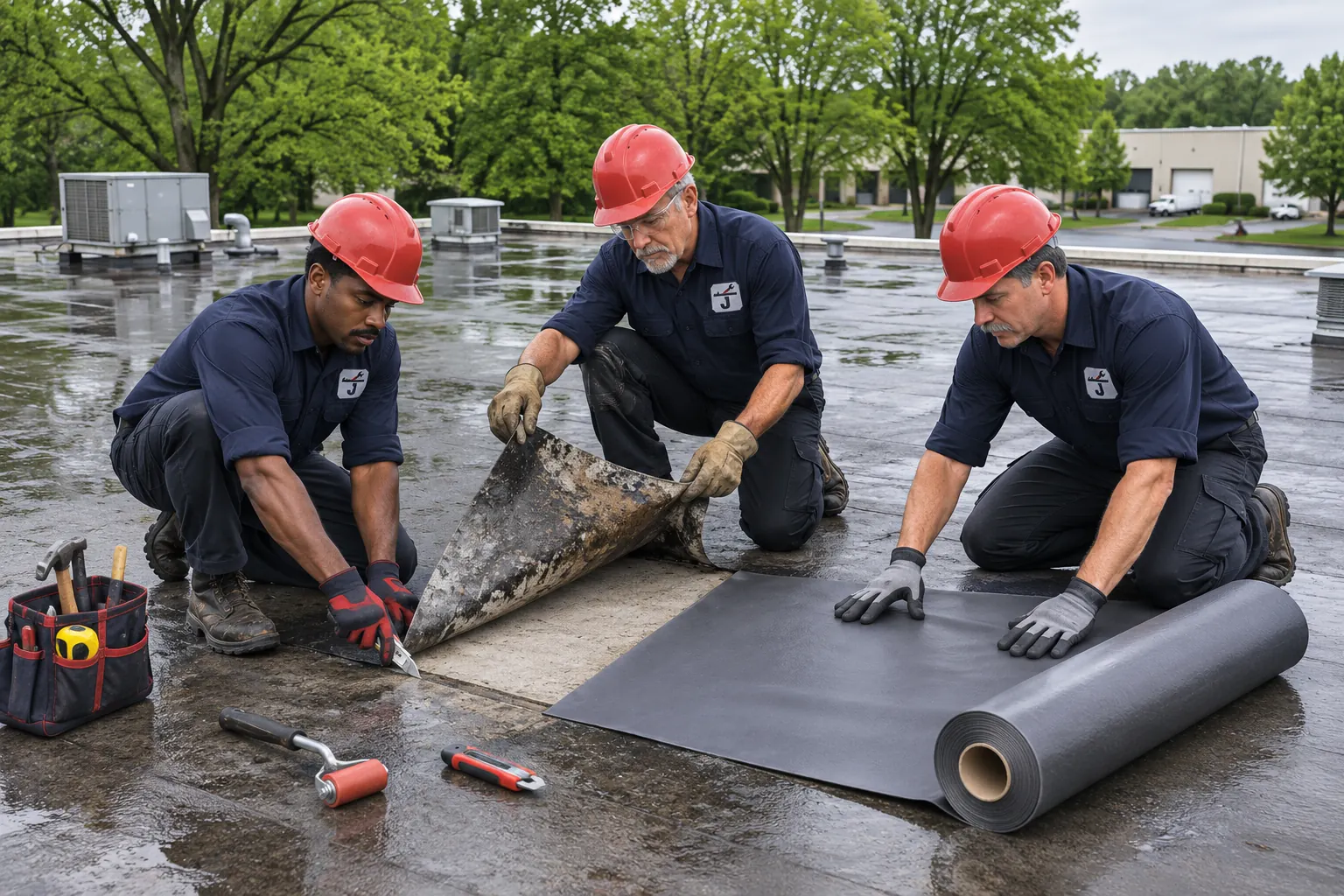
Rubber roofs leak where seam tape lets go, where the sheet shrinks away from the walls, and where flashing cracks at penetrations.
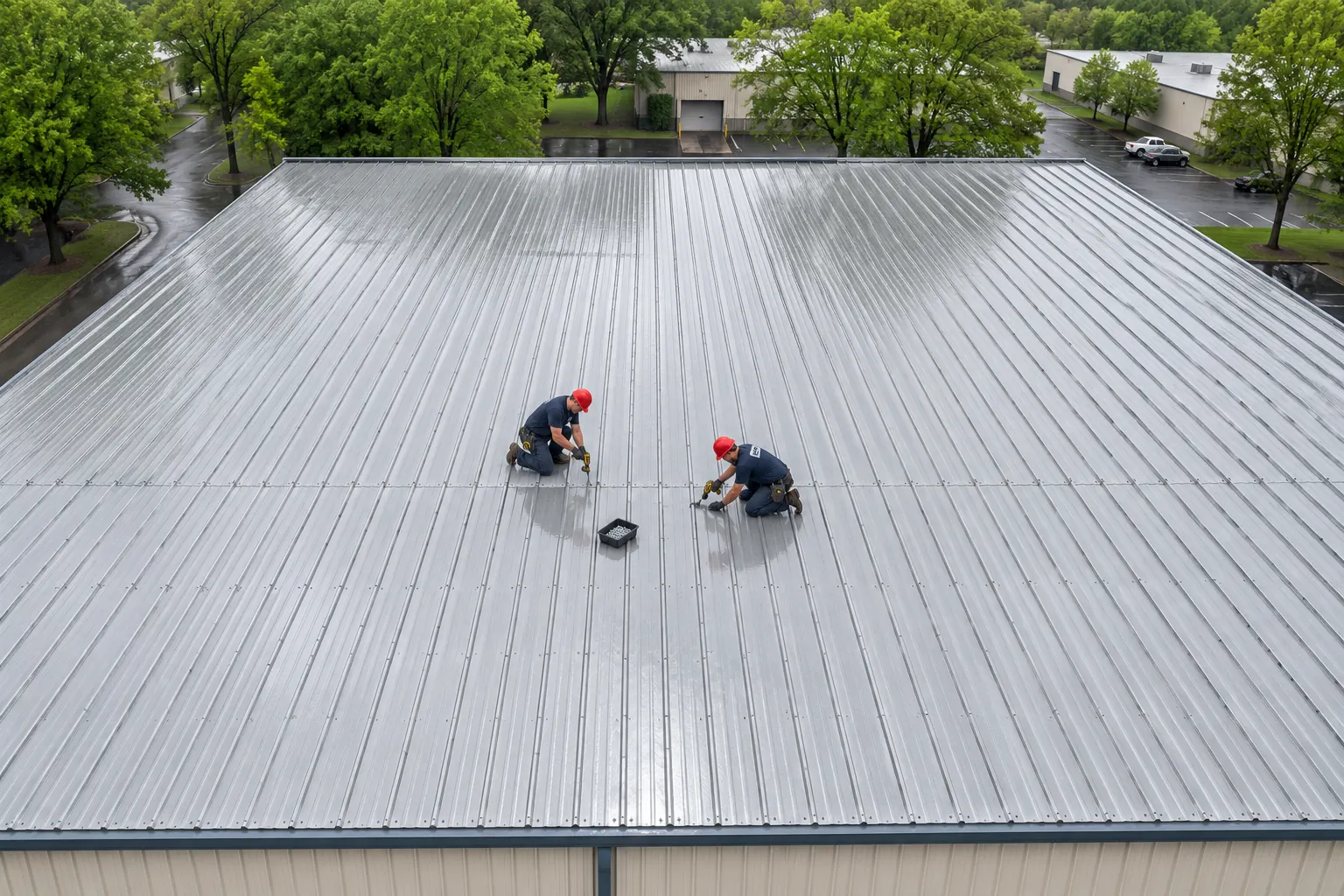
Panel roofs leak at screw washers, end laps, ridge caps, and skylight panels. A straight line of drips usually follows one fastener row.
Rooftop unit curbs, roof drains, and parapet edges rank among the most frequent sources on every roof type around Jeffersontown.
Tracing comes before patching, because the stain inside rarely sits directly under the opening.
Drip spots inside are marked and measured from the walls, then matched to the roof area above and upslope from them.
Curbs, pipe flashings, seams, and drains near that area get checked first, since most leaks start at one of them.
A moisture meter or infrared scan shows where insulation is wet, which outlines how far water has traveled under the membrane.
When the source stays hidden, a controlled water test on one suspect area at a time confirms it before any repair.
A repair at the true opening ends the cycle of patches that miss and stains that come back.
Finding the opening first puts the patch where water enters, rather than over the spot that looked guilty from below.
Moisture readings show which boards are wet, so they get replaced instead of sealed in under a new patch.
Inventory, records, and electrical gear under the drip stay dry once the curb or seam above them is sealed.
Tying each leak to rain, wind, or snowmelt shows whether the next fix belongs at a drain, a wall, or a gutter.
Separating condensation from a true leak keeps money off the roof when the fix belongs in ventilation or insulation.

Call with the dates, wind direction, and rain amounts for each leak. NWS Louisville reports give daily rain totals if you need them.
Leak work moves back and forth between the roof and the rooms under it until the source is confirmed.
The crew walks the roof above and upslope of the reported drip, checking curbs, pipe flashings, seams, and drains, and photographs what it finds.
Water marks on the deck, purlins, and ceiling are followed back toward the high side, since water often runs several feet before it falls.
Moisture readings outline the wet area. If the source stays hidden, a controlled water test on one suspect area confirms it.
A temporary seal goes on first if rain is coming. The permanent repair uses matching materials on a clean, dry surface.
Photos and roof-plan notes go to the facility manager, who reports whether the spot stays dry through the next storm.
Once the source is known, the fix often belongs to one of these repair types.
Open seams, punctures near units, and cracked base flashing on low-slope roofs get matched membrane patches.
Flat roof repairLines of drips under a panel roof usually mean a fastener row or end lap that needs new screws and tape.
Commercial metal roof repairLeaks around exhaust fans, pitch pans, and pipe racks on plant roofs need repairs tied to the equipment causing them.
Industrial roof repairQuestions facility managers ask while they wait for the roofer.
Crews start inside under the stain, trace water marks back along the deck or purlins, then search the roof above for a matching opening. Curbs, pipe flashings, seams, and drains come first, with a moisture meter, an infrared scan, or a controlled water test when the source stays hidden. Water often runs several feet before it falls.
TPO and PVC leak at unwelded seam edges, curb corners, and pipe boots. EPDM leaks at seam tape, walls where the sheet shrinks, and cracked flashing. Modified bitumen fails at laps, blisters, and base flashing; built-up roofs at ply splits, pitch pans, and drain flashing; metal at fasteners, end laps, ridge caps, and skylights.
The opening is one that water reaches only under certain wind directions or rain depths. Wind-driven rain pushes water sideways into wall flashing, counterflashing joints, and parapet caps. Heavy-rain-only leaks suggest a drain that backs up, and drips after snowmelt suggest ice at gutters or blocked drains. Logging date, wind, and rain for each leak narrows the search.
Timing and pattern tell them apart. A leak follows rain or snowmelt and drips from one spot or a short line under a curb, seam, or lap. Condensation shows up on cool, dry mornings, spread across a large area as beads under bare metal or cold spots, and calls for ventilation or insulation work rather than a roof repair.
Protect what sits under the drip and keep people safe. Move stock and records, set buckets or tarps, mark the floor for slip hazards, and shut off power to nearby fixtures if needed. Photograph the stain and note the time, weather, and wind direction when it started. Leave roof access to the roofing crew, especially during storms.
Water that gets through the membrane runs along the top of the insulation, the deck flutes, or a purlin until it finds a seam or low spot to drip through. On a large roof that path can be several feet long, so the opening often sits upslope of the stain.
Send photos of the stain and the dates it leaked. We will trace it to the opening and fix it there.
Leave a name and number and we will call you about the leak, seam, or panel you are dealing with.
Or call now: (502) 323-6989