If Your Roof
A Lap Edge Lifting Along One Seam
Surrounding sheet still bonds when the seam is probed.
Start WithSeam Repair

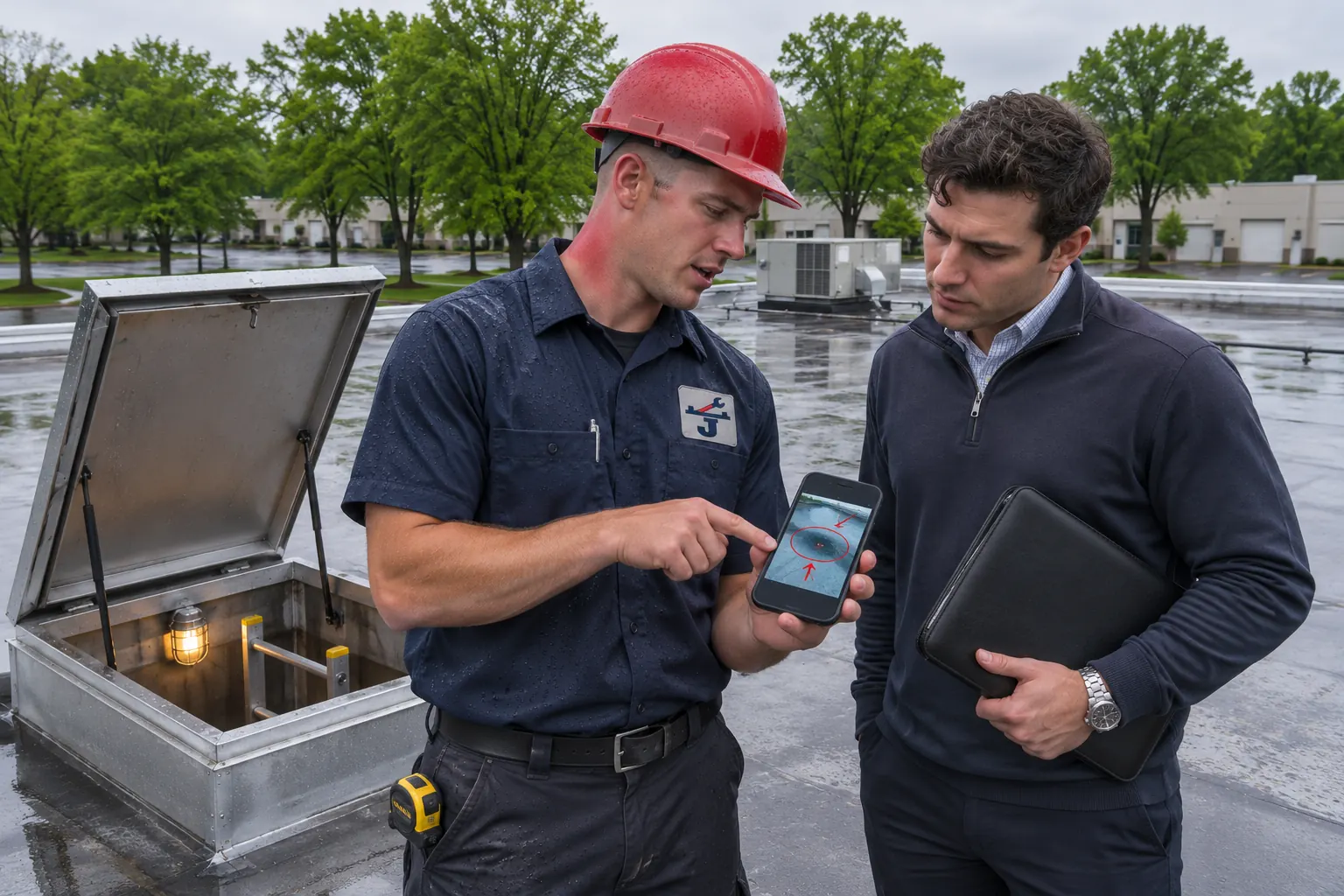
We handle Jeffersontown flat roof repair on TPO, EPDM, PVC, modified bitumen, and built-up roofs, matching every patch to the membrane already there.
Jeffersontown flat roof repair fits a low-slope roof with isolated damage and mostly dry insulation. Moisture readings settle the close calls.
Surrounding sheet still bonds when the seam is probed.
Damage traces back to screws or panels dropped during HVAC service.
Drains sit high, or the deck sags under one area.
Moisture readings show water spread well past any single opening.
Low-slope roofs hold water longer than pitched ones, so small openings matter more. These four conditions come up on most roof walks.
Seam edges on TPO and EPDM open where the original weld or tape bond weakened. A probe along the lap finds the soft spots before rain does.
Older built-up and modified bitumen roofs trap air or moisture between plies. Small firm blisters get watched, and soft or cracked ones get cut, dried, and patched.
Service crews drop screws, tools, and access panels near HVAC units. Each puncture lets water into the insulation, and wet boards spread the damage.
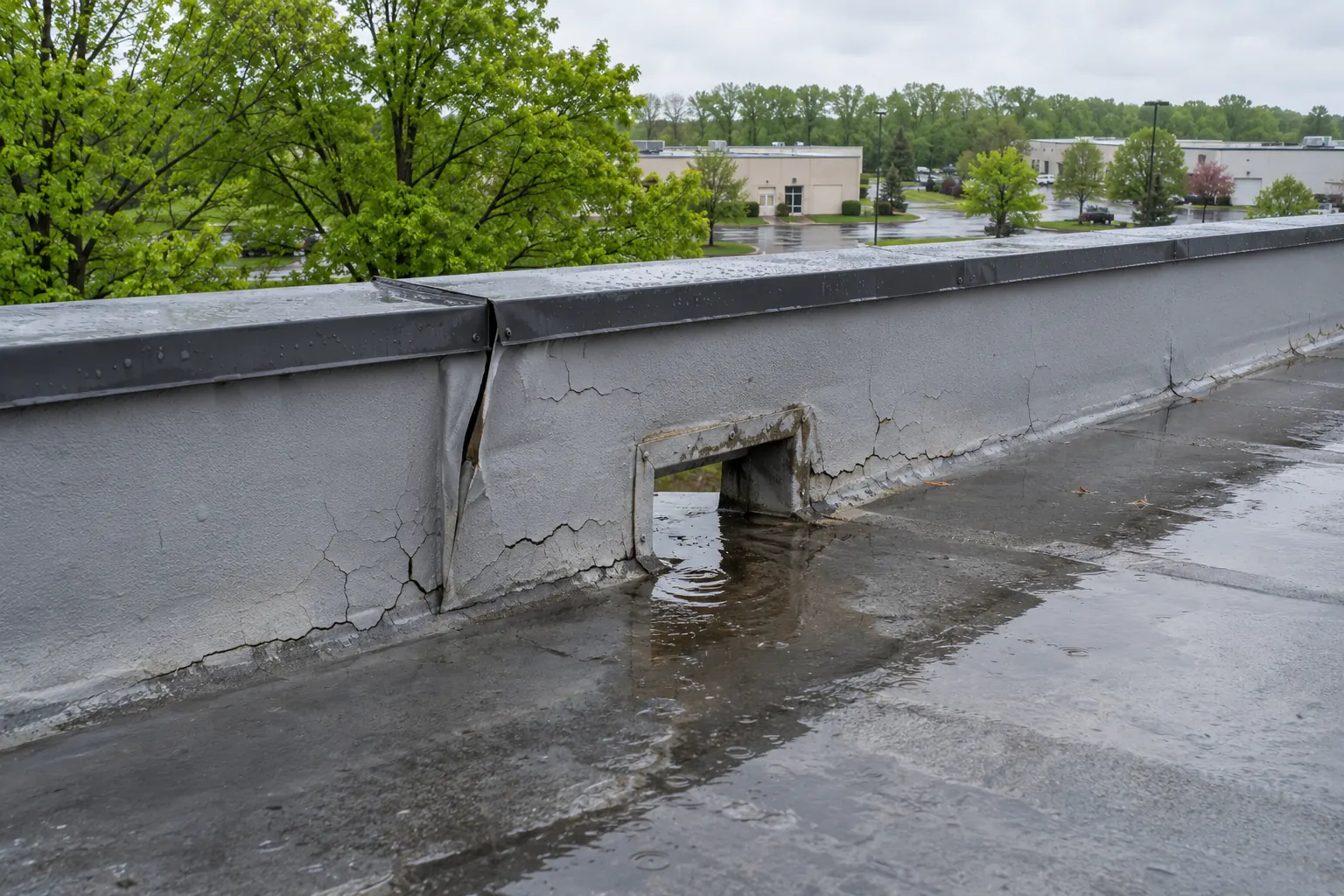
Where the membrane turns up a parapet wall, base flashing cracks and pulls loose. Wind-driven rain then runs behind it into the wall.
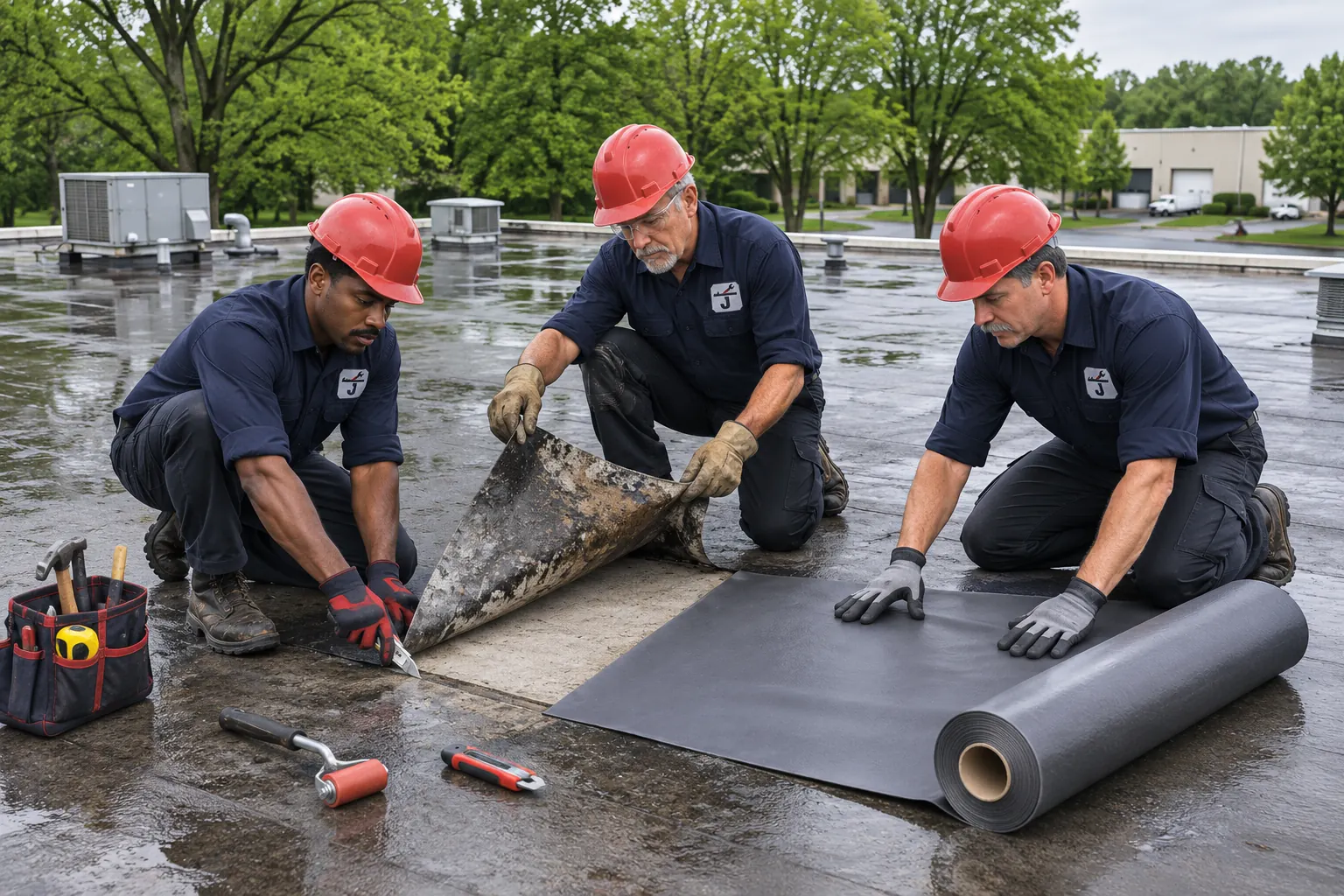
Each roof system takes a patch from its own family, attached the way that system attaches. Roof cement on TPO rarely holds for long.
Hot-air welded patches go on a sheet cleaned of dirt and plasticizer film, so the weld fuses the patch into the existing membrane.
Rubber gets scrubbed and primed, then sealed with seam tape or a cured cover strip pressed into the primer.
Loose granules come off first, then a torched or cold-applied cap sheet patch extends well past the damaged area.
Gravel is scraped back to the plies, and new felts and bitumen are layered over the opening and lapped onto sound plies.
A repair in the roof's own material, on a clean and dry surface, keeps working long after roof cement would have peeled.
Welds and primed tape lock into the old membrane, so lap edges stop lifting at the patch line.
Probing around each hole finds wet insulation, and replacing those boards keeps rot and extra weight off the deck.
Clearing strainers and resetting a high drain bowl moves standing water off seams that would stay wet for days.
Walkway pads along the path to each rooftop unit keep the next round of dropped screws off the field membrane.
Every patch location goes on a marked plan, which shows quickly if new leaks keep appearing in different spots.
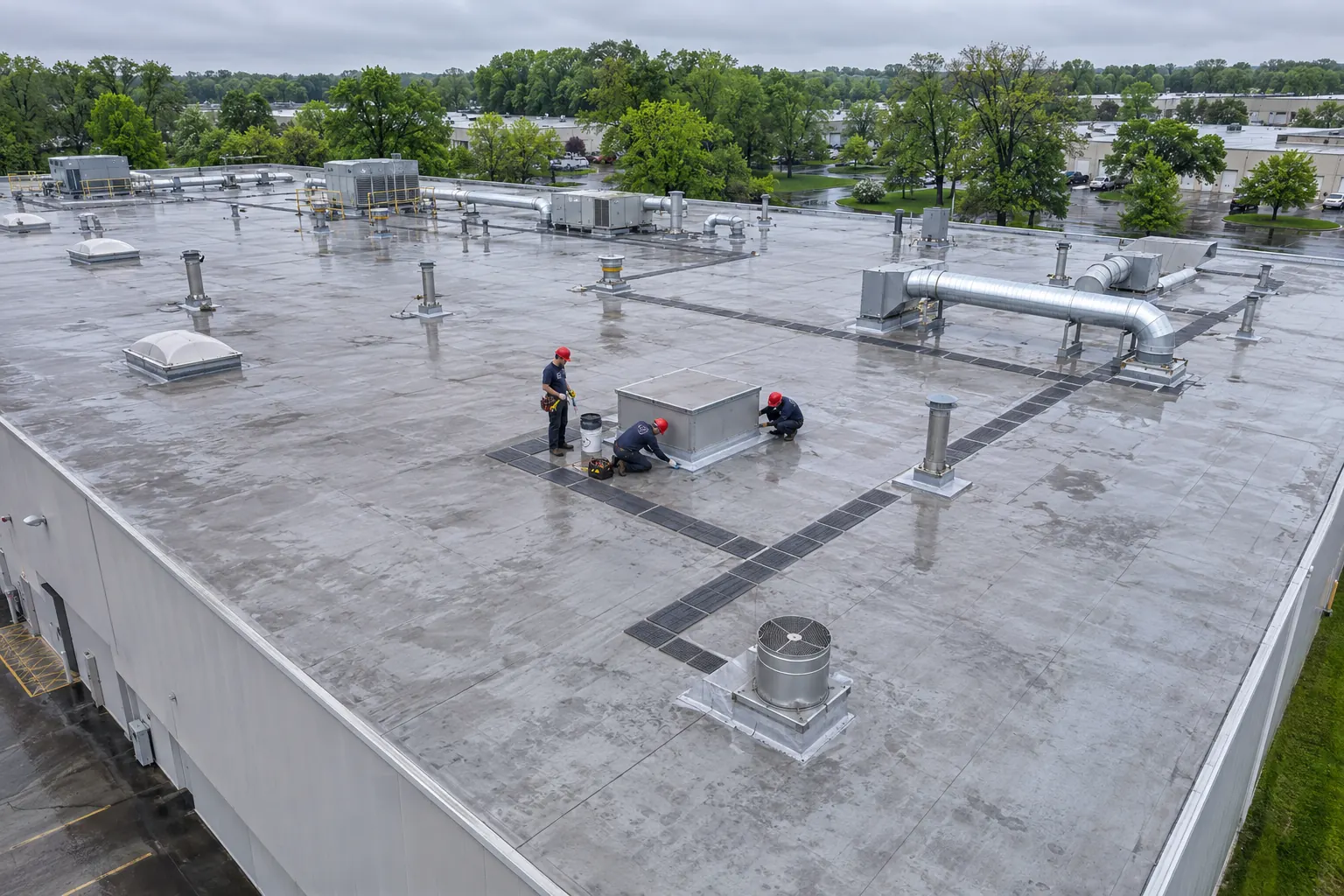
Call with the roof size and where the water sits. Ponding over a seam or old patch gets looked at first, since it stays wet the longest.
Repairs follow the same order on every low-slope roof, with two of the five steps inside the building.
We walk the membrane, probe the seams, check base flashing at the parapets, and photograph each opening found over the reported leak.
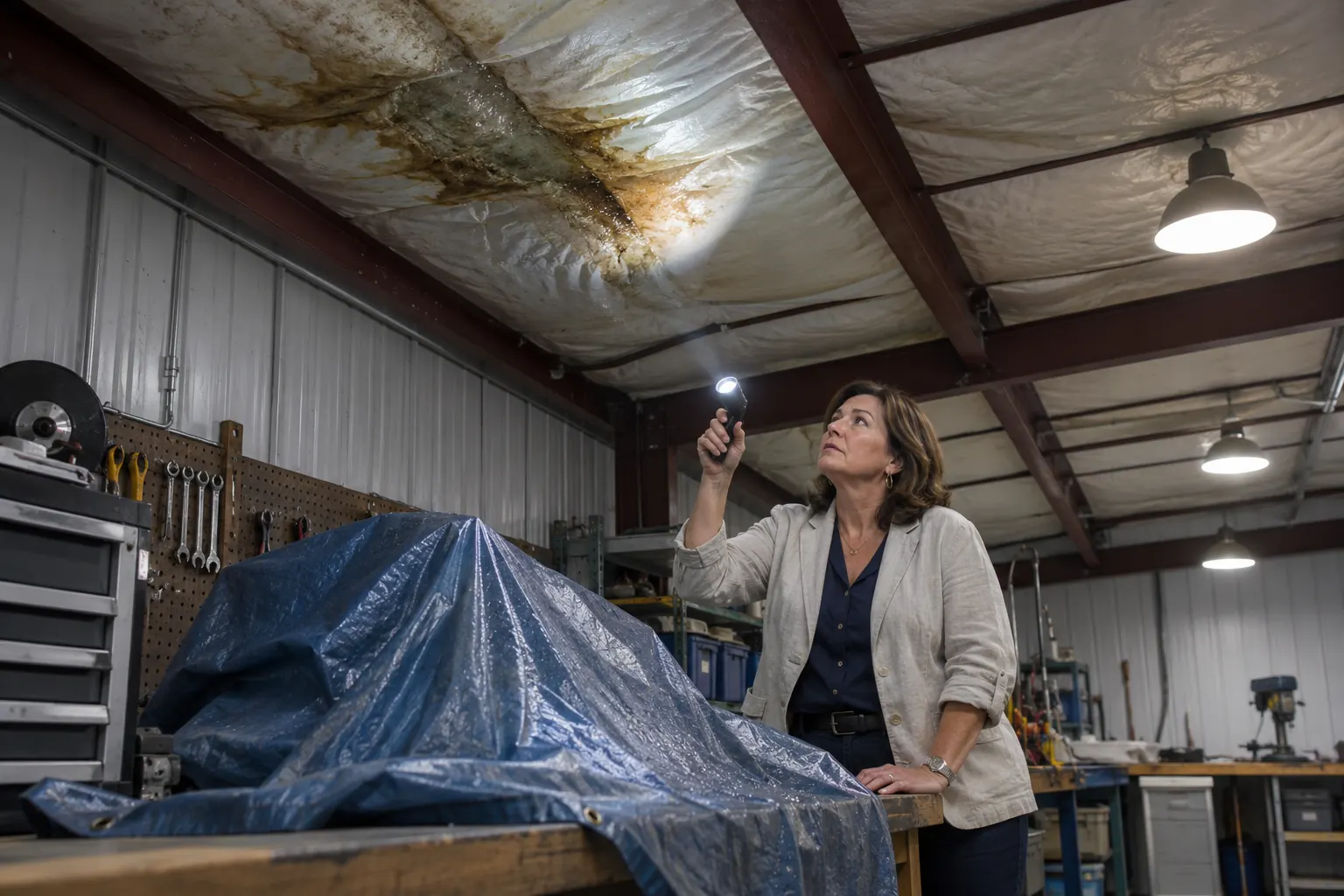
Stains and drips inside are matched to the roof above, since water on a flat roof can travel along the deck before it falls.
Moisture readings around each opening show the wet area. Soaked boards come out and dry replacements go in under the patch.
Patch corners are rounded so the edges resist peeling, and each patch runs well past the damage on every side.
Walkway pads are set along HVAC routes, and the building manager gets photos plus a note on any items that can wait.
Flat roof damage often ties into other work on the same building.
A drip with no obvious opening above it needs tracing along the deck and a moisture survey before any patch goes down.
Commercial roof leak repairPlant roofs add exhaust fans, pipe racks, and production schedules to the same membrane repair work.
Industrial roof repairBuildings with a metal shop wing or canopy need fastener and lap repairs alongside the flat roof work.
Commercial metal roof repairQuestions owners ask about low-slope membrane roofs.
Seam failures, punctures, and flashing breaks lead the list, because water sits longer on a low-slope roof. Around Jeffersontown most flat roofs are TPO, EPDM, built-up, or modified bitumen. On a roof walk, look for lifting lap edges, holes near rooftop units, cracked base flashing at parapets, water standing two days after rain, and soft spots underfoot.
With a patch from the same family as the roof, attached the way that system attaches. TPO and PVC take hot-air welded patches, EPDM takes primer and seam tape or a cured cover strip, modified bitumen takes a cap sheet patch, and built-up roofs get new felts and bitumen. Roof cement on TPO rarely bonds for long.
Give the water a path to a drain. That starts with clearing strainers and scuppers, then resetting a drain bowl that sits high, adding tapered crickets between drains, adding a drain in a low area, or repairing deck sag. Patches inside a ponding area get extra attention because they stay wet the longest.
Only the large, soft, or cracked ones. Small firm blisters on built-up or modified bitumen roofs are usually left alone and watched. A damaged blister gets an X cut, the layers dry, the flaps are pressed into fresh bitumen, and a larger patch covers the cut. Many blisters in one area point to wet insulation.
Each hole gets a patch matched to the membrane and extended well past the damage, after probing for wet insulation underneath and replacing any wet boards. Patch corners are rounded to resist peeling. Where one unit shows several old patches, walkway pads along the service route stop the next round of damage.
Temporarily, yes. A wet sheet takes a weld or primer poorly, so rain-day work stays limited to roof cement, tape, or a tarp. The permanent patch goes on once the roof dries, and the temporary material comes off first so the new patch bonds to clean membrane.
Tell us the roof system if you know it and where water shows inside. We will check the seams and drains around it.
Leave a name and number and we will call you about the leak, seam, or panel you are dealing with.
Or call now: (502) 323-6989