Units
Rooftop Unit Curbs
Curb leaks often mean lifting a unit off cracked flashing. On a nursing home or day care, that lift affects heating and cooling for occupied rooms, so timing gets planned early.

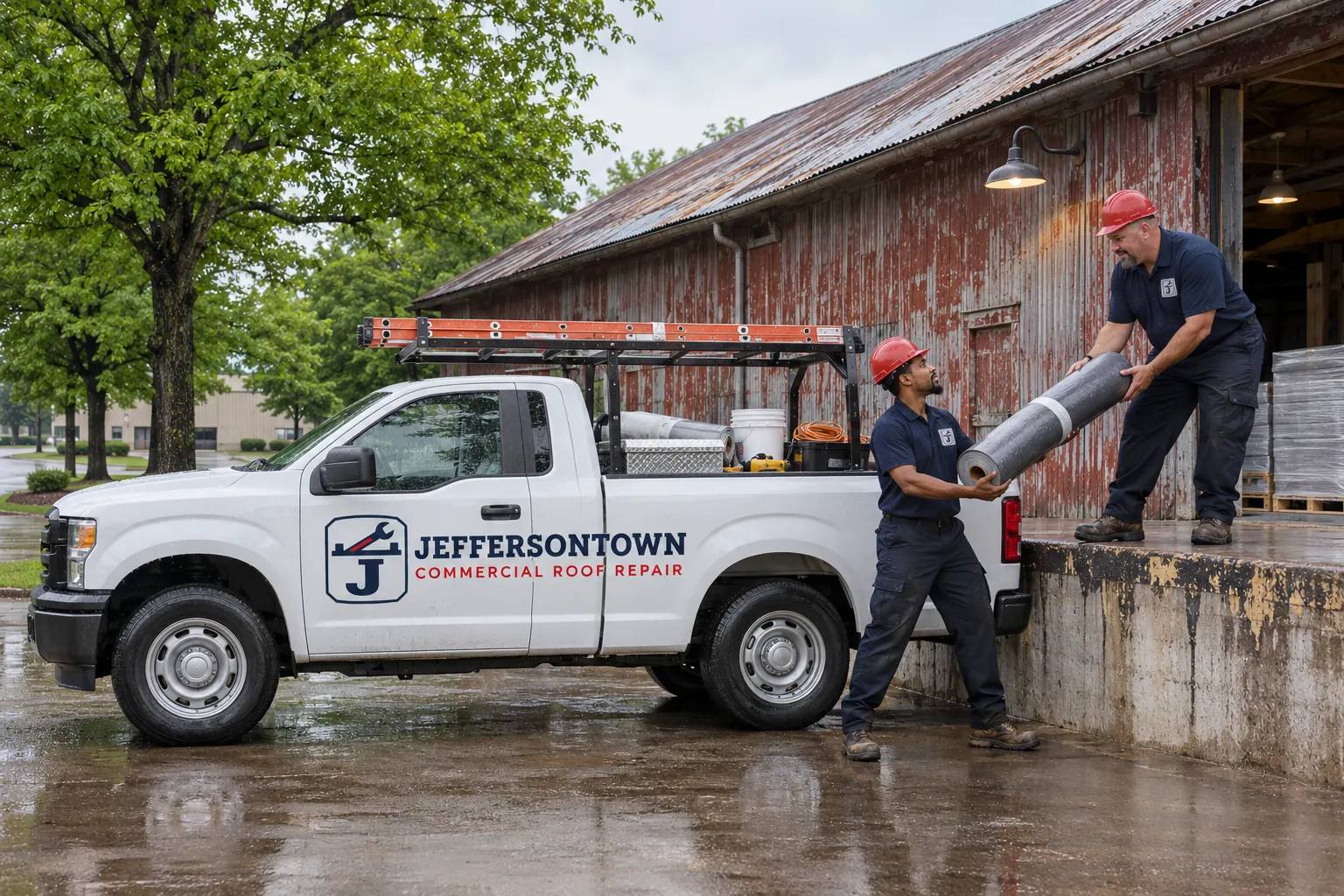
We plan Mount Washington commercial roof repair for state-reviewed care buildings and day cares, plus retail and office roofs on the city path.
Mount Washington commercial roof repair follows one of two paths. Hospitals, nursing homes, day cares, and other institutional or state-licensed buildings go to the Kentucky Department of Housing, Buildings and Construction, according to the city's Building and Housing page.
Retail and office buildings along US 31E follow the city path through the Building Code Department. We sort out which path applies before the repair list is final, because state-reviewed work needs extra lead time.
On state-reviewed buildings, three kinds of roof work take longer to plan. Small seam and flashing repairs move faster.
Curb leaks often mean lifting a unit off cracked flashing. On a nursing home or day care, that lift affects heating and cooling for occupied rooms, so timing gets planned early.
Steel deck rusted through under a long-standing leak has to be cut out and replaced. Deck work on a state-reviewed building is one of the repairs that needs extra lead time.
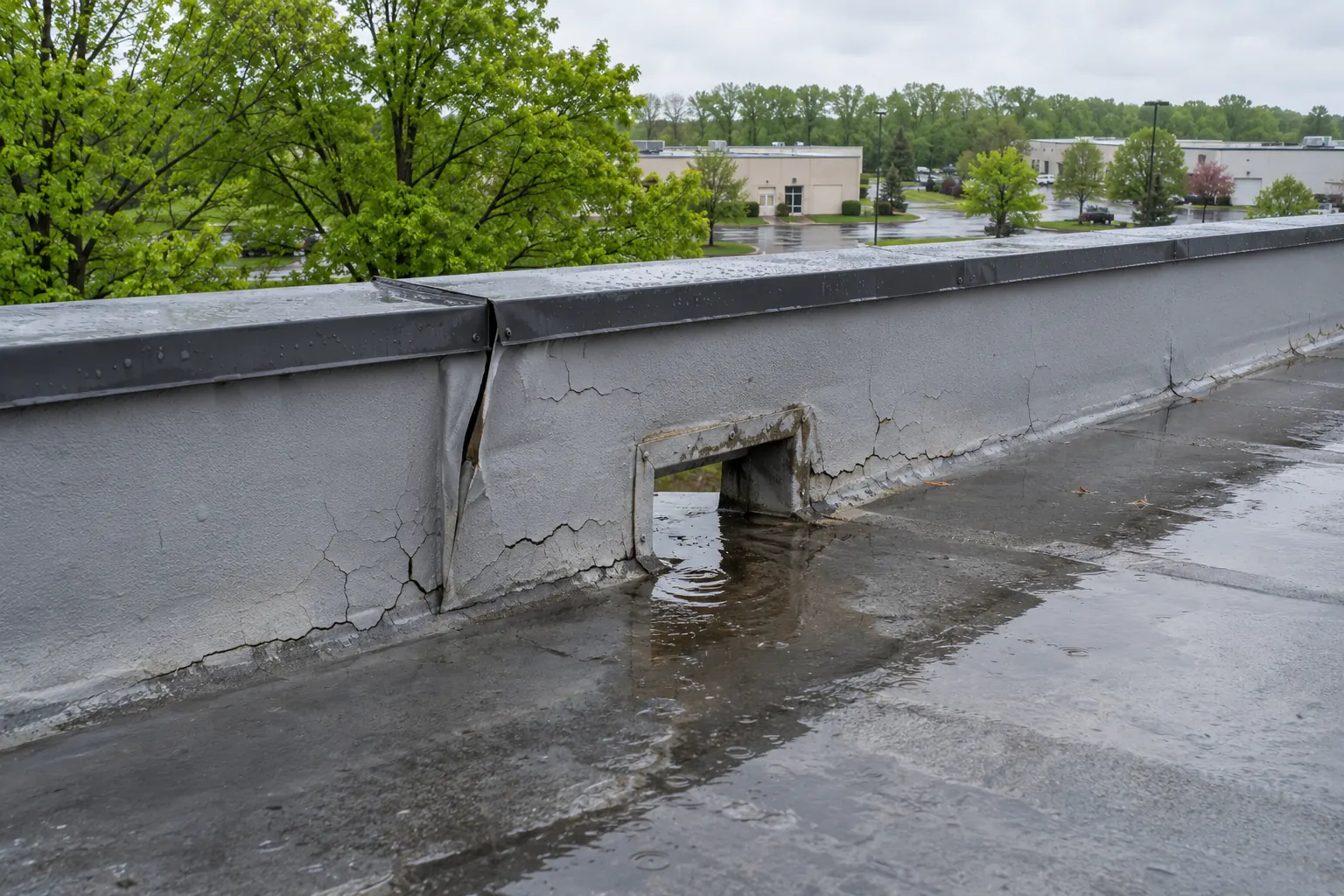
Drain bowls that sit high, cracked drain flashing, and broken strainers let water pond or leak at the outlet. Resetting a drain on these buildings goes on the longer timeline.
Lifting lap edges and small punctures get matched patches on a dry day. This kind of spot repair is far simpler to schedule than unit, deck, or drain work.
Sorting out the review path first keeps a repair from stalling halfway with an open roof over occupied rooms.
Checking whether the building is a hospital, nursing home, day care, or other state-licensed use points the roof repair to the state or the city.
Unit, deck, and drain repairs on care buildings get extra planning time, so materials and the work date line up with the review.
Roof cement or tape stops active drips while the permanent repair waits, then gets removed once matching membrane goes down.
Lifts of rooftop units are timed with facility staff so heating and cooling changes affect residents, patients, or children as little as possible.
Retail and office roofs along US 31E go through the city's Building Code Department, which keeps routine flashing and seam repairs moving.
Three kinds of repair cover most calls from care facilities, day cares, and stores in Mount Washington.
Tracing a ceiling stain in a resident room or classroom back to the curb, drain, or seam above it, then sealing the opening with material that matches the roof.
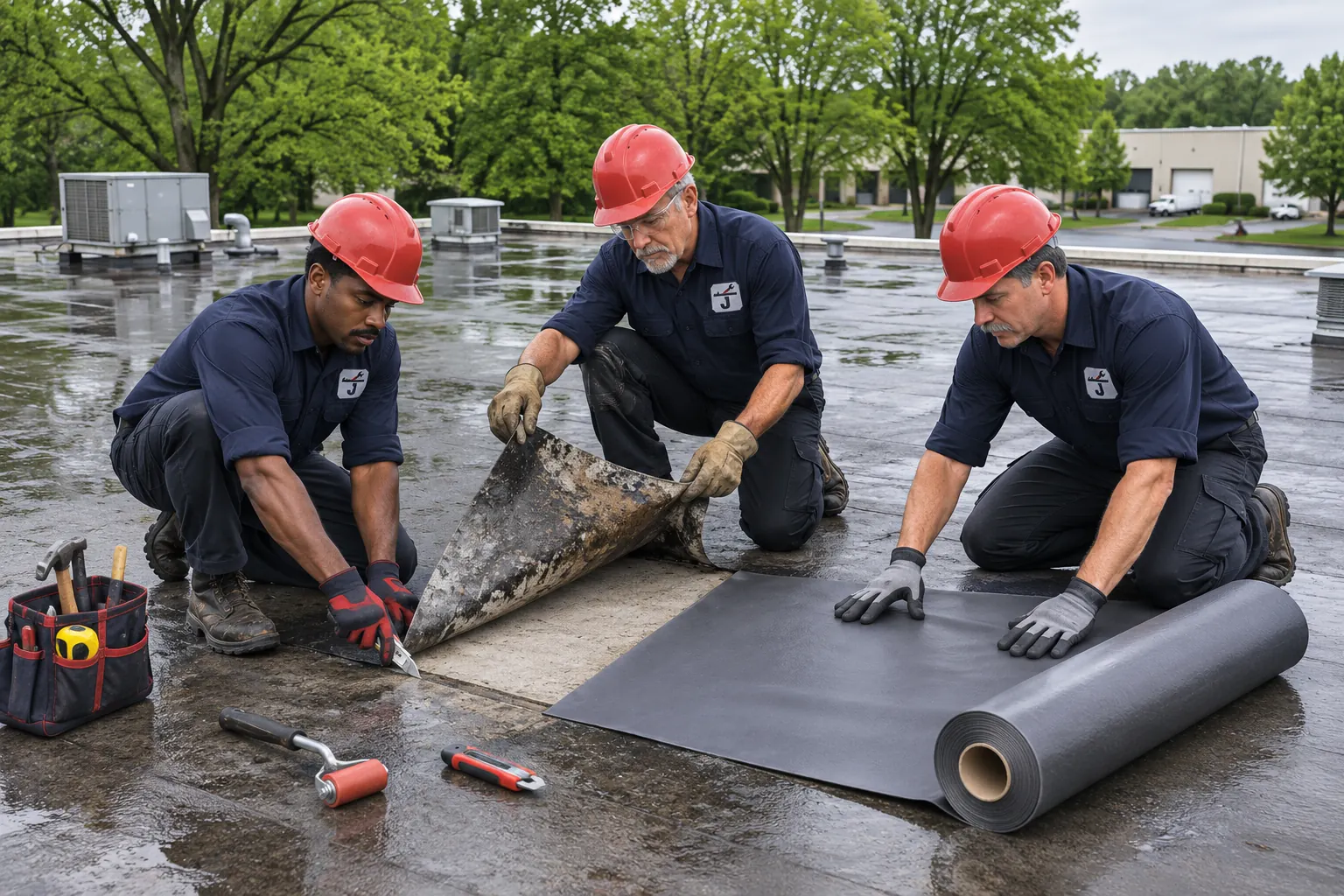
How we find and fix roof leaksPatches, drain resets, and wet insulation cutouts on low-slope care building roofs, with each repair timed around its review path.
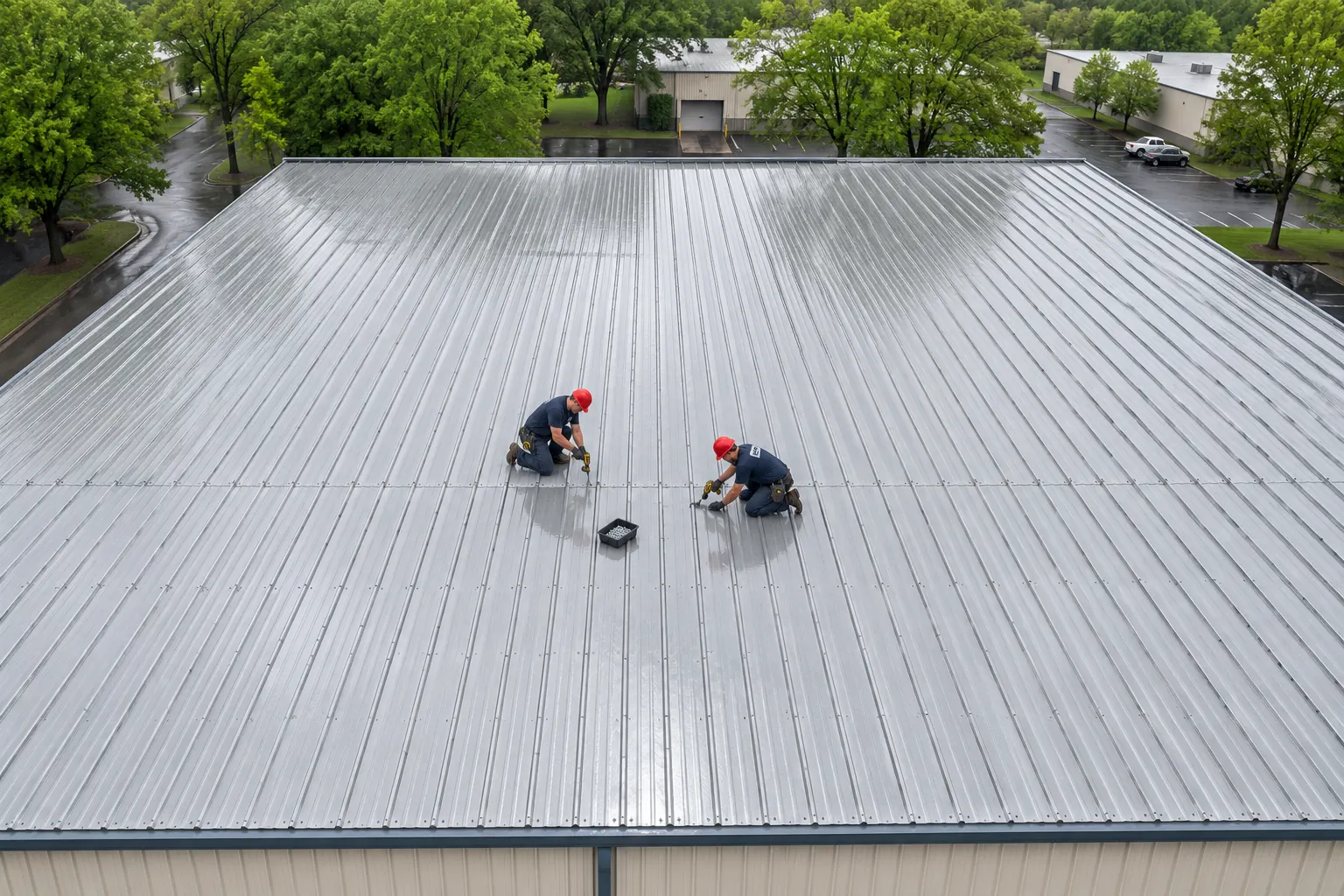
Flat roof repair on care buildingsFastener swaps, end-lap reseals, and rusted panel replacement on metal roofs over Mount Washington retail and office buildings on the city path.
Metal roof repair for shops and officesCall with the room, the building type, and when the drip began. Knowing the building type early tells us whether state review applies to the repair.
State-reviewed repairs add planning steps around the roof work. This is the order from the first visit to the finished repair.
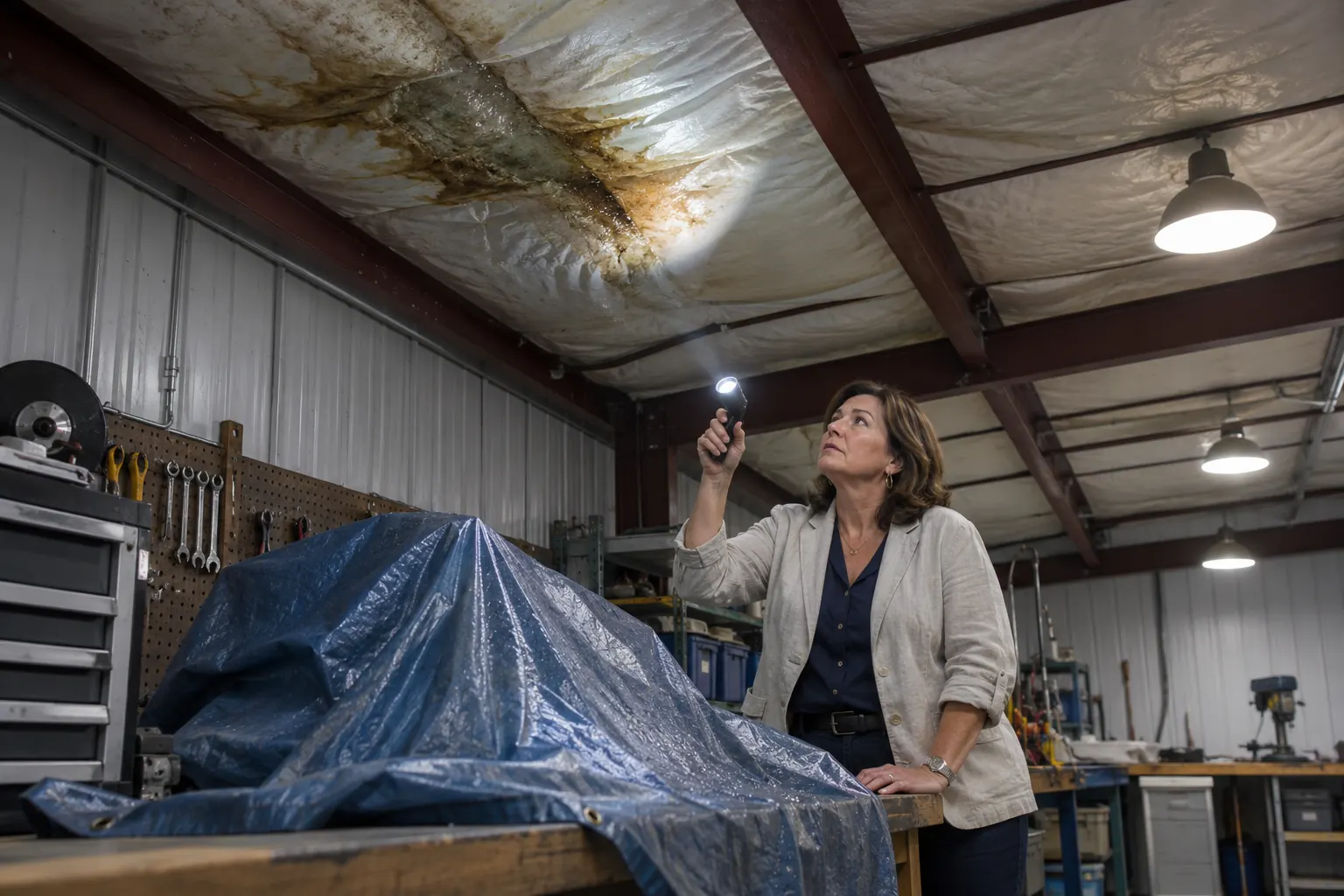
A roofer walks the roof over the reported leak, checks unit curbs, drains, seams, and flashings, and takes moisture readings to find wet insulation or rusted deck below the membrane.
The building's use decides which office reviews the roof work. Hospitals, nursing homes, day cares, and other state-licensed buildings go to the Department of Housing, Buildings and Construction, while other work goes to the city's Building Code Department.
Where rain is coming before the full repair can start, open seams and cracked flashing get a temporary seal of roof cement or tape to protect the rooms below.
Unit lifts, deck cutouts, and drain work are set for times that suit residents, patients, or children, with the state review lead time counted into the plan.
Temporary seals come off, wet boards and rusted deck are replaced, and matching membrane, flashing, and drain parts go in. Each finished repair is photographed for the facility file.
Have a building outside Mount Washington? Call us or send us a message with the address. Our roof repairs also reach these four towns.
Answers for Mount Washington care facility, day care, and retail owners.
Hospitals, nursing homes, day cares, and other state-licensed buildings go to the Kentucky Department of Housing, Buildings and Construction, per the city's Building and Housing page. The city's Building Code Department takes other work. Plan extra lead time when a state repair involves rooftop units, deck, or drains. Retail and office repairs along US 31E stay on the city path.
Drains decide where water goes in a heavy rain. A clogged strainer or a drain bowl set higher than the roof around it leaves water standing over occupied rooms, and that weight and wet time wear seams faster. Clearing strainers on every roof walk keeps small problems from turning into drain work.
Active drips get a temporary seal first, then a permanent repair once the roof is dry. Staff are told which rooms sit under the work area, and unit lifts are timed around heating and cooling needs. Wet ceiling tiles are pointed out so the facility can replace them.
Soft spots underfoot, sagging areas that hold water, and rust stains on the underside of the deck all point to it. These show up most under long-standing leaks near units and drains. A probe or core cut confirms it, and deck replacement goes on the longer review timeline.
Yes, a log of dates, locations, and photos makes repeat problems easy to spot and gives the facility a record of each repair. When new leaks keep appearing in different places, the log shows whether spot repairs still fit the roof or replacement is getting closer.
Wind direction is the usual cause. Wind-driven rain pushes water sideways into wall flashing, counterflashing joints, and parapet caps, while heavy-rain-only leaks point to a drain or scupper that backs up. Noting the date and wind for each leak narrows the search, and NWS Louisville reports give the rain totals.
Tell us the building type and where the water shows. We will sort out the review path and plan the repair from there.
Leave a name and number and we will call you about the leak, seam, or panel you are dealing with.
Or call now: (502) 323-6989