If Your Roof
Screws That Spin Without Tightening
Holes have worn oblong in the purlin under the panel.
Start WithOversized Fastener Swap
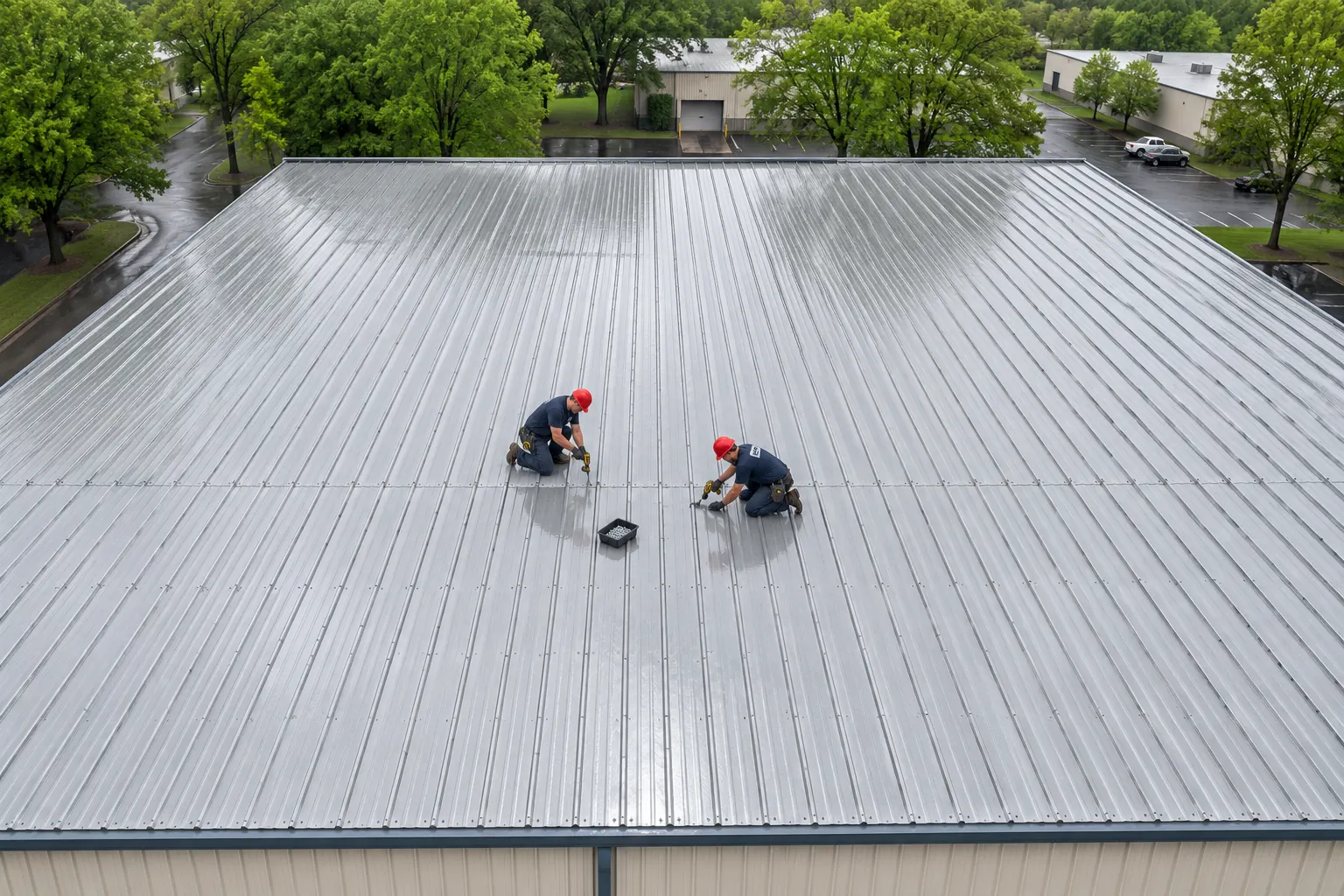
Our Jeffersontown commercial metal roof repair covers R-panel and standing-seam roofs on shops, warehouses, and farm buildings, from fastener rows to ridge caps.
Jeffersontown commercial metal roof repair fits panels that still hold weight, with leaks at joints rather than holes across the bays.
Holes have worn oblong in the purlin under the panel.
Surface rust or pinholes stay close to the overlap.
Faded panels sit flush with the steel around them.
Rust has spread across whole panels or into the deck.
Daily heating and cooling moves the panels, and that movement works joints loose. Leaks follow the joints.
Rubber washers under the screw heads dry out and split. Each one lets a little water down the shank and into the insulation over the purlin.
Sealant between overlapping panels shrinks with age. Water driven uphill by wind slips under the upper panel and wets a strip across the roof.
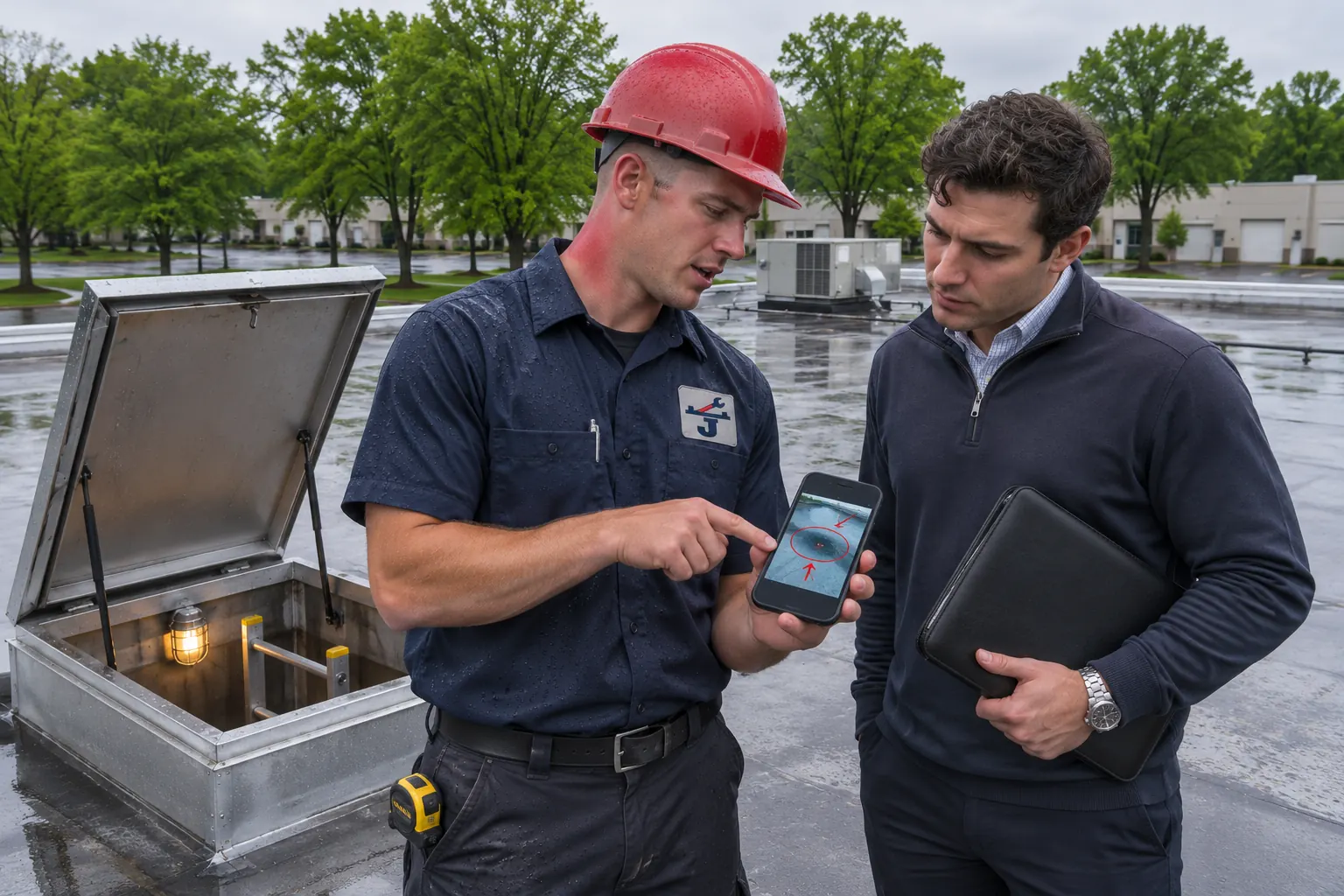
Foam closures under the ridge cap shrink and fall out, and cap fasteners loosen. Blowing rain and snow then get in at the peak.
End joints in long gutter runs open up, and hangers bend under snow or ladders. Overflow runs back along the eave and down the wall.
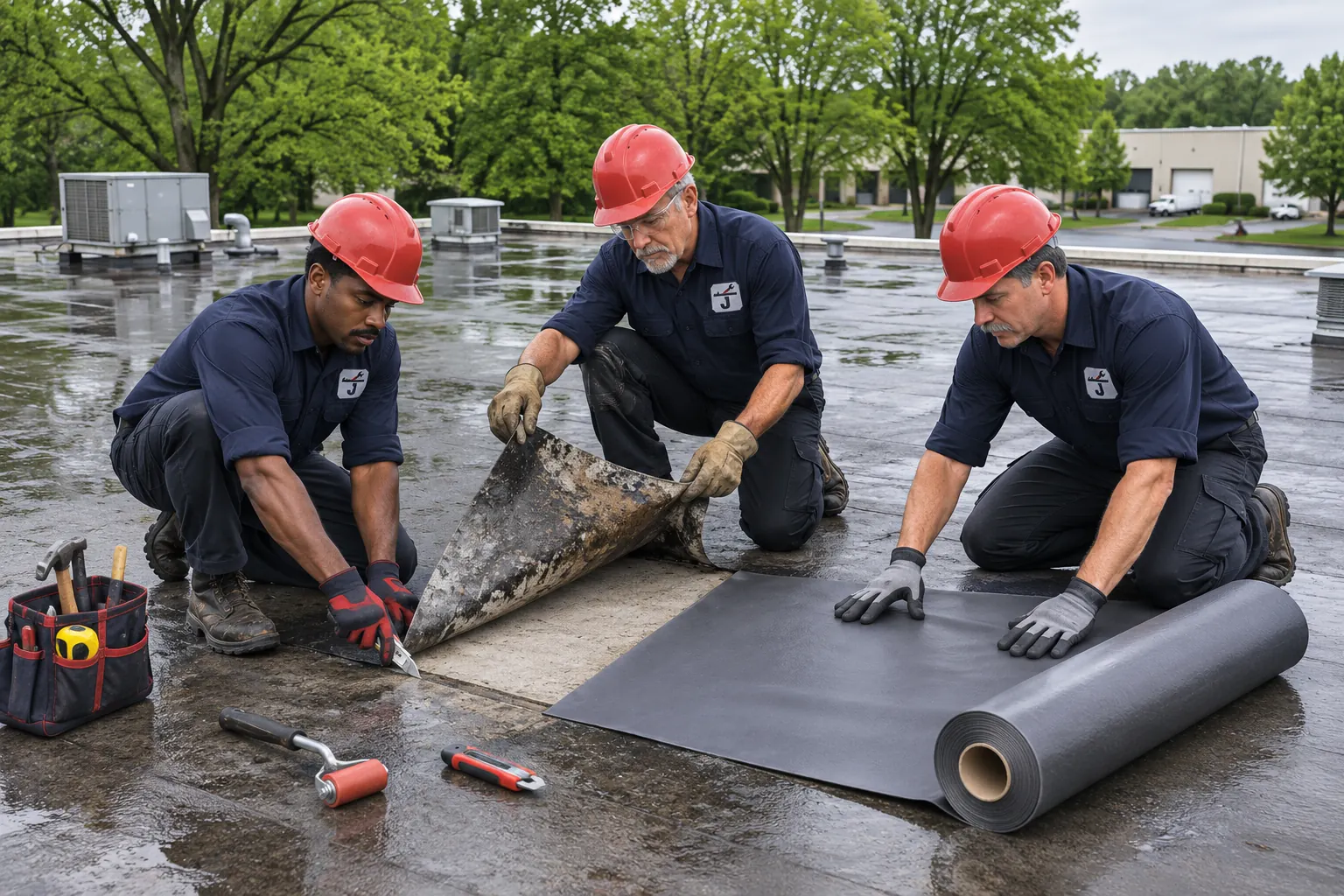
Each repair puts a joint back into working order with parts that match the original roof.
Old screws come out, each hole is checked for rust or wallow, and an oversized screw with a new EPDM washer goes in snug.
Overlaps are cleaned or lifted, fresh butyl tape sealant goes in, and new screws refasten through the lap.
Missing foam closures are replaced, cap laps get new tape, and the cap ends are sealed at the rakes.
Surface rust is wire-brushed and primed, pinholes get a fastened metal patch, and rust-through gets a new section in the same profile and gauge.
Metal roofs fail joint by joint, so each sealed lap and fastener row closes off a specific leak path.
Sealing a bad end lap keeps water from soaking the long strip of insulation that runs under it across the roof.
Washers that seal again keep water off the screw shank, where rust starts in the panel around the hole.
Rows near the eave and ridge carry the most wind load, and tight fasteners there keep panels in place through storms.
New fiberglass skylight panels in the matching rib profile let light in without the cracks that dripped onto the floor.
Resealed seams and rehung sections move roof water to the downspouts instead of over the wall.
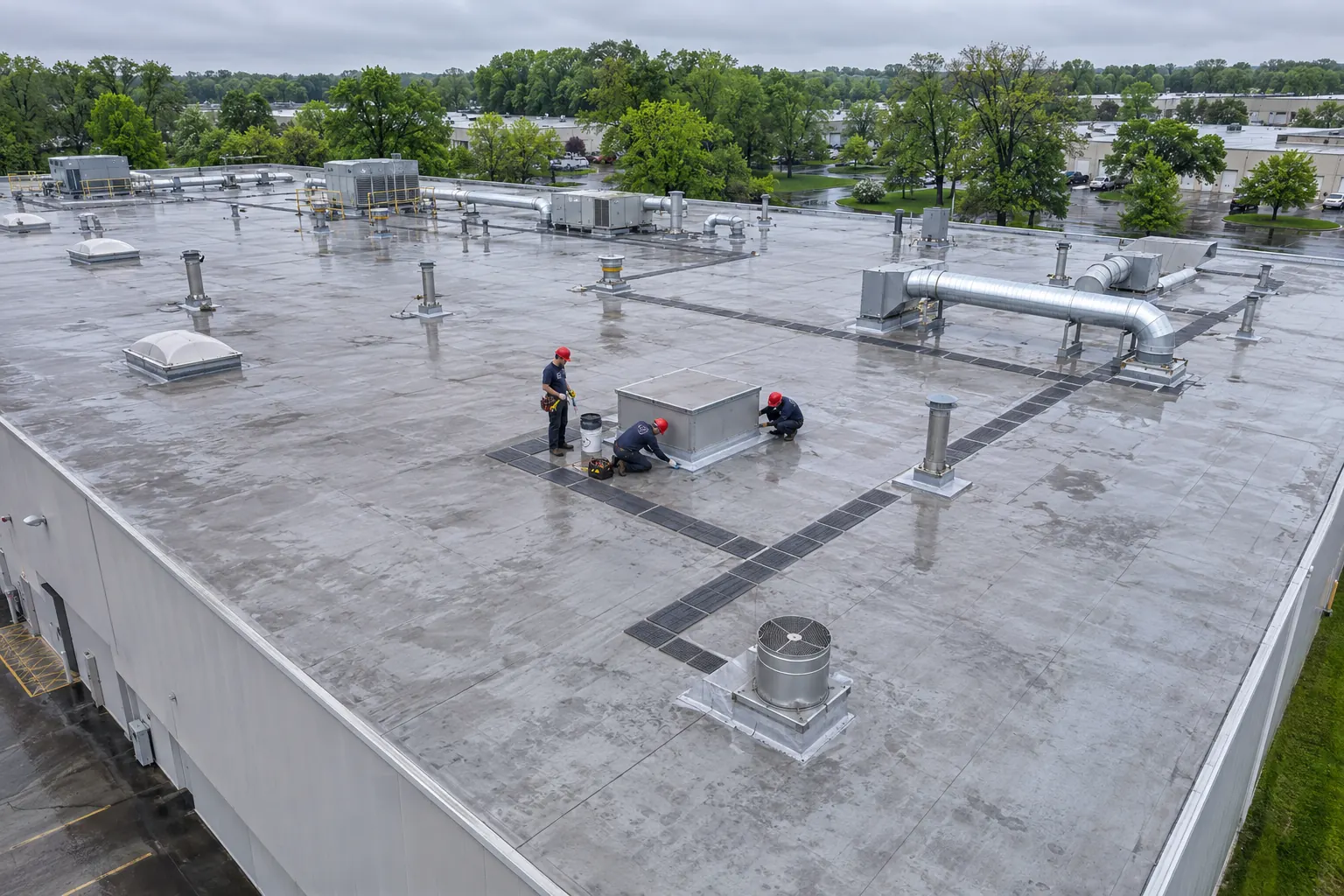
Call and describe where the drips fall. A straight line of drips usually points to one fastener row or end lap, and that gets checked first.
Most of the work happens on the panels, with a check inside the building at the start and the end.
A roofer walks the panel runs, tests screws in each suspect row, checks end laps, ridge caps, skylight panels, and gutters, and photographs every defect.
Water marks inside show which bay is leaking. Water can run along a purlin before dripping, so marks are measured from the walls.
Every screw in the suspect row gets checked, since neighbors fail together. Spinning screws get the next size up with fresh washers.
End laps get new butyl tape and screws. Rusted-through sections are replaced with panels matching the old profile so the ribs nest.
You get dated photos of each repair and a list of items to watch, such as skylight panels or gutter runs near the end of their life.
Metal buildings often share a roof with a flat section or carry equipment that needs its own repair.
Office wings and loading dock roofs on metal buildings are often low-slope membrane, repaired with matched patches.
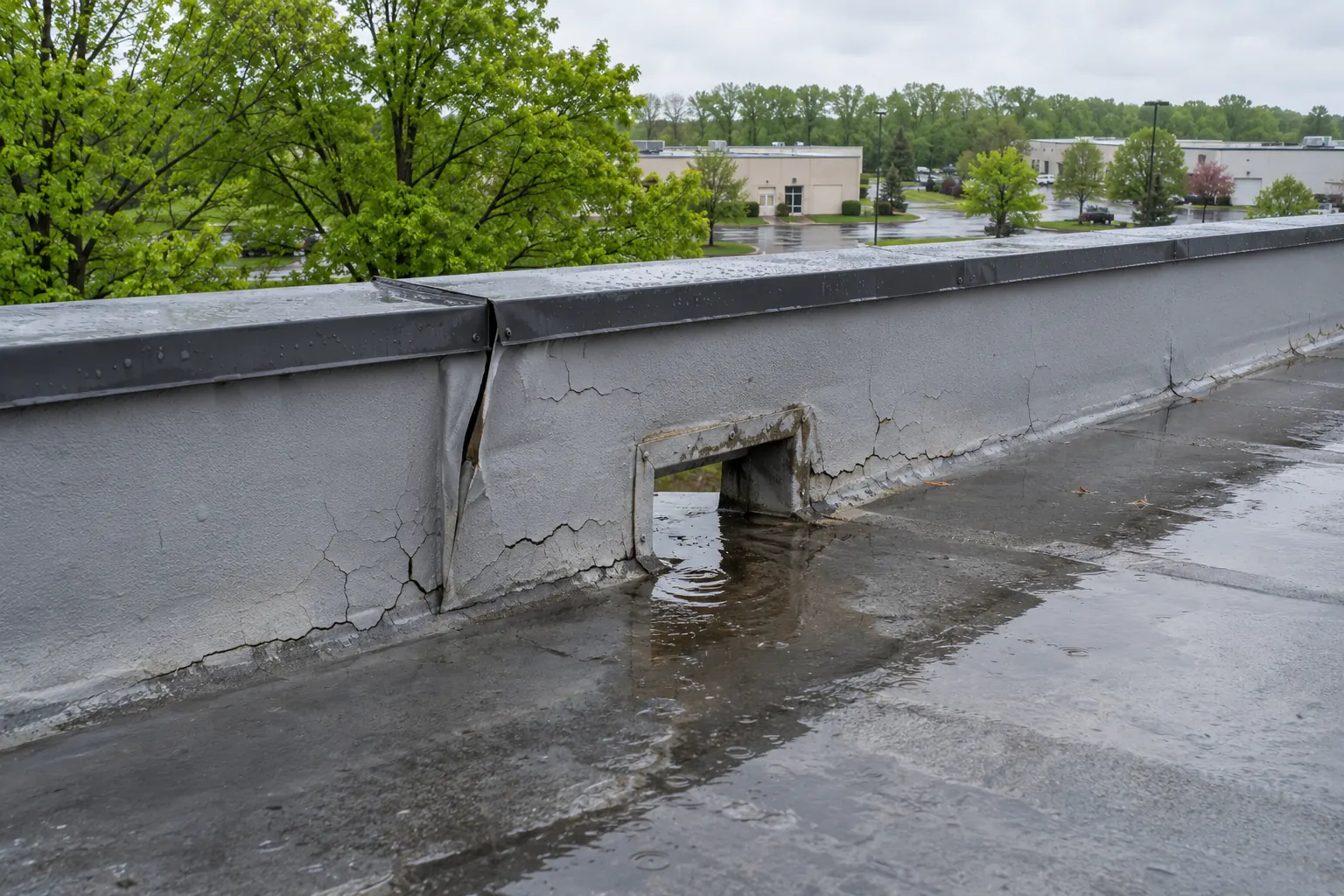
Flat roof repairA leak that shows only in certain storms can start at wall flashing, so it gets traced before any panel work.
Commercial roof leak repairPlant buildings with metal roofs add exhaust fans and pipe penetrations that need their own flashing repairs.
Industrial roof repairQuestions owners ask about exposed-fastener and panel roofs.
Most leaks start at fasteners, end laps, and flashings, where water slips past a joint instead of running off the panel. Exposed-fastener R-panel roofs on shops, warehouses, and farm buildings show it most. Cracked washers, dried lap sealant, shrunken ridge closures, cracked skylight panels, split gutter seams, and loose curb flashings are the usual culprits.
Each screw comes out, the hole is checked for rust or an oblong shape, and a new screw goes in, often one size larger, with a fresh EPDM washer. It is set snug enough to compress the washer without crushing it. Every screw in the row gets checked, since neighbors fail together.
That turns on how far the rust has spread and whether the steel still holds weight. Light surface rust is brushed, primed, and sealed at the fasteners. Small pinholes get a riveted or fastened metal patch. Rust-through along an end lap means a new lower section, and soft, flaking steel means a full panel in the same profile and gauge.
End laps are cleaned or lifted, laid with fresh butyl tape, and refastened with new screws through the lap. Caulk smeared over the joint from above rarely lasts. Ridge caps get new foam closures, fresh tape at the cap laps, new screws into the ribs, and sealed ends at the rakes.
Gutters get split seams cleaned, resealed, and riveted, sagging sections rehung at proper spacing, and outlets cleared and reattached. Cracked or brittle fiberglass skylight panels are replaced with new panels in the same rib profile. Screens or guards over skylights add protection, since faded panels lose strength.
Fastener swaps and panel replacement can go ahead in most dry weather. Butyl tape and sealants bond best on clean, dry steel, so lap work is scheduled for a dry stretch. Panels covered in frost or wet from morning dew wait until the surface dries.
Tell us the building type and where the drips fall. We will check the screws, laps, and caps above them.
Leave a name and number and we will call you about the leak, seam, or panel you are dealing with.
Or call now: (502) 323-6989