Coping
Shifted Coping Caps
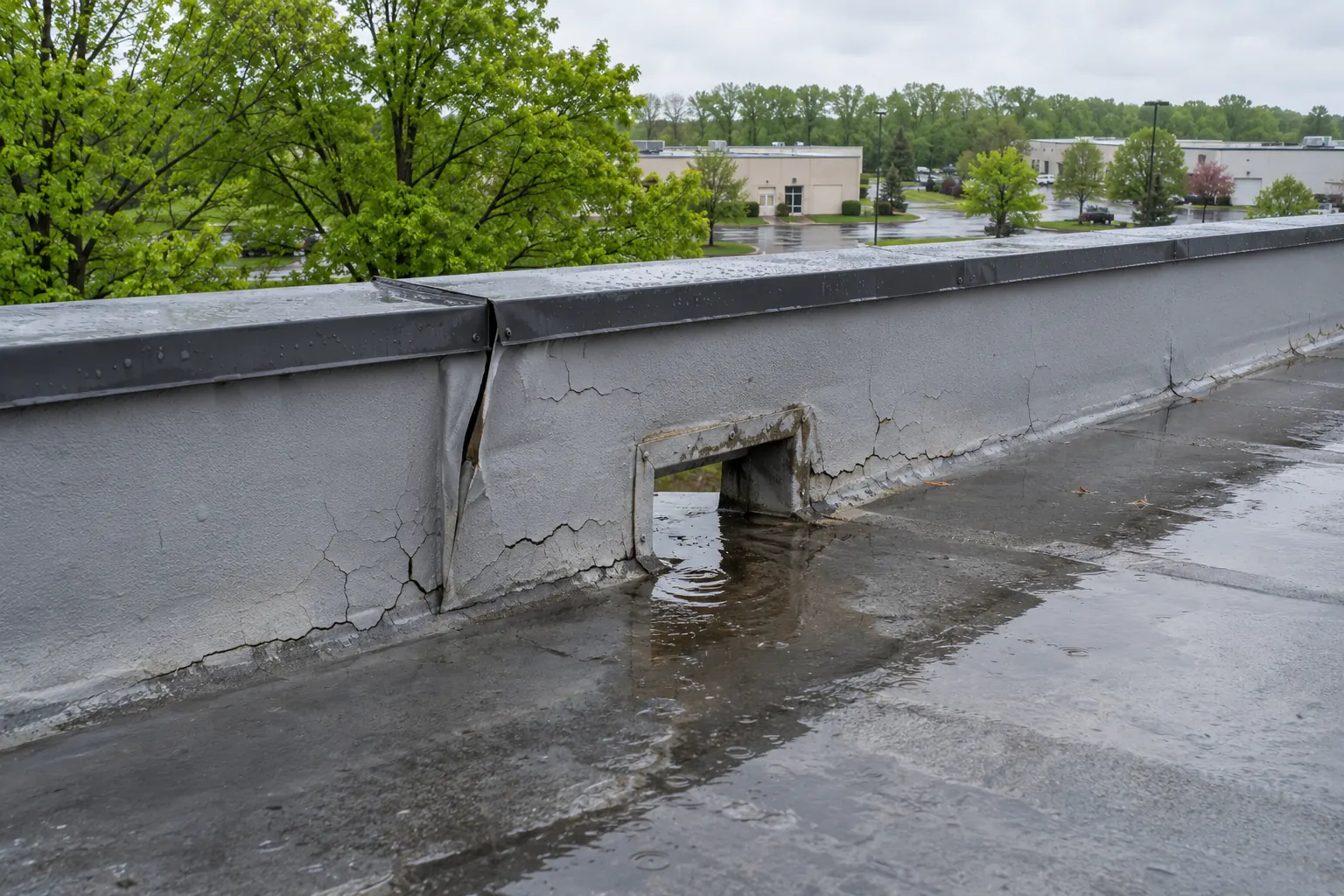
Parapet caps on street-facing walls lift when their cleats loosen in wind. A gap opens at the joint, the paint line breaks, and rain enters the masonry below the cap.
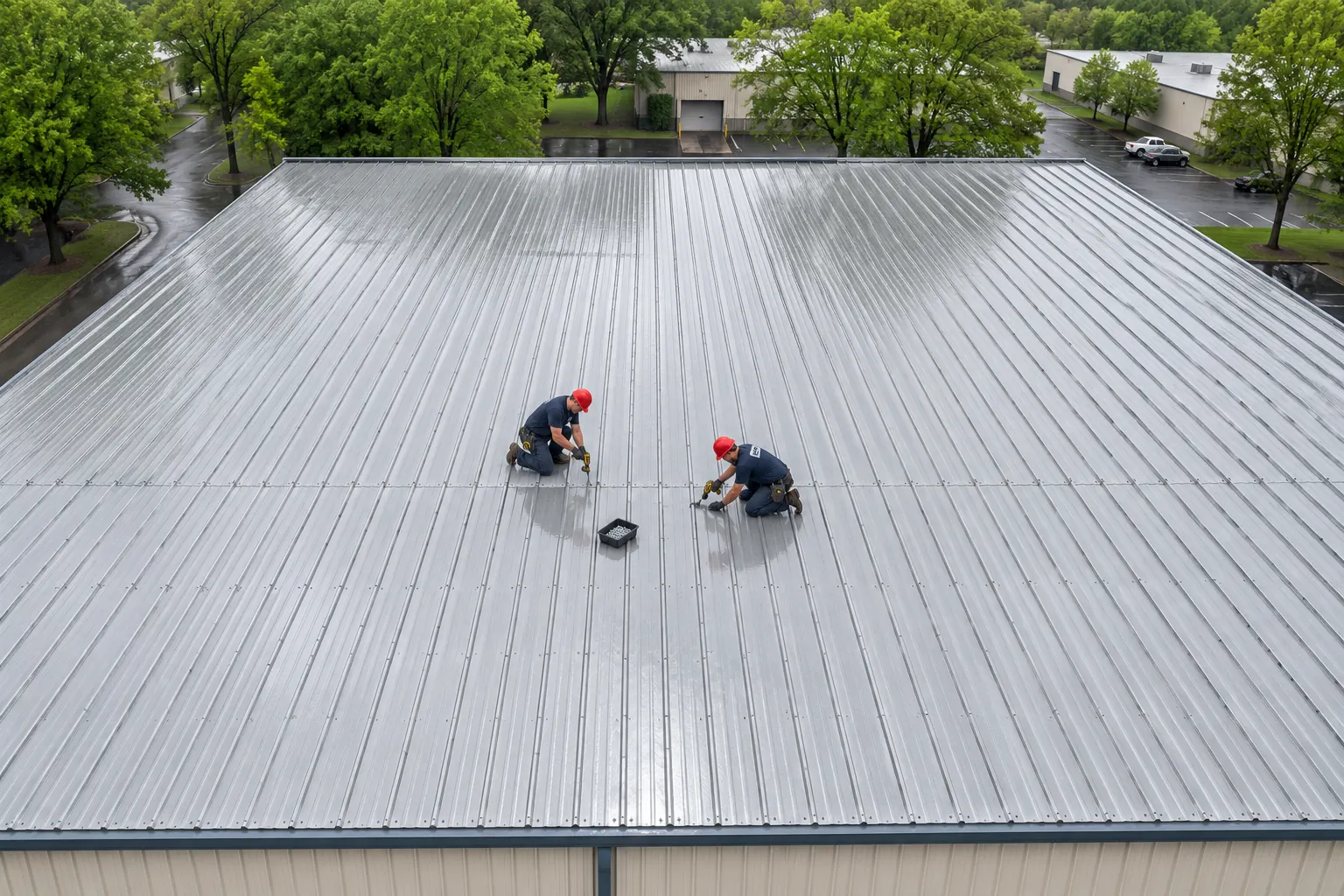
We provide Douglass Hills commercial roof repair for offices and retail buildings, matching visible panels and coping to the original and preparing scope lists for city review.
Douglass Hills commercial roof repair often starts with a phone call to the city. Its Letter of Compliance page says city approval must accompany any Louisville Metro permit, and the City Engineer reviews each letter with a project plan.
Small sealant work and seam patches rarely reach that point. Replacing panels, coping, or edge metal can, so the repair list gets written by roof part early, before any material is ordered.
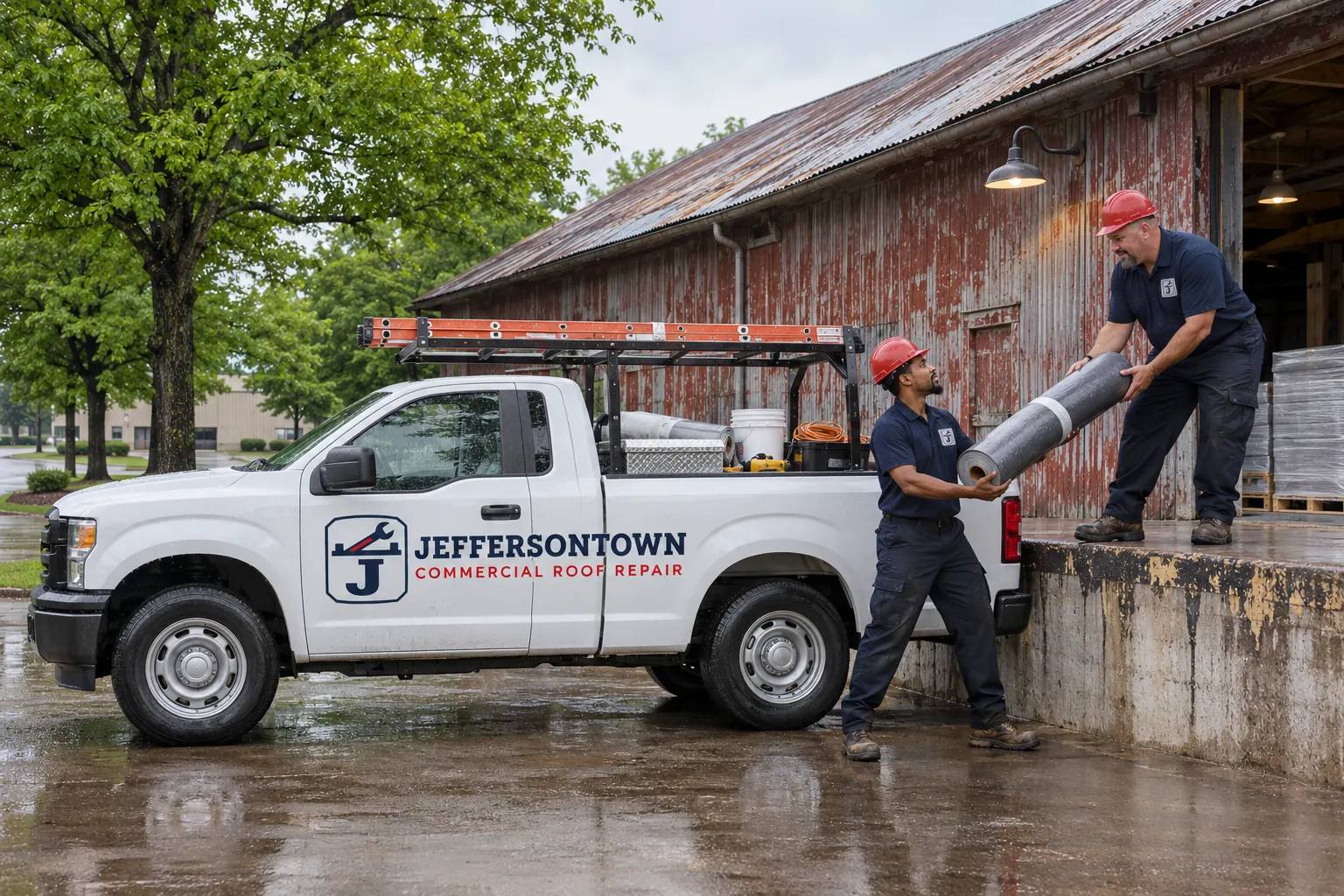
The roofs that draw city attention are the ones people see. These failures show up on street-facing slopes and edges first.
Parapet caps on street-facing walls lift when their cleats loosen in wind. A gap opens at the joint, the paint line breaks, and rain enters the masonry below the cap.
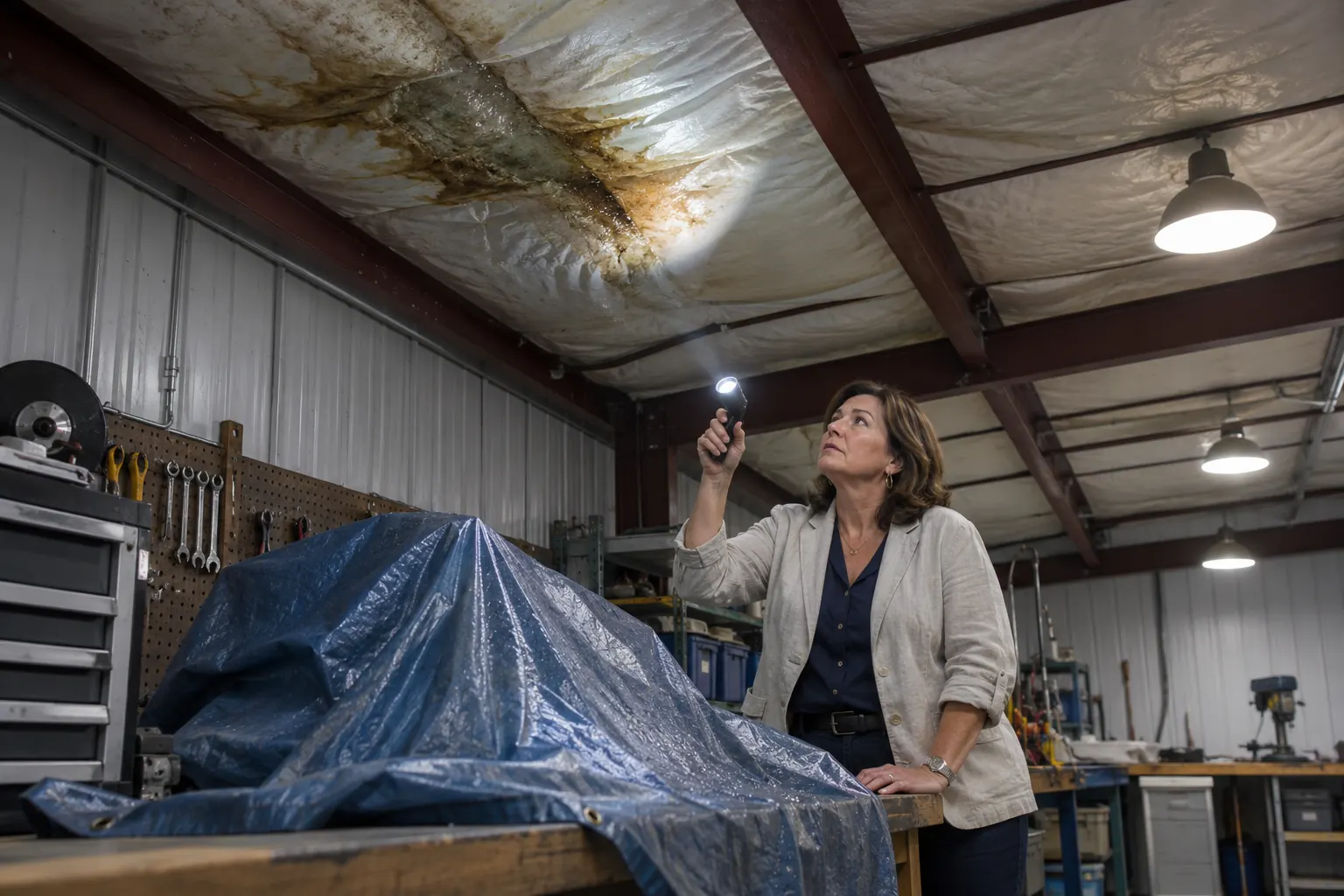
Exposed-fastener panels on front slopes rust first where end laps hold moisture. Brown streaks running down the face usually mean the lap sealant has dried and water sits between sheets.
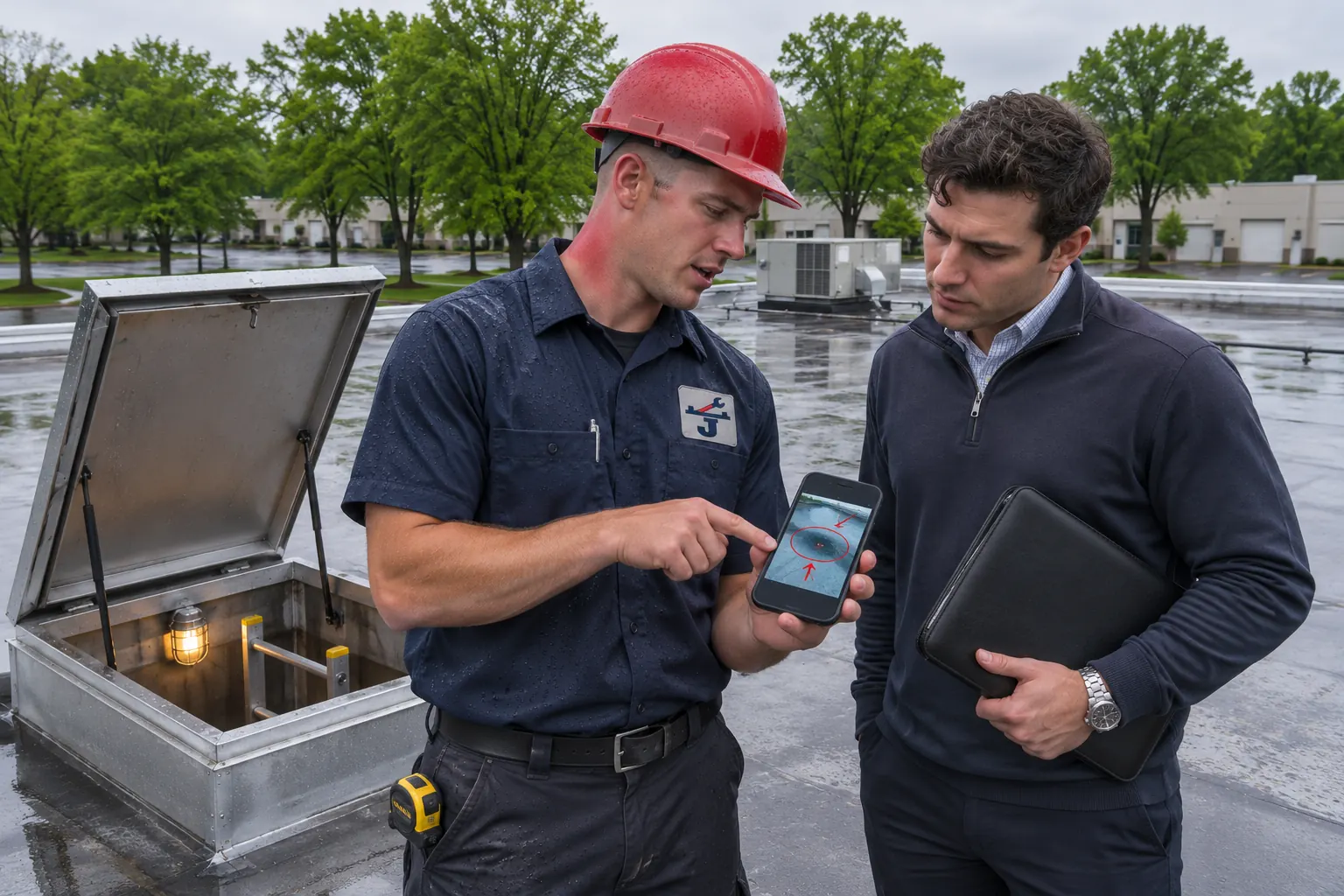
Gutters and edge metal along the eave take ladder hits and wind. A bent drip edge sends water behind the gutter and stains the fascia that faces the parking lot.
Earlier fixes done with off-color panels or bright caulk lines stand out from the road. Removing them and installing matched metal seals the laps properly and returns the face to its original look.
A color and profile match keeps a repair from reading as a patch, and it keeps joints sealed the way the original roof was built.
Replacement panels ordered by the maker's color name and gauge sit flush with the old ribs and match from the curb.
New cleats and fresh joint sealant hold parapet caps down in wind and keep rain out of the masonry.
Cleaning and priming light surface rust at panel laps holds off the holes that would later force a full panel swap.
A written repair list and dated photos of each panel and cap joint give the City Engineer the plan it reviews.
Sealing the cap and counterflashing keeps water from soaking the insulation and framing inside each parapet wall.
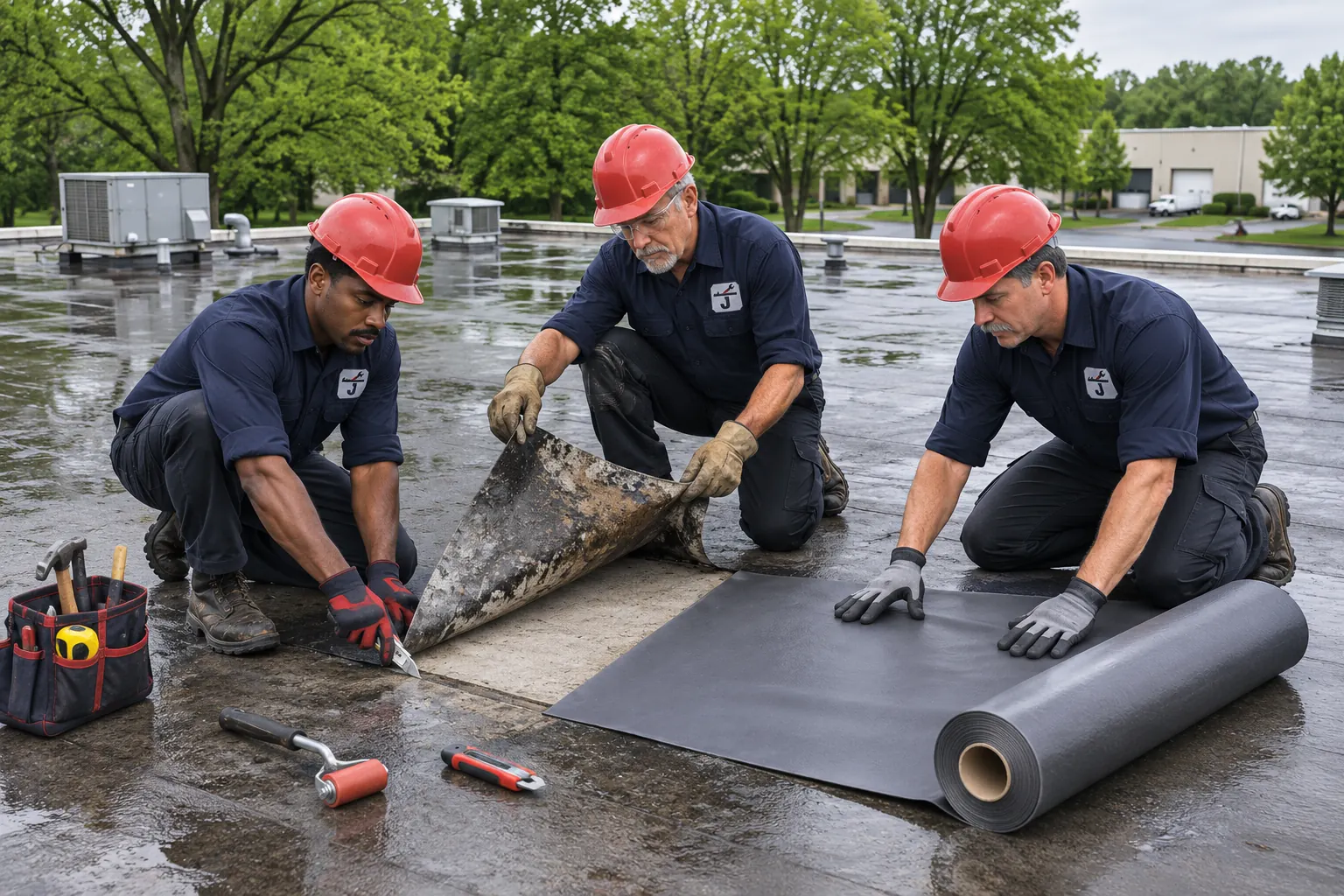
Visible metal and edge repairs make up most calls here, with leak tracing for water that shows up inside.
Swapping rusted or dented panels for new ones in the same profile, gauge, and color, then refastening the laps with fresh washers so the face looks and seals like the original.
Metal panel repair and color matchingResetting coping caps on new cleats, rebuilding base flashing at the parapet, and patching low-slope membrane hidden behind the street-facing walls of offices and shops.
Flat roof and parapet repairTracing a stain inside back to the lap, cap joint, or edge above it, then sealing that spot with material that matches the existing roof system.
How leaks are traced and sealedCall before ordering metal. We will ask about the roof profile and color, then help you assemble the repair list the city asks to see.
City review fits between the roof walk and the repair. Here is the order the work follows.
A roofer walks the roof and edges, records the panel profile, gauge, and color, and photographs every lap, cap joint, and fastener row that needs attention on the visible faces.
The owner shares the repair list with Douglass Hills. When panel, coping, or edge metal replacement needs a Louisville Metro permit, the city reviews its Letter of Compliance with a project plan first.
Replacement panels, coping, and edge metal are ordered by the maker's color name and gauge, so the ribs nest with the existing sheets and the finish blends from the street.
Damaged panels come off, new ones go in with butyl tape at the laps and new screws with fresh washers, and coping caps are reset on new cleats with sealed joints.
Before and after photos, a marked sketch of each panel and coping repair, and a list of items left for later go to the owner for the city file and future planning.
Reach out by phone or online: call us or send us a message. Our commercial roof repair work also covers these towns near Douglass Hills.
Answers about city sign-off, matched metal, and street-facing roof repairs in Douglass Hills.
Yes, for repairs that need a Louisville Metro permit. The city's Letter of Compliance page says its approval must go with any Metro permit, and the City Engineer reviews each letter with a project plan. Street-facing work draws the most attention, so new panels, coping, and patches should match the original color and profile. Ask the city early.
Usually it does not. Sealant work and small patches rarely require a Metro permit, so the city letter seldom comes up. Panel replacement, new coping, and edge metal work are the jobs that tend to raise the question, which is why a written scope helps before ordering.
Start with the panel maker's color name. Many older panels carry a label or part number on the underside, and building records often list the profile and gauge. When neither exists, a sample cut from a hidden edge lets the supplier match the color and rib shape.
Wind and daily movement work the cleats loose. Coping caps expand and shrink with temperature swings, and the joint sealant between caps cracks over time. Once a cap lifts, wind gets under it more easily and rain soaks the parapet below.
Light surface rust can be cleaned, primed, and sealed at the fasteners. Pinholes take a fastened metal patch, while flaking steel or rust-through along an end lap means replacing the panel or its lower section. On visible slopes, a patch also needs to match the surrounding finish.
They come off. Caulk smeared over a lap rarely seals the joint underneath, and off-color patches draw the eye from the street. Removing them lets the lap be resealed with butyl tape and refastened, and the finished area matches the roof around it.
Send photos of the panels or coping you want fixed. We will walk the roof and prepare a repair list for the city.
Leave a name and number and we will call you about the leak, seam, or panel you are dealing with.
Or call now: (502) 323-6989