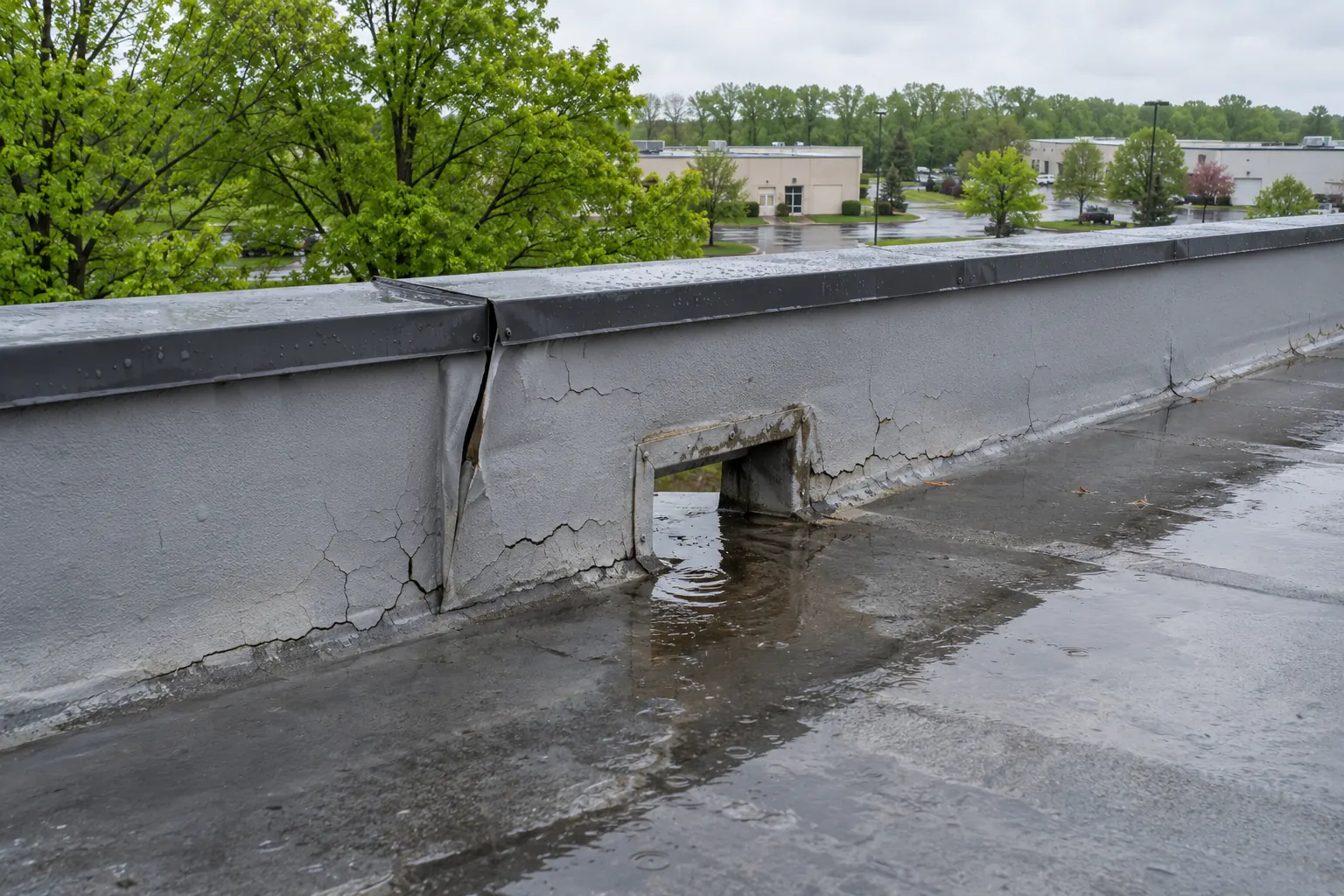
Mast Boot
Cracked Mast Boot
Rubber boots sealing the service mast to the panel crack in the sun. Rain then runs down the mast and drips along the wall just inside the eave.
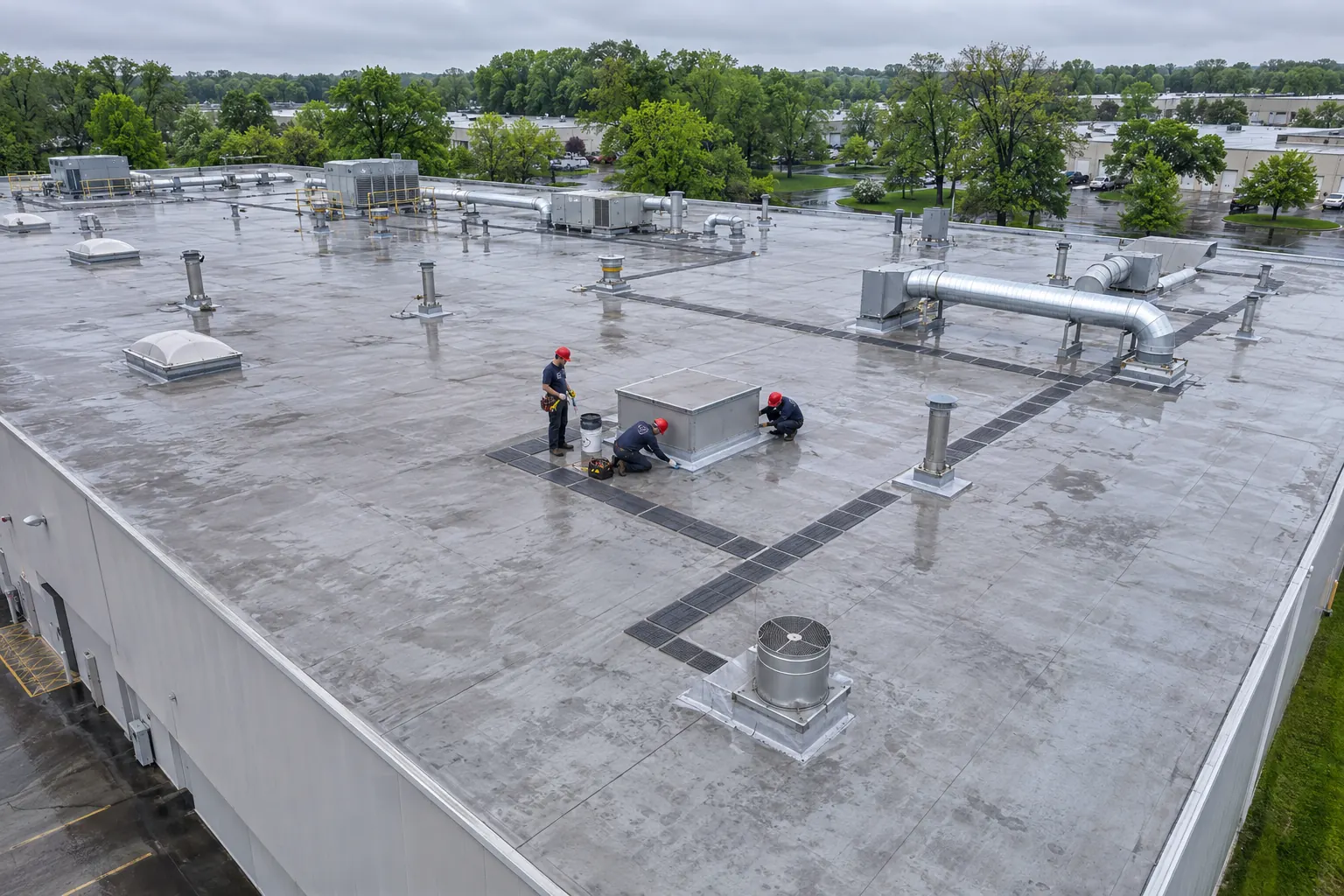
We provide Taylorsville commercial roof repair on metal shop and storage buildings, from backed-out screws to leaks around the service mast near the eave.
Taylorsville commercial roof repair often puts the roofer close to live power. On metal shop and storage buildings here, the electric service mast commonly passes through the roof near the eave.
Spencer County is served in part by Salt River Electric, Blue Grass Energy, and Shelby Energy. The electric bill shows which one serves the building, and an electrician sets any shutoff with that co-op.
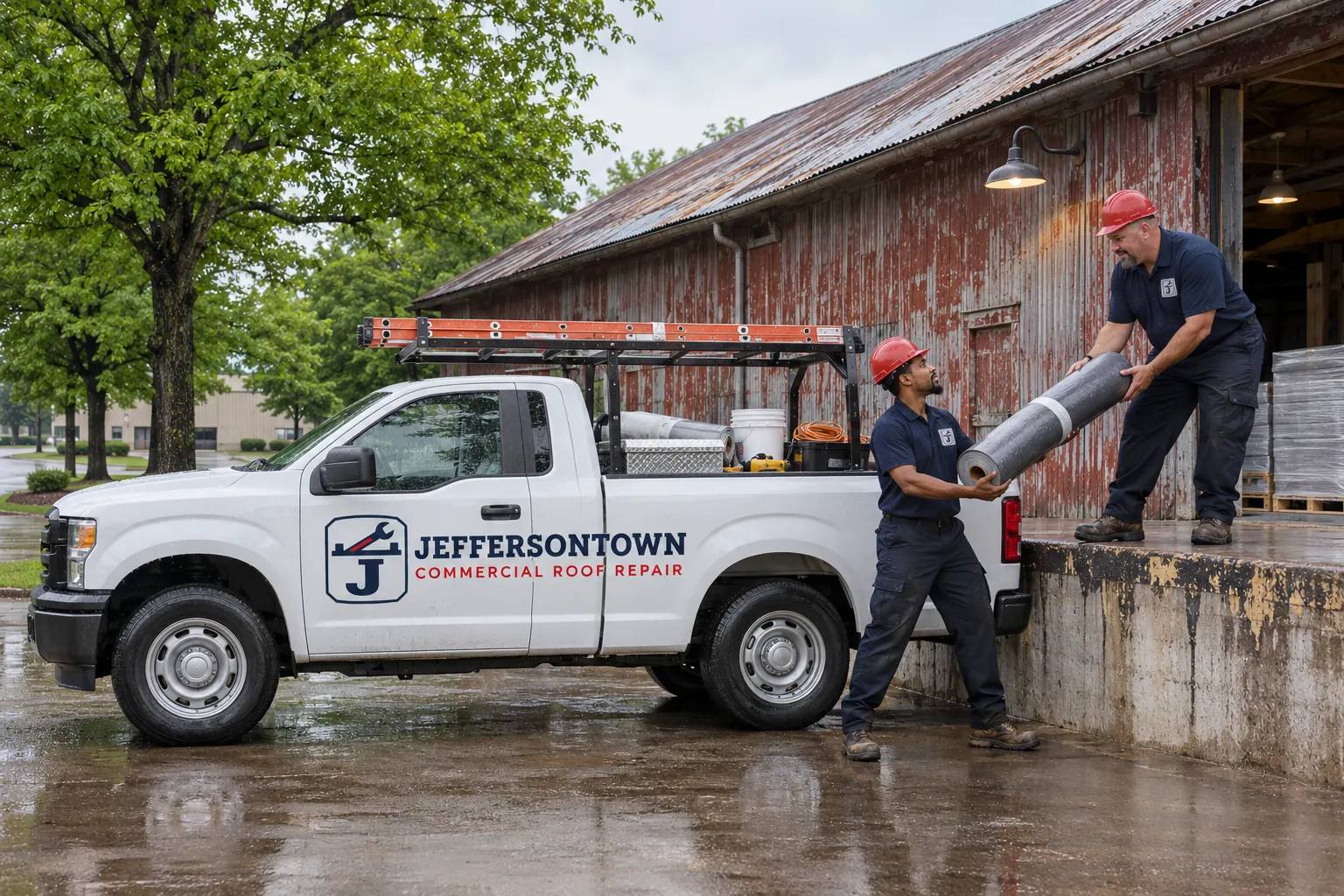
Exposed-fastener metal roofs leak at their joints. These four spots get checked first on a Taylorsville shop or storage building.
Rubber boots sealing the service mast to the panel crack in the sun. Rain then runs down the mast and drips along the wall just inside the eave.
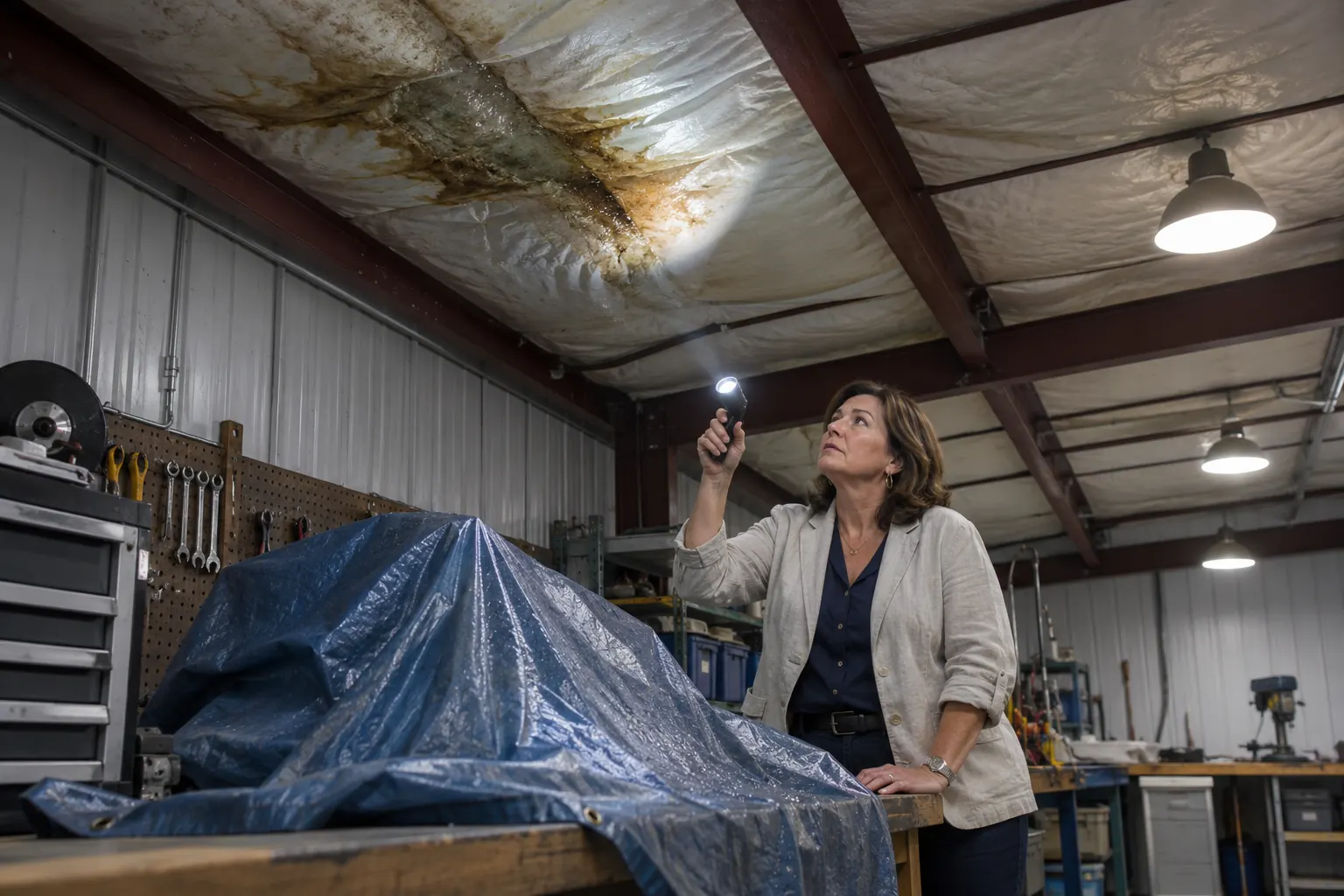
Heat and cold move the panels every day, and screws work loose in the purlins. Cracked washers under the heads let water follow each shank inside.
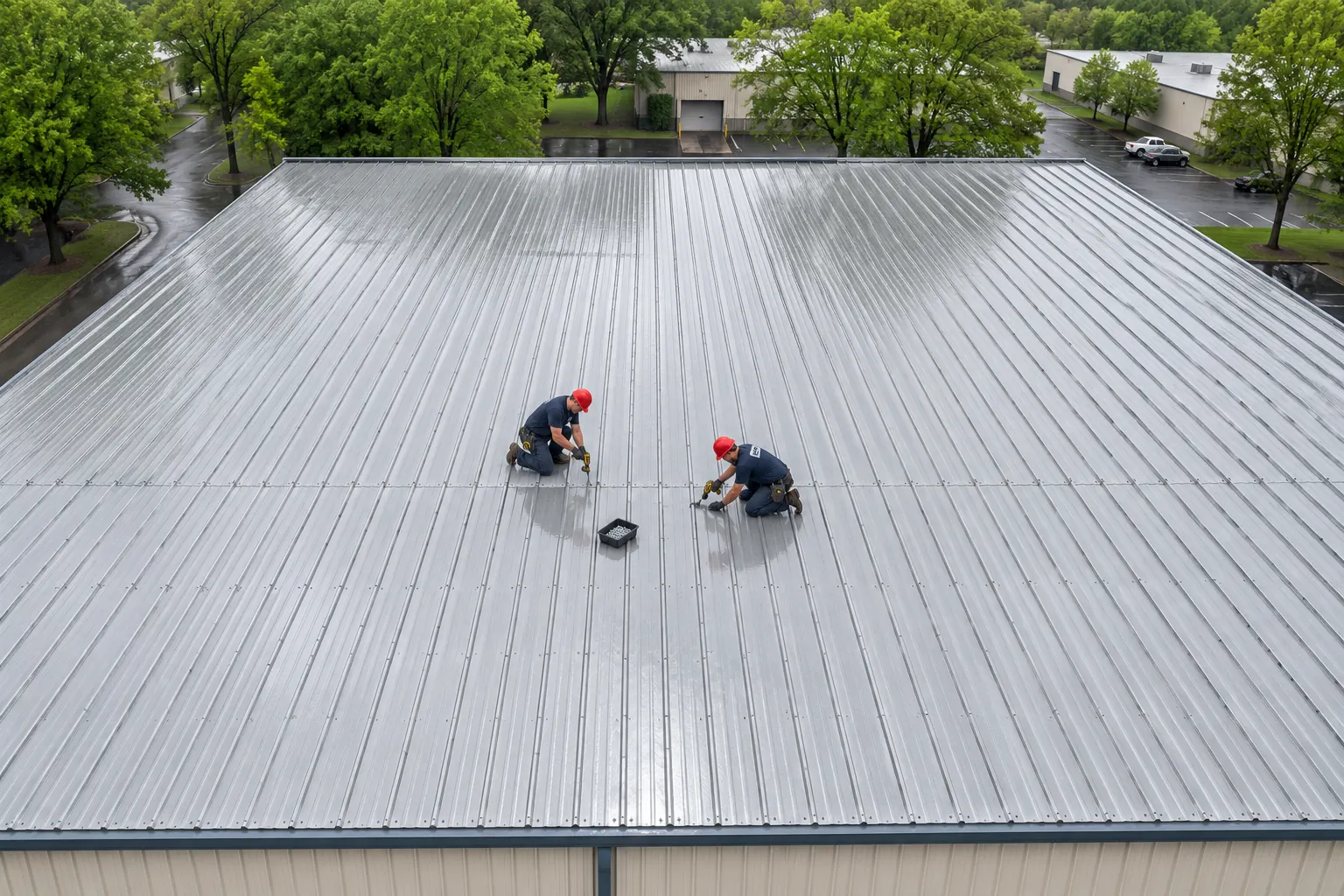
Where one panel overlaps the next down the slope, the sealant dries and shrinks. One bad lap can wet a strip of insulation running the width of the roof.
Gutters along the eave split at their seams and bend under ladders. Missing foam closures under the panel ribs let wind-driven rain in at that same edge.
Repairs at the eave and mast protect the stored equipment, tools, and wiring below.
Sealed screws and end laps over storage bays keep equipment and stock away from drips during spring storms.
A tight mast boot keeps rain from running down the mast toward the meter base and service entrance inside.
New washers and resealed laps stop water from sitting at screw holes, where rust starts on the steel.
Insulation under the panels stays dry once end laps are resealed, so it keeps holding heat through winter.
Every screw row, lap, and boot repaired is noted by bay and photographed for the owner's records.
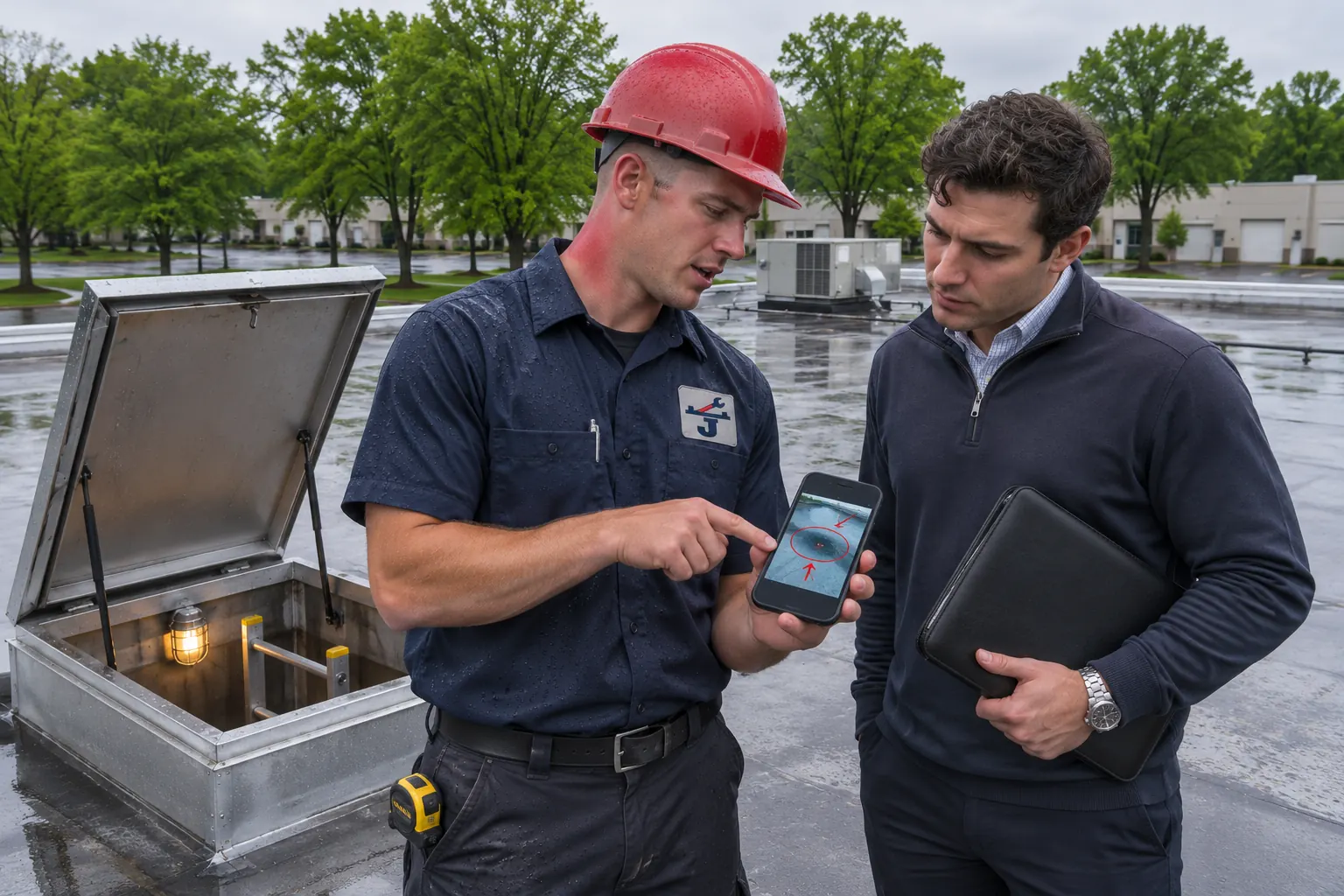
Three services cover most shop and storage roof work. Each card links to the full service page.
Fastener swaps with fresh EPDM washers, end-lap reseals with butyl tape, and matched panels for rusted-through sections on shop and storage roofs.
Metal shop roof repairFollowing water stains along the purlins back to the mast boot, screw row, or lap above, then sealing that point while staying clear of the weatherhead.
Leak tracing on metal buildingsLarger storage and production roofs surveyed by bay, with each defect numbered on a roof plan and repaired in order of leak risk.
Larger industrial roof repairKeep clear of the wiring and call us. Have the electric bill handy so we know which co-op serves the building before anyone goes near the mast.
Steps switch between the roof and the building, including the power side. Each is marked where it happens.
A roofer walks the metal roof row by row, checks every screw, end lap, and ridge cap, and looks closely at the mast boot and weatherhead near the eave without touching them.
The electric bill shows whether Salt River Electric, Blue Grass Energy, or Shelby Energy serves the building. That matters whenever a panel or boot repair sits next to the service mast.
When work must happen close to the weatherhead or a unit disconnect, an electrician arranges the shutoff with the co-op. Panel and boot work near the mast waits until that is set.
Backed-out screws come out for oversized ones with new washers, dried laps get fresh butyl tape, and the mast boot is replaced where the rubber has cracked.
Once repairs are done, the suspect screw rows and the mast area get a controlled water test, and inside drips are checked again before the roof is closed out.
Run a shop or farm building nearby? Call us or send us a message for a look. We also repair commercial roofs in these towns.
Answers on metal shop roofs, service masts, and power for Taylorsville buildings.
Look at the electric bill first. Salt River Electric, Blue Grass Energy, and Shelby Energy each serve parts of Spencer County, according to East Kentucky Power Cooperative. The provider matters when a repair involves the service mast or a unit disconnect. Shop masts here often pass through near the eave, so repairs stay clear of the weatherhead.
The Spencer County building inspector is the first call. Small patches and sealant work rarely draw a permit, while panel replacement and deck repair often do. Describe the scope by item, such as the number of panels and any purlin repair, when you call.
Water dripping across a wide area on cool, dry mornings points to condensation. A leak follows rain and drips from one spot or a short line, usually under a screw row or lap. Condensation calls for ventilation or insulation work, while a leak calls for a roof repair.
Small pinholes take a fastened metal patch set in sealant. Rust-through along an end lap, or soft and flaking steel across a panel, calls for replacement. New panels need the same profile and gauge as the old ones so the ribs nest and the laps seal.
Check the eave and rake edges first, then the ridge cap and any skylight panels. Wind lifts panels and pulls screws at the edges, and it can bend the service mast or tear its boot. Take dated photos for the insurance claim before temporary sealing starts.
Cracked or brittle skylight panels come out, and new ones in the same rib profile go in, sealed at each lap and fastened like the steel around them. Faded panels lose strength and sit flush with the roof, so screens or guards go over them to protect anyone walking the roof.
Send the address and a photo of the mast area if you have one. We will plan the visit around the power side.
Leave a name and number and we will call you about the leak, seam, or panel you are dealing with.
Or call now: (502) 323-6989