Curbs
Cracked Curb Flashing
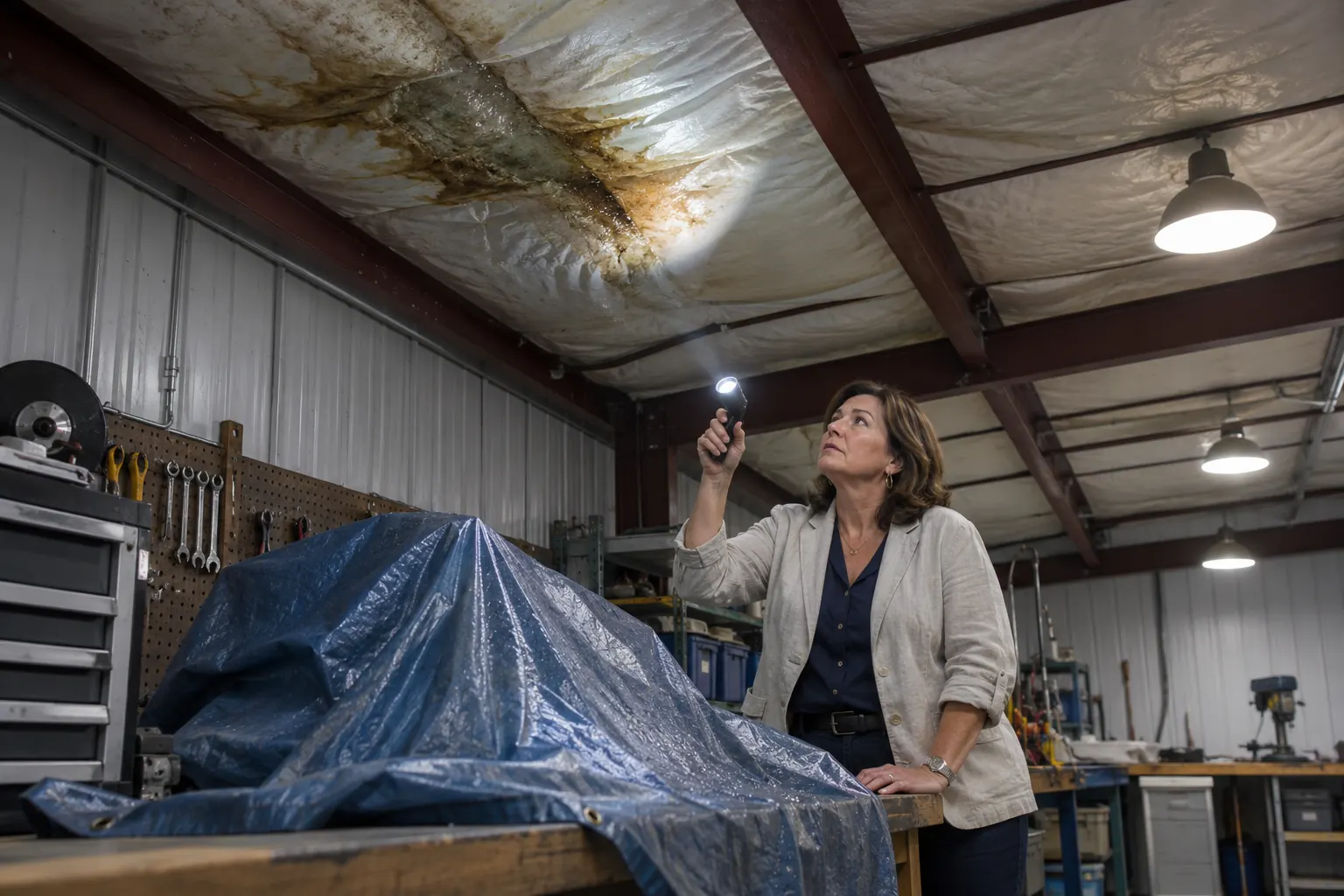
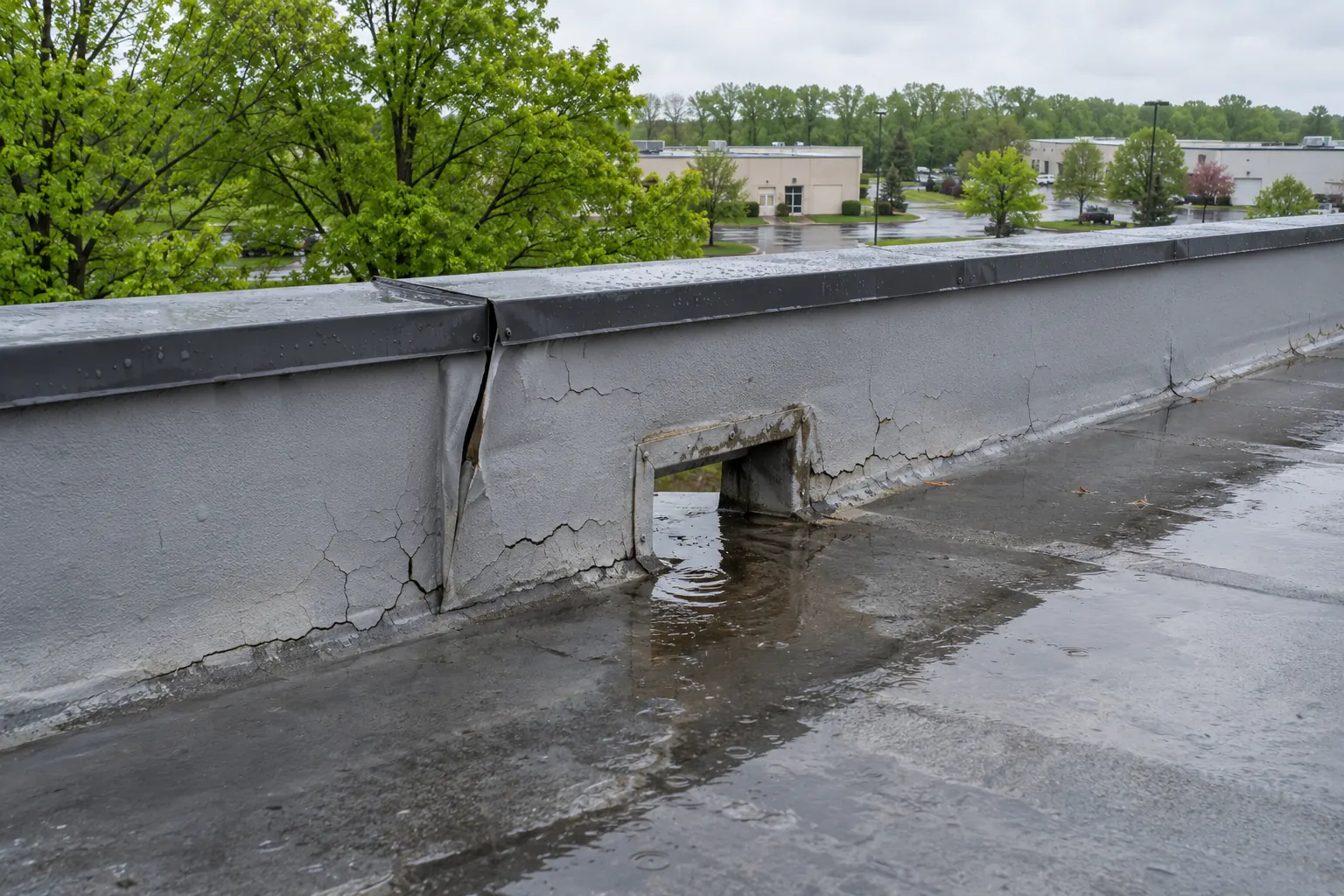
Corners of unit curbs crack as service techs step on them and the unit vibrates. Water slips under the flashing and runs along the deck toward the floor below.
Simpsonville commercial roof repair for production and distribution buildings, with curb leaks, unit lifts, and conduit moves planned as one sequence.
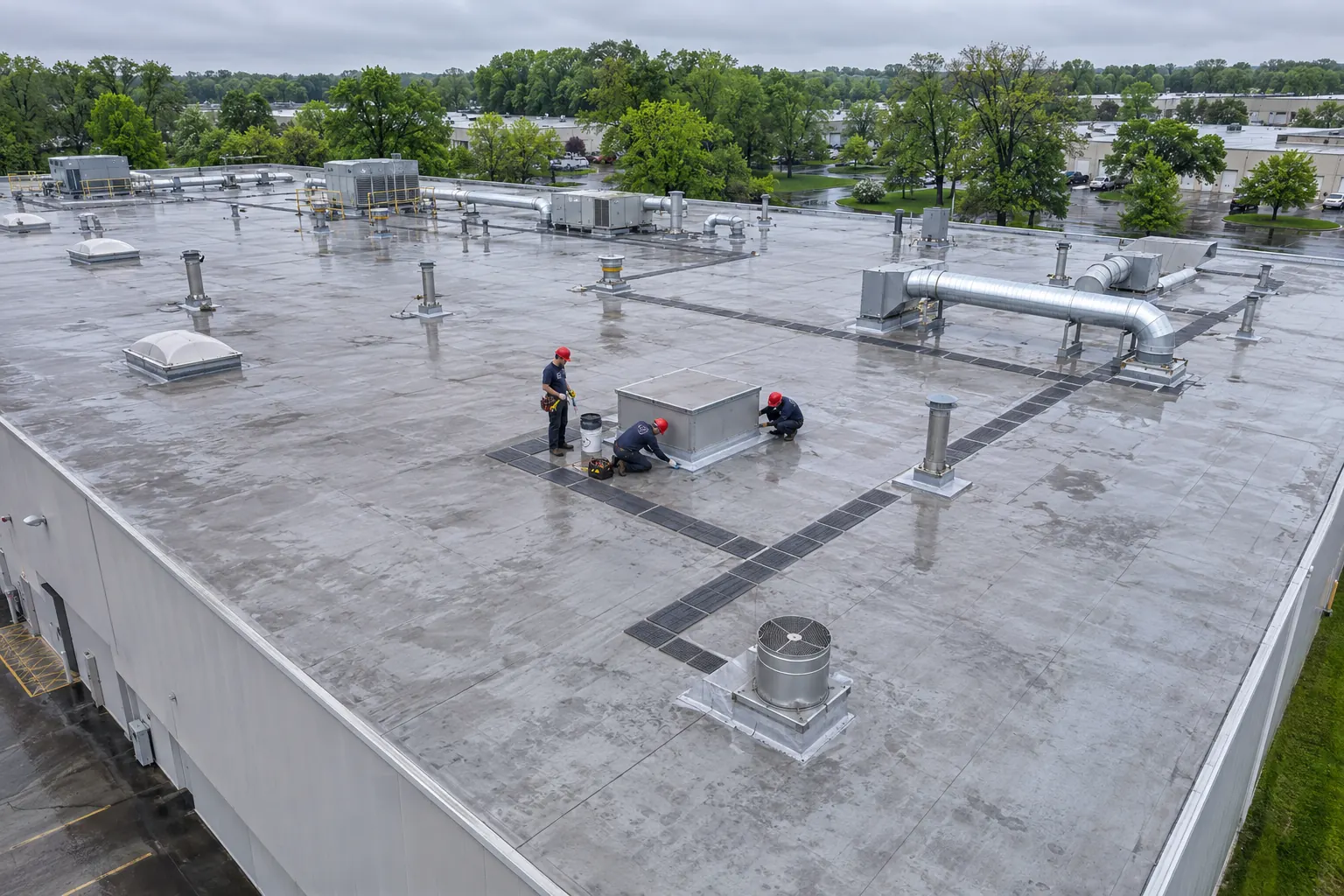
Simpsonville commercial roof repair on production and distribution buildings often centers on the curbs under rooftop units. When a curb leaks, a lasting fix can mean lifting the unit and moving the conduit that feeds it before the flashing is rebuilt.
That work touches two inspectors. The Shelby County electrical inspector handles wiring changes once a permit number exists, and the City of Simpsonville building inspector covers building work inside city limits. We plan the disconnect, the curb work, and the reset as one sequence.
Large roofs over production and storage space collect equipment, conduit, and foot traffic. These are the places where water gets through.
Corners of unit curbs crack as service techs step on them and the unit vibrates. Water slips under the flashing and runs along the deck toward the floor below.
Electrical conduit that drops through the roof beside a unit relies on a boot or pitch pan. Once the pan filler shrinks, rain follows the pipe into the building.
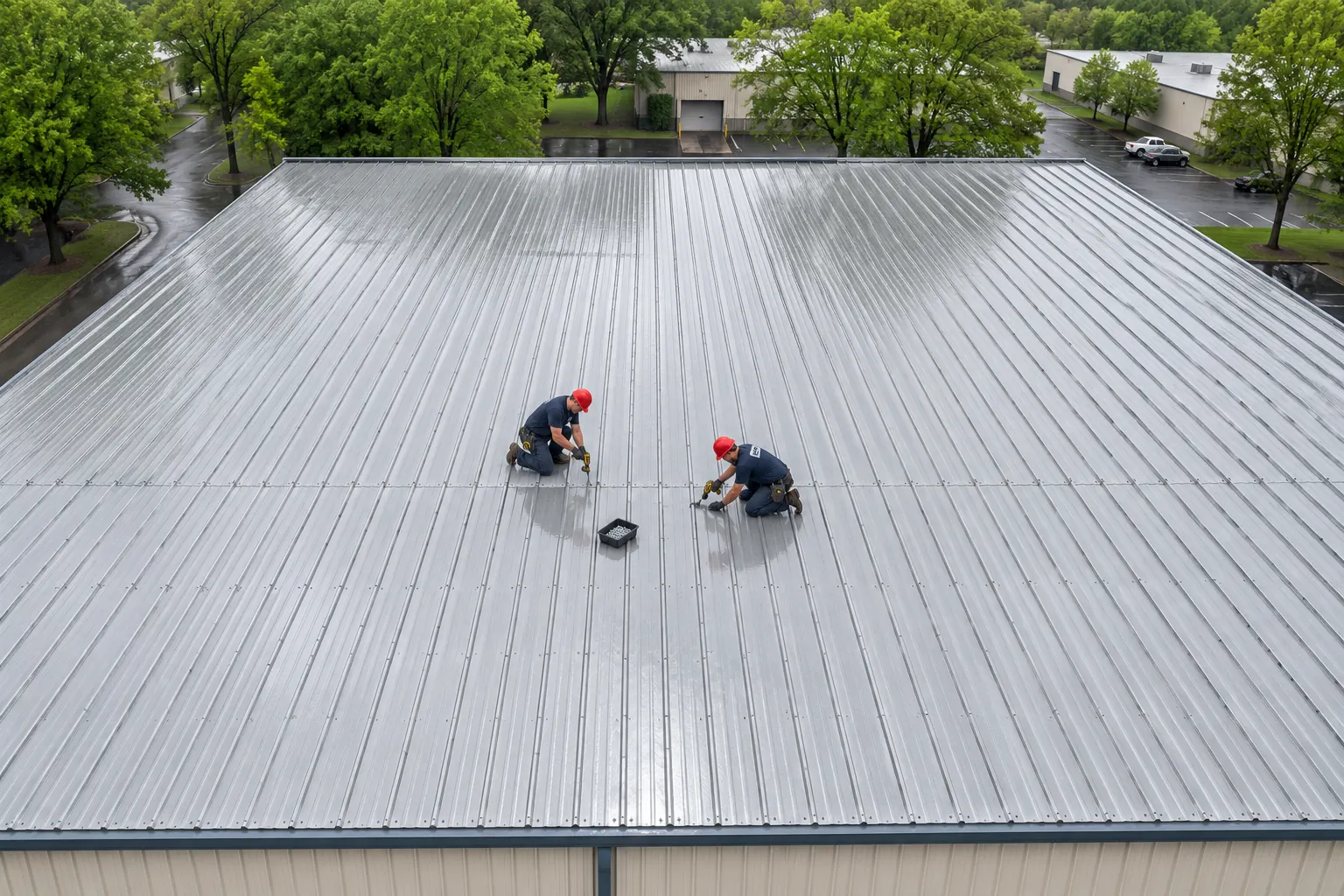
Metal roof sections over storage bays lose screw washers to heat and cold. Every spinning screw near a unit or ridge becomes an opening above stored product.
Packaging scraps and debris from service visits collect at drain strainers. Standing water then rises against curb bases and finds every weak seam nearby.
Doing the electrical, unit, and roof work in one order keeps each trade from undoing the work of another.
A set order for disconnect, curb reflashing, and reset gives the plant a known date for the unit to run again.
Reflashed curbs and sealed conduit boots stop drips over machines, racks, and packed goods below the roof deck.
Wet boards around a curb are cut out while the unit is lifted, so the membrane is opened one time.
Conduit moves at each rooftop unit are checked by the Shelby County electrical inspector once a permit number exists for the job.
Each curb gets its own entry with dates, photos, and the unit it serves, which shows leak patterns across a large roof.
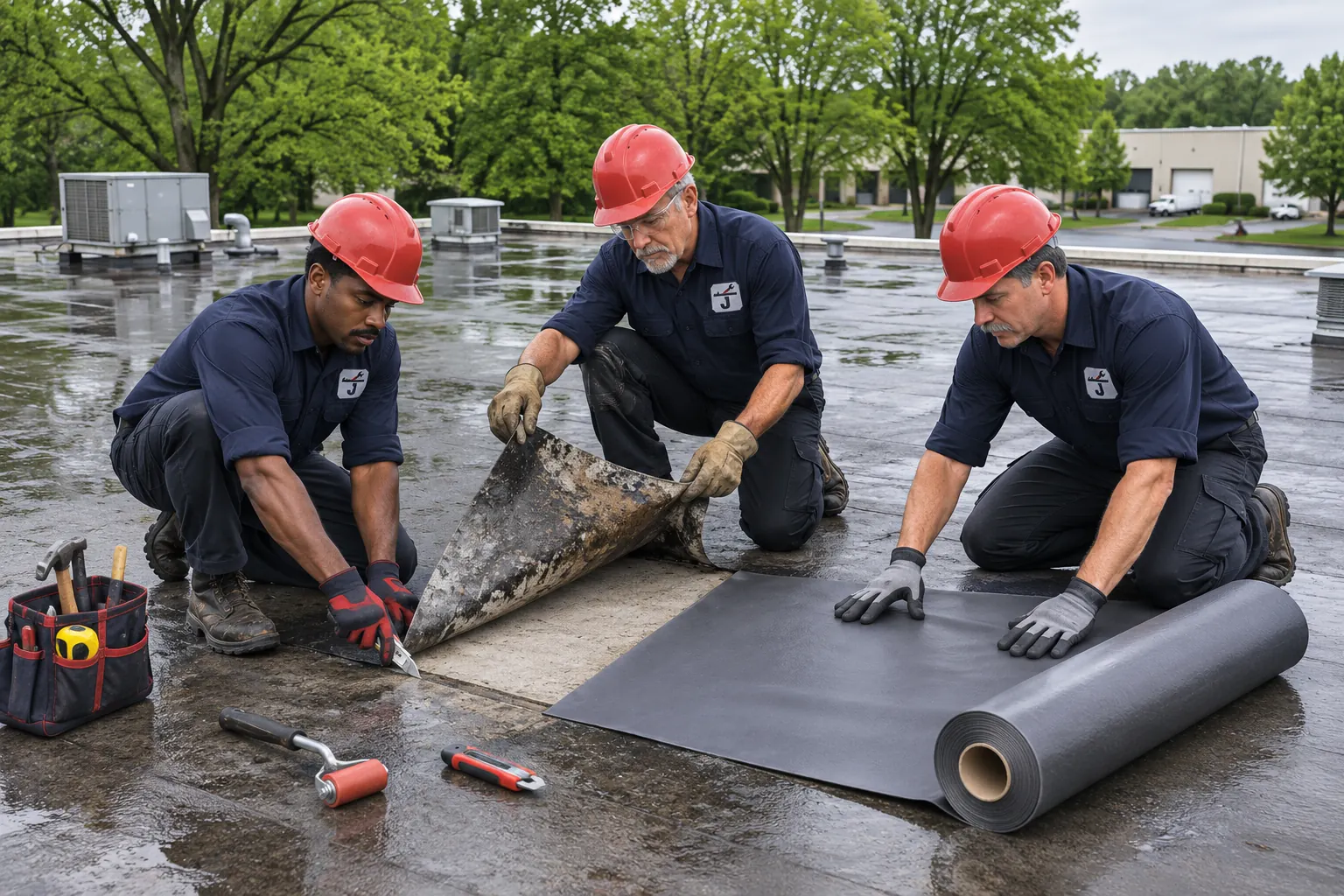
These three kinds of work cover most Simpsonville production and distribution roofs.
Curb reflashing, conduit boot repairs, and walkway pads around rooftop units on production buildings, coordinated with the electrician and the mechanical contractor.
Industrial roof repair around plant equipmentWelded TPO and taped EPDM patches on large low-slope roofs, plus drain resets and wet insulation cutouts near unit curbs.
Flat roof repair on large roofsOversized fastener swaps, end-lap reseals with butyl tape, and rusted panel replacement on metal storage and distribution buildings, with new panels matched to profile and gauge.
Metal roof repair for storage buildingsCall with the unit number, what sits below it, and when the drip started. We will ask about the electrician and the disconnect before the visit.
Curb repairs on these roofs involve three trades. Each step below happens on the roof or in the building, in this order.
We walk the roof around the leaking unit, check every curb corner, conduit boot, drain, and nearby seam, and take moisture readings to see how far water spread under the membrane.
Before conduit on the roof moves, the electrician pulls the permit so the Shelby County electrical inspector can review the wiring change. The City of Simpsonville building inspector covers any building work inside city limits.
A licensed mechanical contractor and the electrician shut down and disconnect the unit. It is then lifted off its curb, and the conduit is moved clear of the curb flashing.
Wet insulation around the curb is cut out and replaced, then new membrane flashing wraps the curb with rounded corners, and walkway pads go down along the service route.
Once the unit is set back on its curb, conduit boots and pitch pans are sealed with matching material, and the curb is photographed and logged by unit number.
Running a plant or warehouse close by? Call us or send us a message. We also repair commercial roofs in these five towns near Simpsonville.
Answers for Simpsonville plant and warehouse owners about curb leaks and permits.
The Shelby County electrical inspector handles wiring changes once a permit number exists, and the City of Simpsonville building inspector covers building work inside city limits, per the county's permit steps guide. Curb leaks on production roofs often mean lifting a unit and rerouting conduit, so plan the wiring, disconnect, and curb reflashing as one sequence.
Lifting is the only way to reach flashing that runs under the unit's base rail. Patching around the edge leaves the cracked corners and wet insulation underneath in place. With the unit off, the curb flashing is rebuilt in one piece and the boards beneath it get checked.
Conduit gets a pipe boot or a pitch pan matched to the roof system. On TPO, the boot is welded to the membrane, and on EPDM it is primed and taped. Pitch pans are filled with fresh sealant and topped off as the filler shrinks over time.
Yes. Most punctures near units come from dropped screws, tools, and panels during HVAC service. Pads laid along the path service techs walk spread their weight and catch dropped parts before they cut the membrane. Units with several old patches around them gain the most from a pad route.
Have the unit number, the area of the plant below it, and the dates of past drips. Note the electrician and mechanical contractor who service the unit and whether a permit number exists. Photos of the ceiling or floor under the leak help match it to the curb above.
It does. Water standing against a curb base soaks the flashing seams for days and finds any crack. Clearing drain strainers, resetting a drain bowl set too high, or adding a tapered cricket between drains gives that water a path off the roof.
Share the unit number and what sits below the leak. We will plan the curb repair around your electrician and production schedule.
Leave a name and number and we will call you about the leak, seam, or panel you are dealing with.
Or call now: (502) 323-6989