Seams
Open Seam Patches
Patching a lifted lap on TPO or EPDM sits at the small end of the scale. The patch matches the sheet, and the roof around it stays in place.
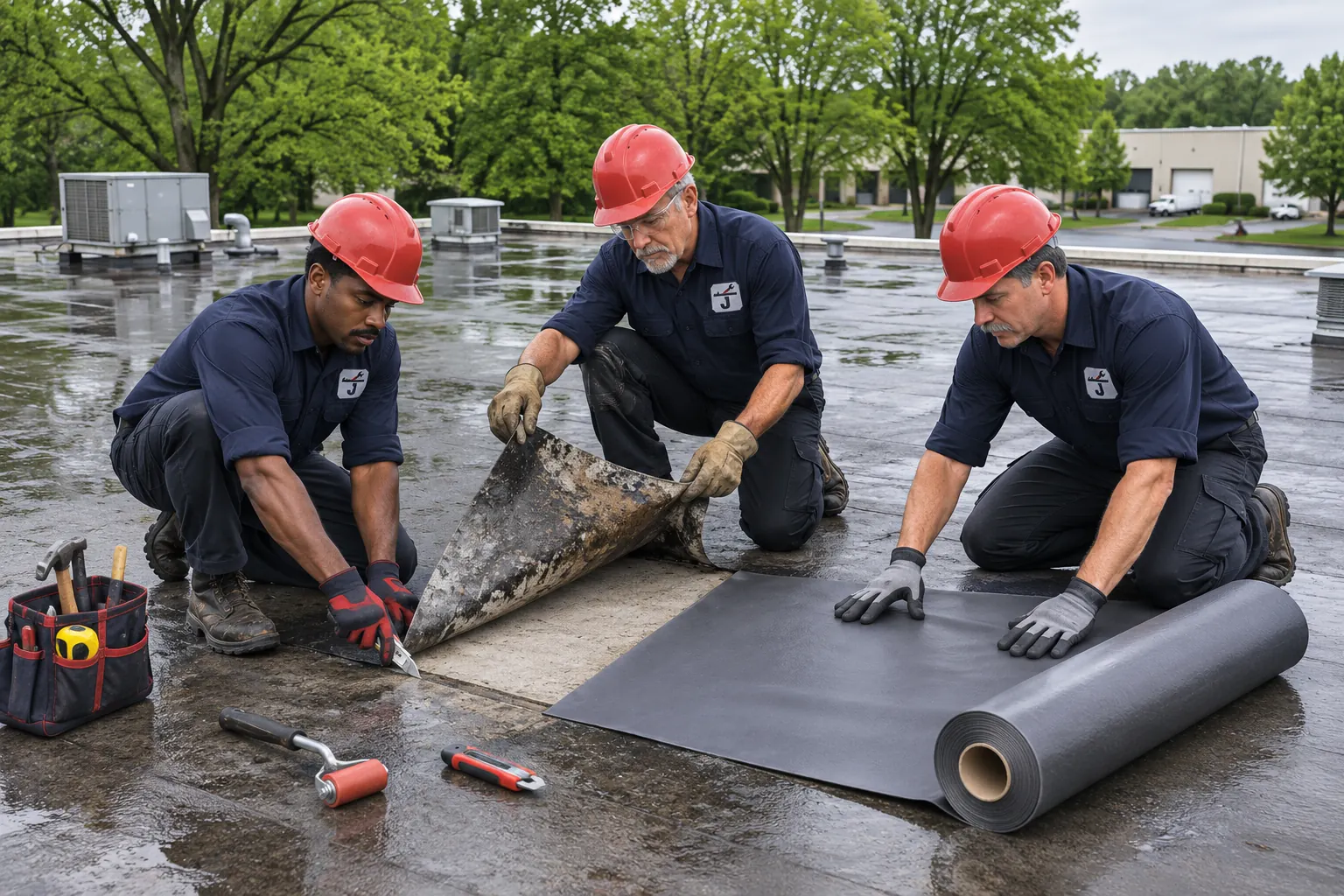
We do Buechel commercial roof repair on shops, offices, and warehouses, sizing each job against Louisville Metro rules for repair and reroofing work.
Buechel commercial roof repair that needs a permit goes through Louisville Metro's Department of Inspections, Permits and Licenses, because Buechel is a Metro area. Applications go in through Metro's Accela portal.
West Buechel sits right beside it but runs as its own city with its own hall. We confirm the parcel first so the paperwork for a seam or flashing job reaches the right office.
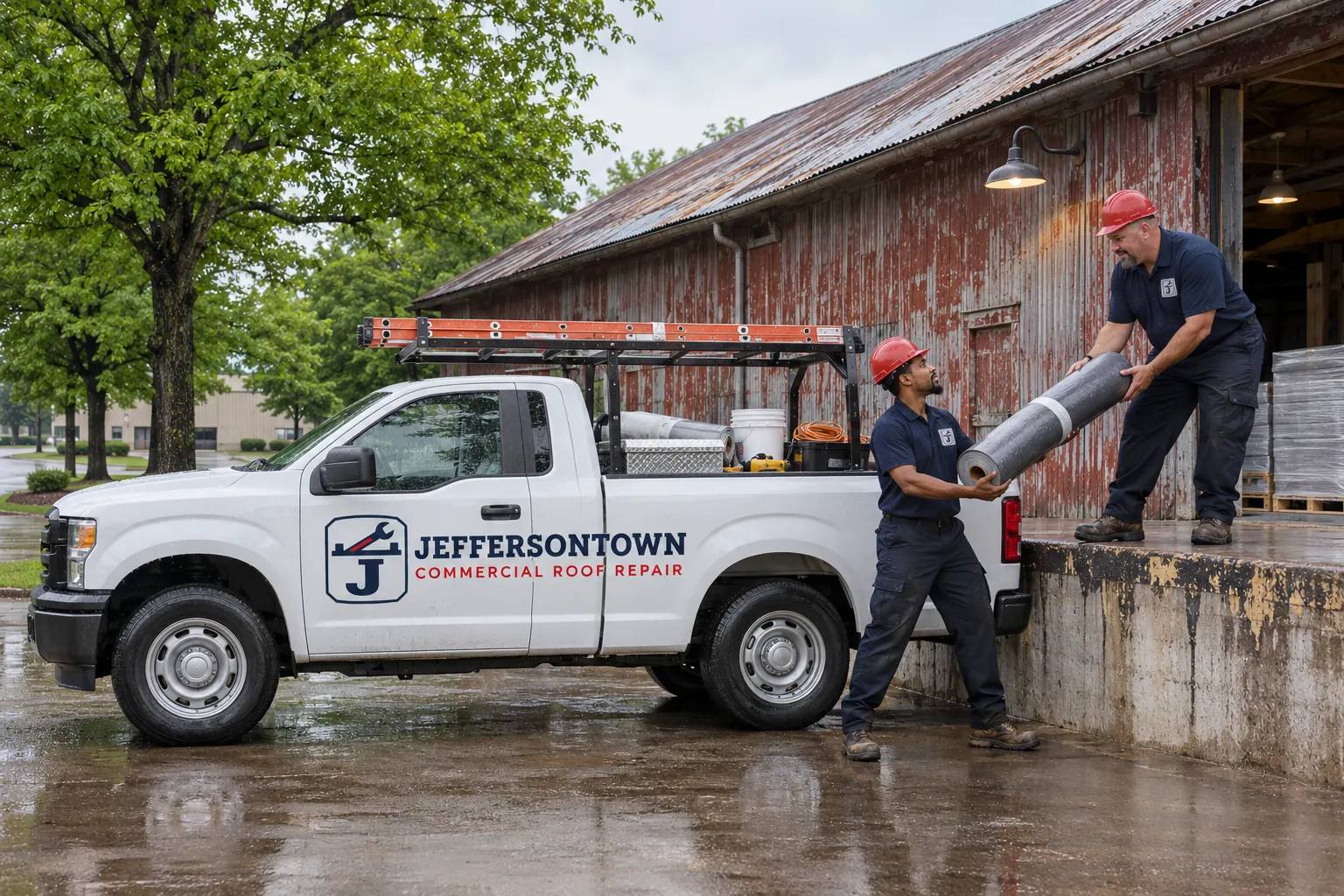
Metro's reroofing guide separates small repair work from reroofing. These four job types show how common Buechel roof work lines up.
Patching a lifted lap on TPO or EPDM sits at the small end of the scale. The patch matches the sheet, and the roof around it stays in place.
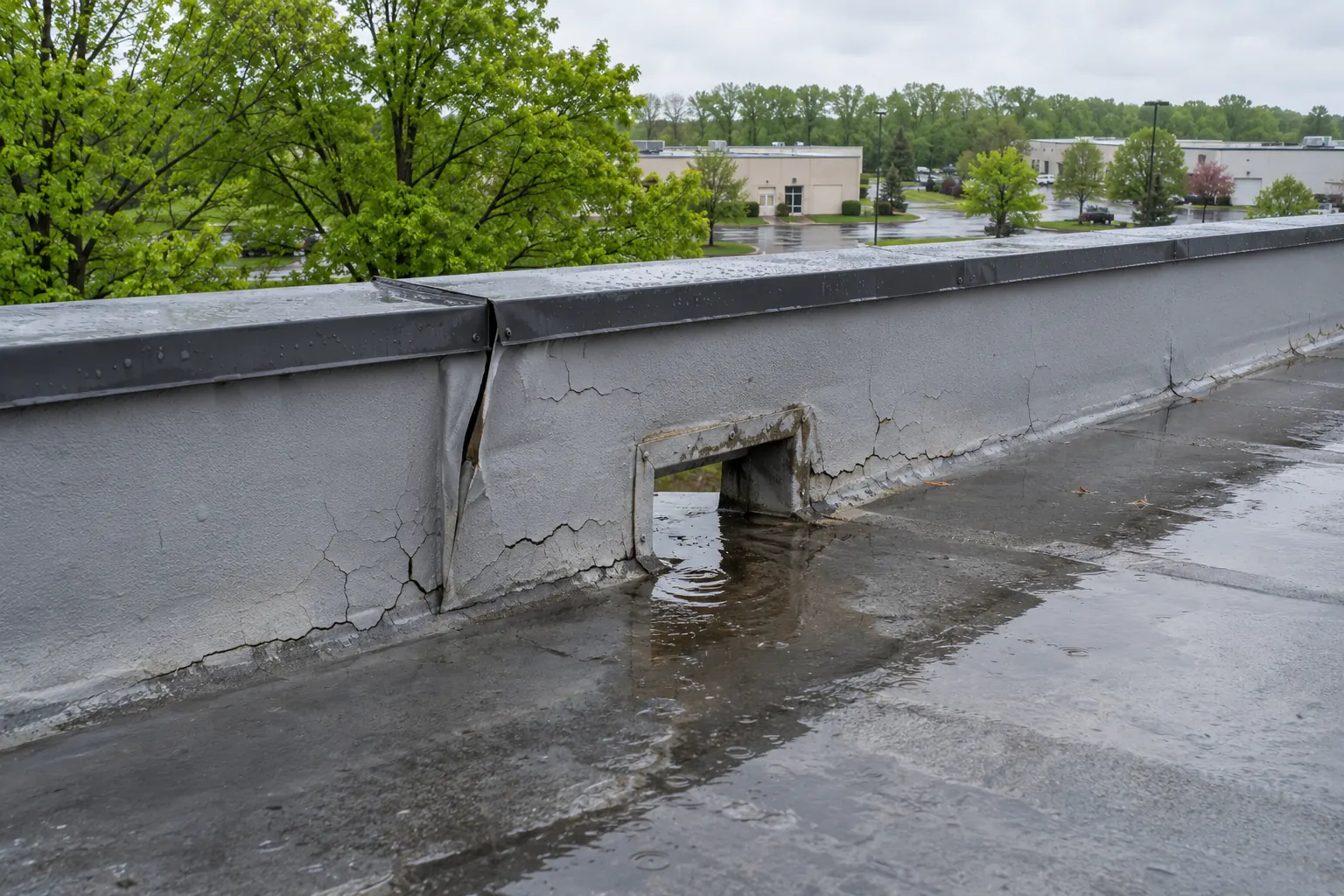
Replacing cracked flashing at a curb or parapet also counts as small work. Old flashing comes off, new material goes up, and the field membrane stays untouched.
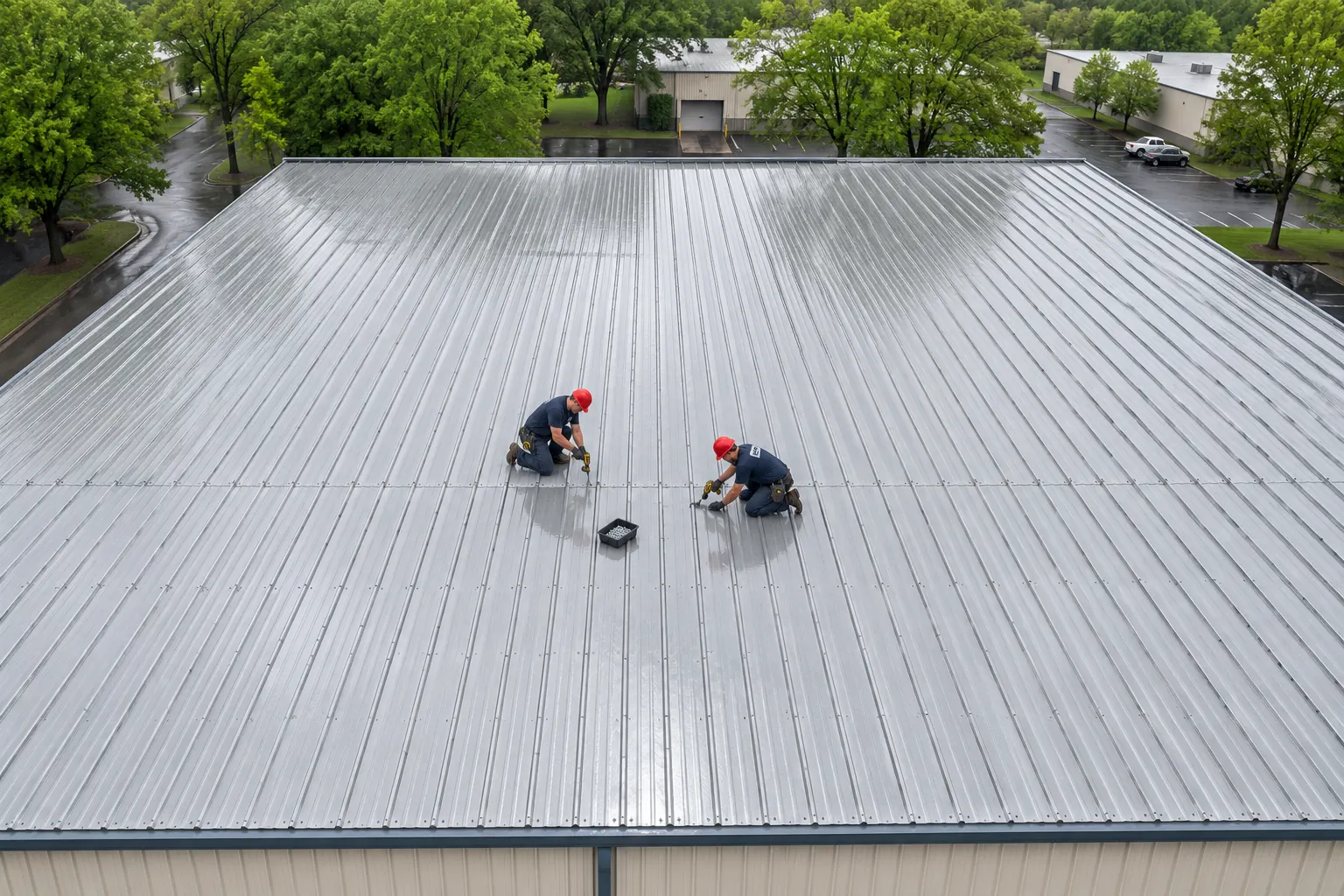
Removing and replacing a large area of membrane and insulation moves the job toward reroofing review. Give the full square footage when the scope goes to Metro.
Cutting out a few wet boards around a leak stays a repair. Wet insulation across much of the roof deck points toward replacement and reroofing rules.
Knowing which side of the repair line a job falls on keeps the paperwork and the roof work in step.
A scope sized against Metro's guide shows early whether seam and flashing work needs a permit at all.
Each patch, flashing run, and cutout is listed with its size, so reviewers and owners read the same numbers.
Small seam and curb leaks get sealed with matching material while the rest of the roof keeps working.
Fixing a lifted lap before water spreads keeps wet board to a few cutouts instead of a reroofing-sized area.
Where moisture readings show broad wet insulation, the owner gets a written view of when a section replacement makes sense.

Most Buechel jobs fit one of these three kinds of work. Each card opens a page with more detail.
Lap patches on TPO, EPDM, and modified bitumen roofs, each welded, taped, or torched the way that system calls for and kept to the damaged area.
Flat roof seam and lap repairOversized screws with new washers, resealed end laps, and matched replacement panels on warehouse and shop metal roofs with backed-out fasteners.
Warehouse metal roof repairSectioned work on large warehouse roofs, with repairs on dry areas now and wet sections mapped by expansion joint for a later phased replacement.
Phased industrial roof repairCall with the roof size and the damaged area. We can sort out which side of Metro's repair line the work looks like before anything gets filed.
The steps move from the roof to the permit desk and back. Each one is marked where it happens.
A roofer walks the full roof, takes moisture readings around each leak, and measures every open seam, cracked flashing, and wet area so the repair size is clear from the start.
The parcel record shows whether the building sits in Buechel, under Louisville Metro, or in West Buechel, which has its own city hall. That decides where questions about deck or flashing permits go first.
Measured patches, flashing runs, and cutouts are compared with Metro's reroofing guide. Small seam and flashing work stays a repair, while a large tear-off is written up for reroofing review.
Open laps get matching patches, cracked curb flashing is rebuilt, and wet insulation is cut out and replaced before new membrane goes over the deck.
Each repaired seam, curb, and cutout is photographed and marked on a roof plan. The owner keeps that record for Metro and for the next roof walk.
Have a roof in a neighboring town? Call us or send us a message to check. We repair commercial roofs in each of the towns below as well.
Answers on permits, the repair line, and common leaks on Buechel roofs.
Yes, when a permit is needed. Buechel is a Metro area, so permits run through Louisville Metro's Department of Inspections, Permits and Licenses, filed in the Accela portal. West Buechel next door is its own city, so check the parcel first. Metro's reroofing guide puts seam patches and flashing repairs at the small end and large tear-offs near reroofing review.
No single number fits every roof, so describe the full scope to Metro. A few patches and flashing repairs stay small, while replacing a large share of the membrane and insulation can shift the job into reroofing rules under the Kentucky Building Code. Measured areas on a roof plan make that call easier.
The Kentucky Building Code, 2018 edition, based on the 2015 International Building Code. For repairs, the questions that come up most involve matching the roof covering's fire classification, securing new edge metal against wind, and fastening replacement metal panels to the original pattern or better.
Rubber washers under the screw heads crack, and daily heating and cooling backs screws out of the purlins. Water then follows the screw shank into the building. The fix is a new, often oversized screw with a fresh washer, and every screw in that row gets checked.
Yes, when they have lost their bond or trap water. Patches stacked over older patches rarely seal well, and roof cement under a new TPO or EPDM patch keeps it from bonding. Old material comes off down to a clean sheet so the new patch becomes part of the roof.
The rest of the roof stays in service while one section is replaced. Expansion joints and area dividers make clean break lines, and the tie-in between old and new membrane gets careful detailing, since a poor joint becomes the next leak. Dry sections keep getting repairs as needed.
Send the address and the roof size. We will check the parcel and measure the damage before any paperwork goes to Metro.
Leave a name and number and we will call you about the leak, seam, or panel you are dealing with.
Or call now: (502) 323-6989