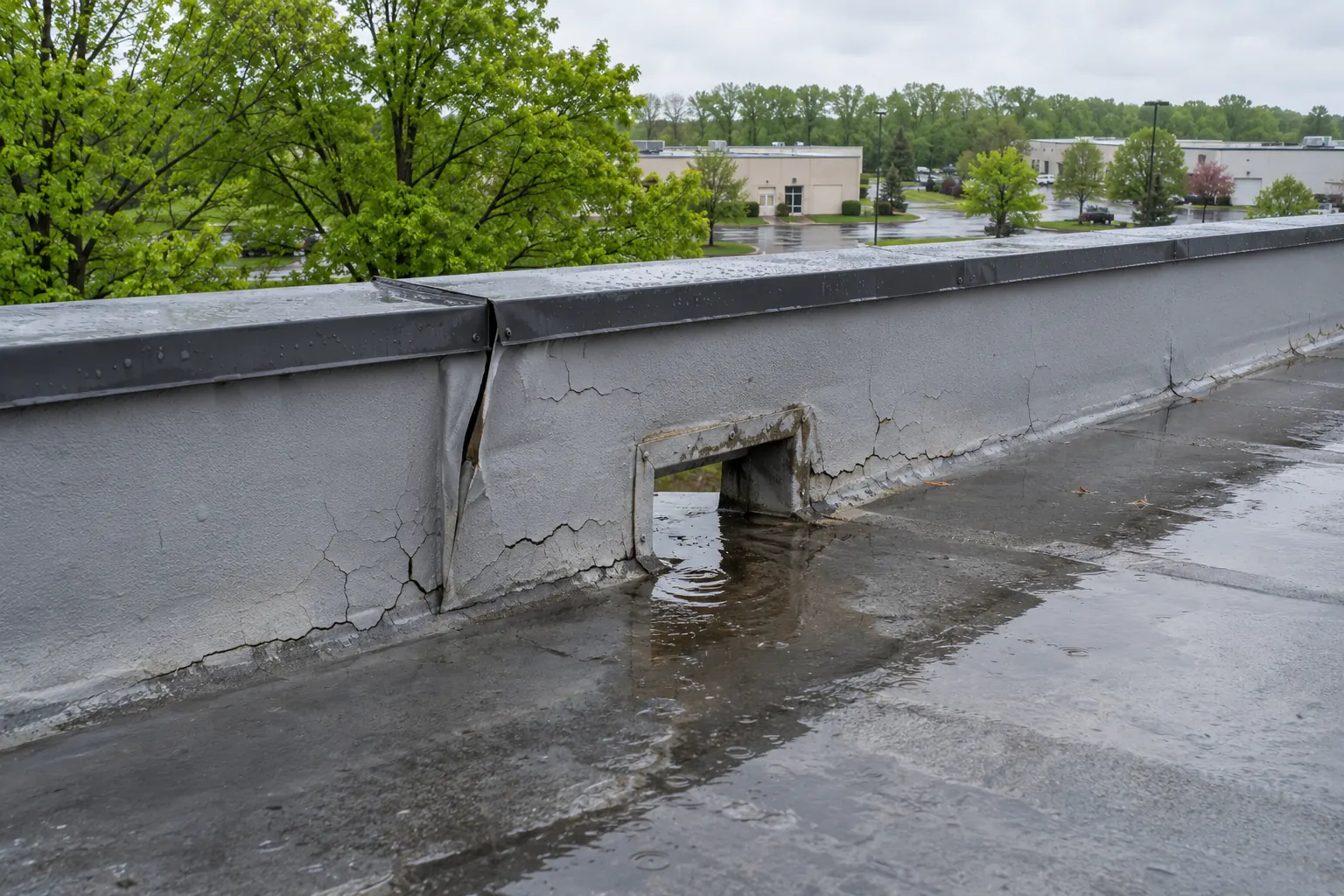
Coping
Split Coping Joints
Metal caps on the parapet move with heat and cold. Once the joint sealant cracks, rain runs into the wall cavity and shows up as a stain near the storefront glass.
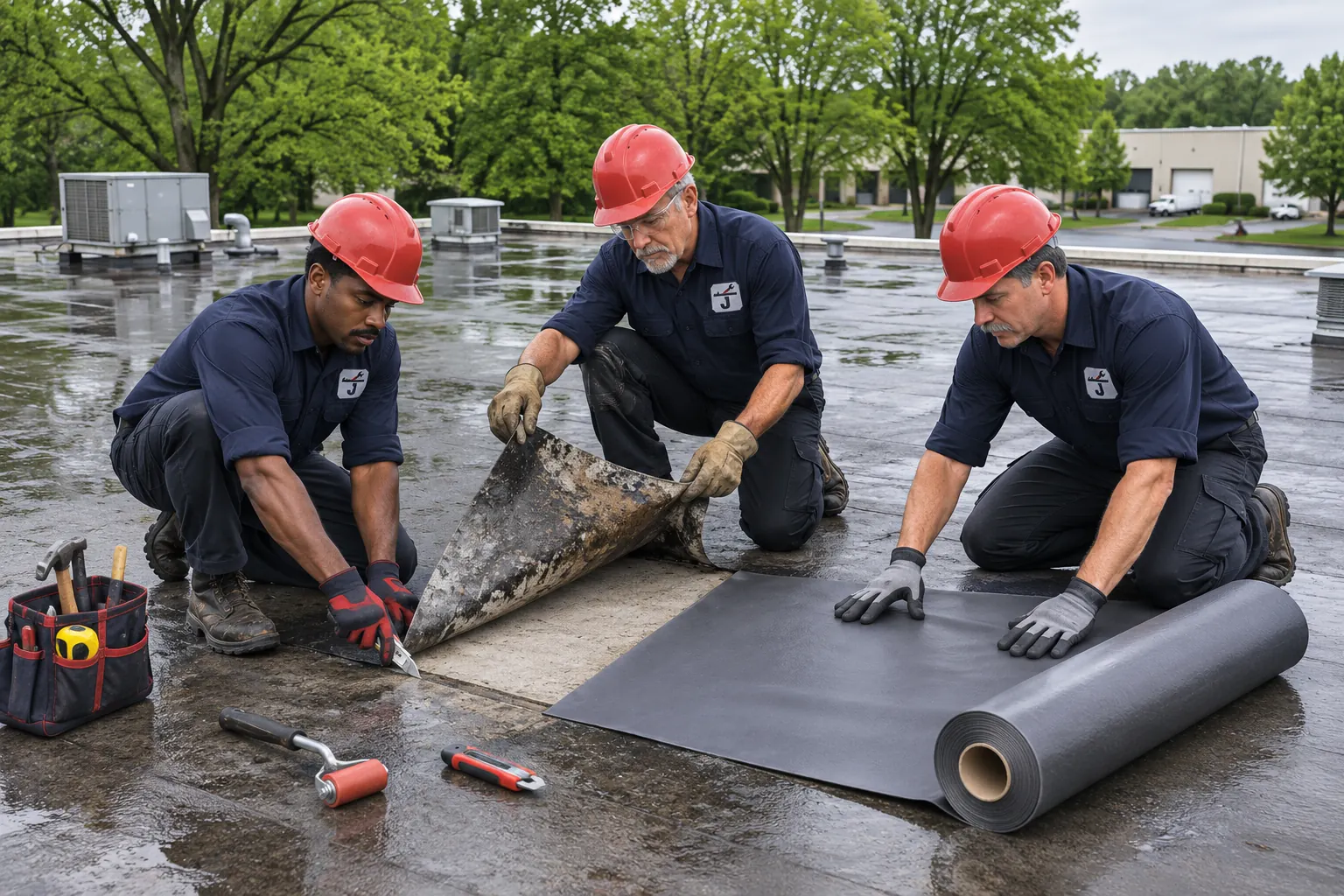
We handle Middletown commercial roof repair for retail and office roofs, from split coping joints to backed-up rear scuppers, scheduled around open stores.
Middletown commercial roof repair on Shelbyville Road (US 60) starts with the parking lot. Shops there depend on open spaces and clear storefronts, so lifts and material drops go in early, before customers arrive.
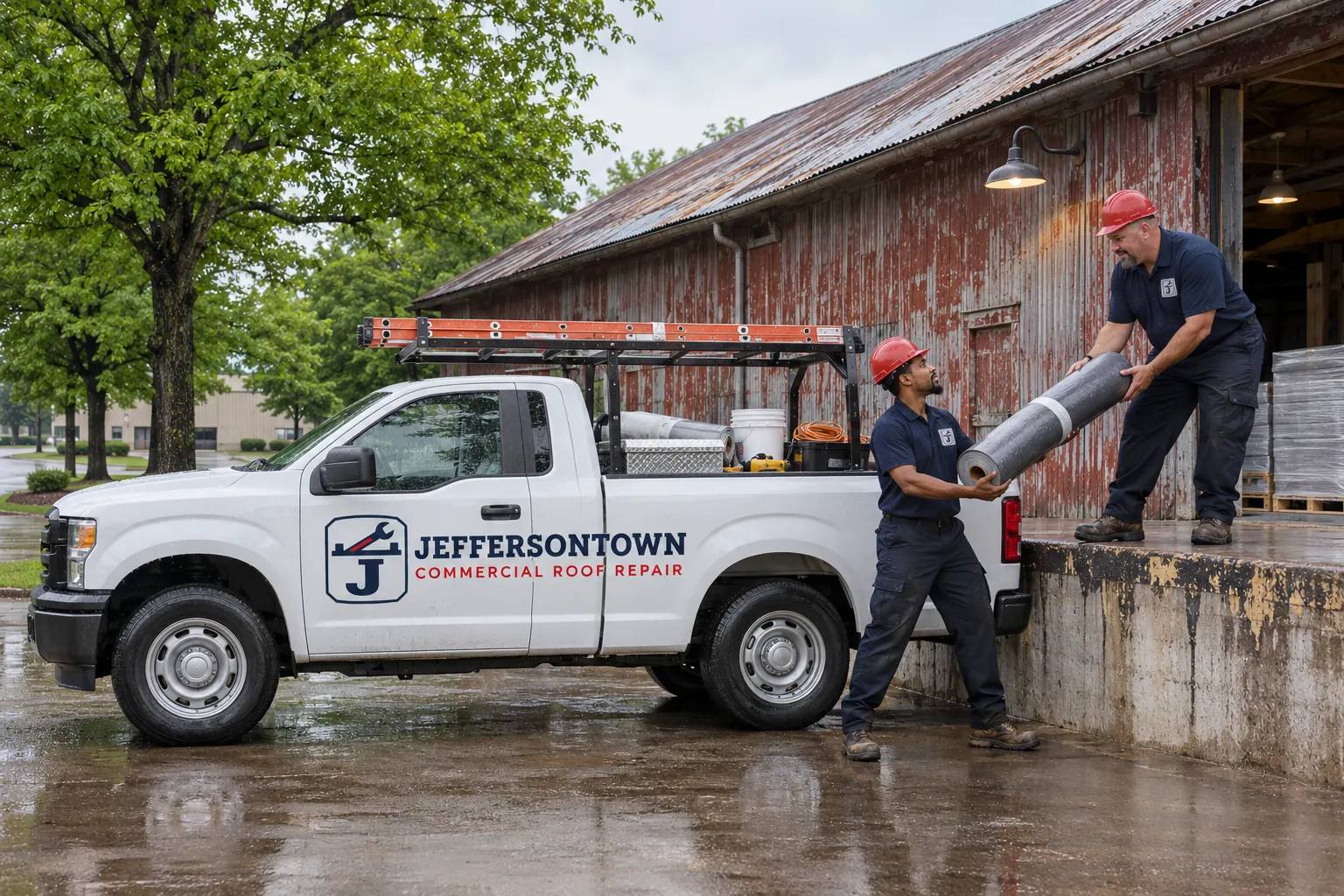
We stage the truck and ladder at the rear of the building where possible. Front walks stay open, and the work on the roof moves section by section so a tenant never loses its entrance.
Storefront roofs sit low behind tall front walls, so their problems stay out of sight from the lot until a ceiling tile turns brown.
Metal caps on the parapet move with heat and cold. Once the joint sealant cracks, rain runs into the wall cavity and shows up as a stain near the storefront glass.
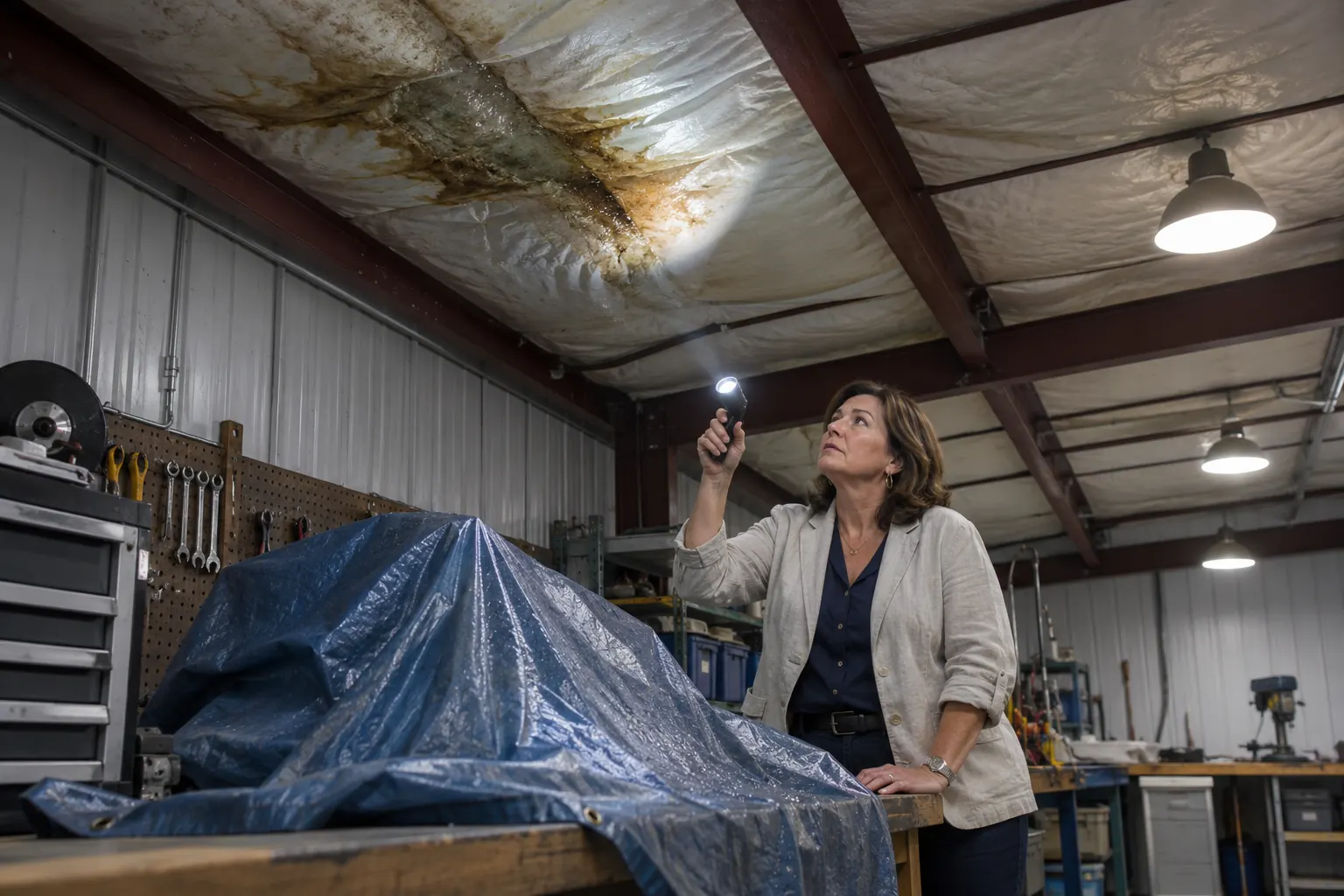
Base flashing where the membrane turns up the wall pulls away over time. Water slips behind it during wind-driven rain and travels down to the suspended ceiling.
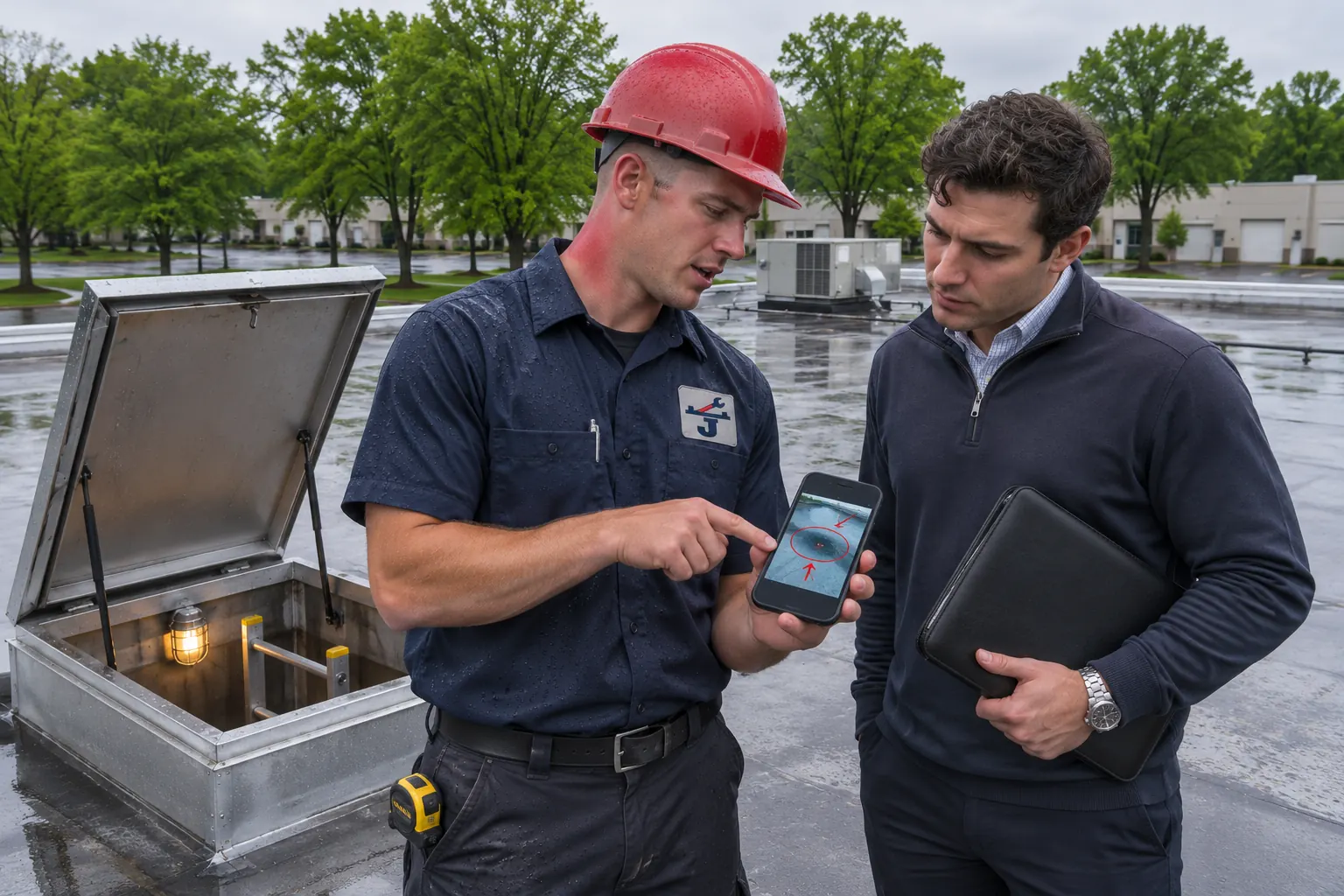
Leaves and packing debris collect at the scupper box in the back wall. Water stands against the parapet, then finds the dried sealant around the box.
Strip centers carry one rooftop unit per tenant. Service crews step around those curbs all year, and the corner flashing cracks first.
A repair made with matching materials on a dry day keeps the stockroom dry and the ceiling grid intact.
Stained tiles and buckets in the aisle disappear once the coping joint or curb corner is sealed at its source.
Water kept out of the parapet stops rust on the wall studs and mortar loss in the brick facing the lot.
Catching a split seam early keeps wet boards to a small cutout rather than a large section of the roof.
Dated photos and a marked roof plan show which tenant space each repair sat over.
Roof items that can wait go on a written list, so the next round is scheduled instead of rushed.
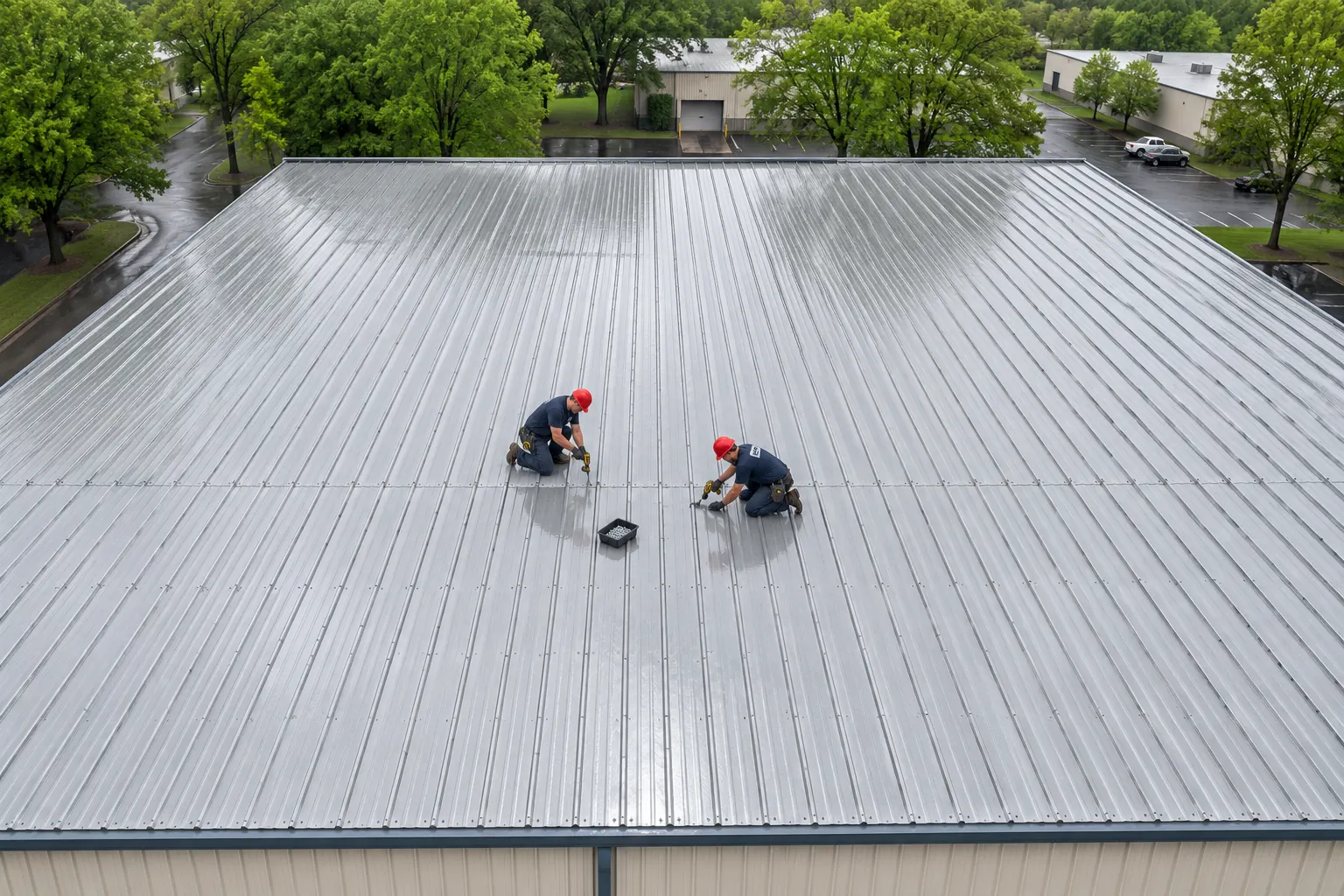
Most Middletown calls fall into three kinds of work. Each links to more detail on how we handle it.
Tracing a drip from the ceiling grid back to the curb, coping joint, or scupper above it, then sealing that opening with material that matches the roof.
How we trace and fix leaksWelded TPO patches, taped EPDM repairs, and rebuilt base flashing on the low-slope roofs behind storefront parapets.
Flat roof repair detailsFastener swaps, end-lap reseals, and color-matched panels on metal mansards and entry canopies that customers see from the lot.
Metal roof repair detailsCall with the tenant name, the suite number, and when the drip started. That points us to the right curb or coping joint before anyone climbs up.
Work moves between the roof and the tenant spaces below it. Each step happens where it is shown.
A roofer walks the low-slope roof behind the parapet, checks coping joints, curbs, and scuppers, and photographs each defect over the reported drip.
Drip spots inside the suite are measured from the walls, so the opening found above lines up with the damage below.
Moisture readings around the opening show how far water spread. Wet insulation is removed and replaced before any patch goes down.
TPO gets a welded patch, EPDM gets primer and tape, and coping joints get fresh sealant and new cleats where the old ones loosened.
Finished repairs are photographed, marked on the roof plan, and explained to the manager before the lift leaves the lot.
Not sure your building is in our area? Call us or send us a message. We repair commercial roofs in these towns around Middletown.
Answers about storefront roofs, permits, and timing in Middletown.
Repairs are booked around store hours and parking. Shops along Shelbyville Road need open lots and clear storefronts, so lifts and deliveries happen early in the morning or on slower weekdays. Storefront roofs usually hide their trouble behind the parapet, at coping joints, wall flashing, and rear scuppers, so those areas get checked on every visit.
For larger work, yes. Middletown is a home-rule city, so its city hall weighs in before Louisville Metro issues a permit for deck or panel work. Small patches and sealant work rarely raise the question. Call the city with the address and a short repair list before ordering replacement panels.
Water near the front glass usually starts at the parapet above it. A cracked coping joint or loose counterflashing lets rain into the wall cavity, and the water runs down inside the wall until it reaches the window head or the ceiling grid just inside the door.
It happens often on strip centers. Water entering over one suite can run along the deck before it drips into the space next door. We check the roof over both suites and each rooftop unit owner is told which curb is involved.
Send the suite numbers, photos of each stain, and the dates of past leaks. Note whether HVAC service was done recently, because dropped screws and cut membrane near units cause many storefront leaks. Records of earlier patches help us avoid stacking a new repair over an old one.
Only for a short time. Roof cement and tarps hold water back until the roof dries, but they bond poorly to TPO and EPDM. Each temporary seal gets removed and replaced with a matching patch once conditions allow the permanent repair.
Tell us the address and which suite is leaking. We will set a visit around your store hours.
Leave a name and number and we will call you about the leak, seam, or panel you are dealing with.
Or call now: (502) 323-6989