Coping
Loose Coping Caps
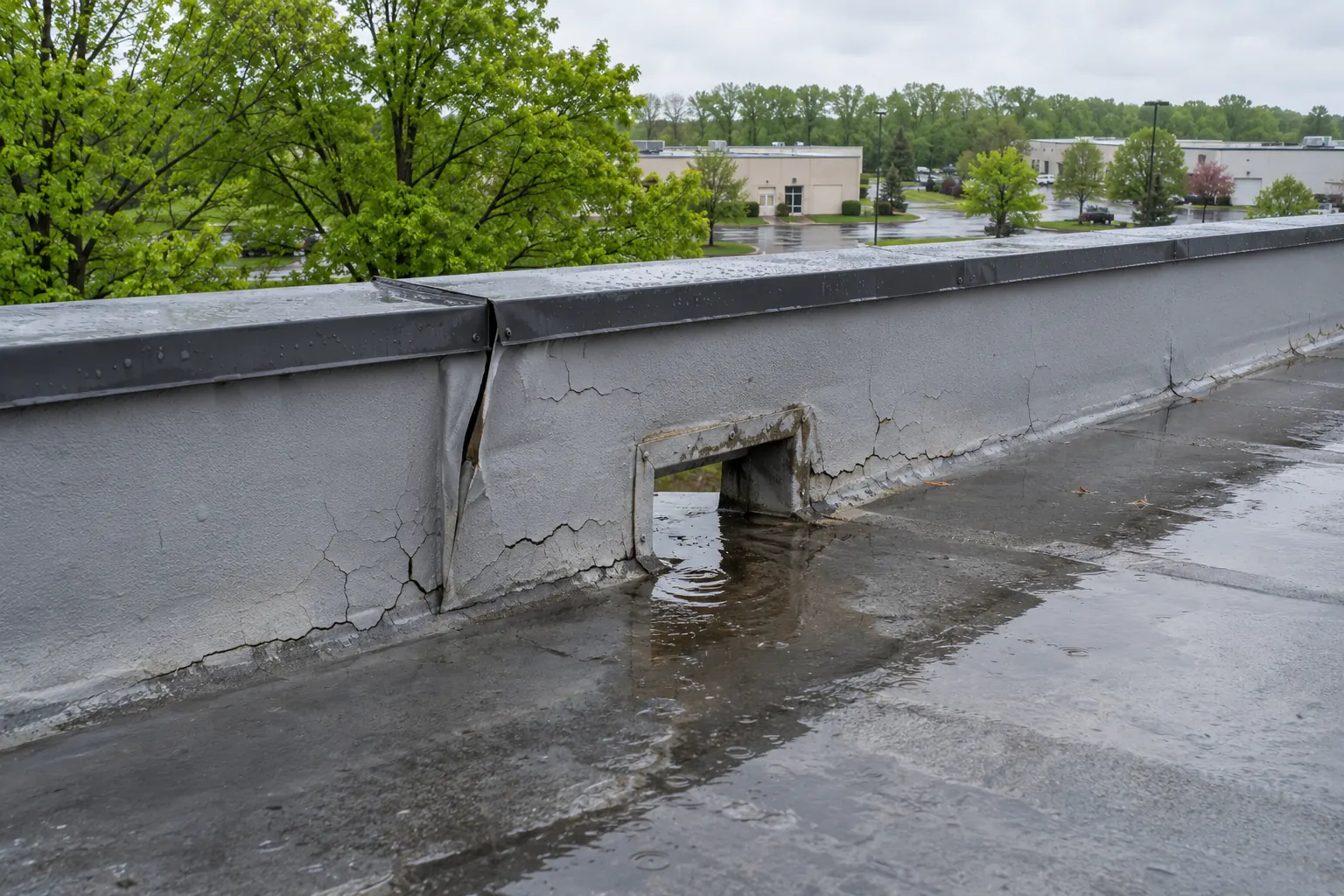
Caps on top of the parapet lift when cleats rust or fasteners pull out of old mortar. Rain then drops straight into the wall core and soaks the brick from inside.

We provide La Grange commercial roof repair for older brick buildings, sealing coping caps, base flashing, and scupper boxes along the parapet walls.
La Grange commercial roof repair often happens on low-slope roofs hidden behind brick parapets. As the Oldham County seat, the town has many older commercial buildings where rain runs along those walls before it reaches the roof edge.
That makes the wall the first place we look. Coping joints, the flashing at the base of the wall, and the scupper boxes cut through the brick take the most water, so each one gets checked before the open field of the roof.
Older brick walls take water at the top, along the face, and at the base. These four spots turn up again and again on La Grange roofs.
Caps on top of the parapet lift when cleats rust or fasteners pull out of old mortar. Rain then drops straight into the wall core and soaks the brick from inside.
Membrane turned up the brick shrinks and splits at the corner where wall meets roof. Water standing along that line slips behind the flashing and wets the deck edge.
Through-wall scupper boxes carry roof water out past the brick. When the sealant around a box dries or leaves block it, water backs up into the wall opening.
Joints where counterflashing tucks into the brick lose mortar over the decades. An open joint above the flashing lets wind-driven rain behind it while the membrane below stays intact.
Fixing the wall where water starts keeps damage from spreading into the brick, the roof deck, and the rooms below.
Resealed coping caps keep water out of the wall core, which slows mortar loss and spalling on the brick face.
Rebuilt base flashing stops water from wetting insulation along the wall line, where soaked boards are hardest to reach.
Cleared and resealed scupper boxes move roof water out through the wall instead of letting it pond against the parapet.
Knowing whether a repair stays at the flashing or grows into wall or deck work tells you when Oldham County Building and Inspections needs a call.
Every repaired coping joint, scupper, and flashing run is photographed and marked by wall, so the next visit starts from a record.
Three kinds of work cover most calls from older La Grange buildings. Each one links to more detail.
Following a stain on an upper-floor ceiling or wall back to the coping joint, mortar gap, or scupper box above it, then sealing that spot with matching flashing material.
How we trace leaks along parapet wallsPatching the low-slope membrane behind the parapet and rebuilding cracked base flashing where TPO, EPDM, or modified bitumen turns up the brick wall.
Flat roof repair behind parapetsRefastening and resealing loose coping caps, replacing rusted cleats, and fitting new counterflashing where sheet metal laps over the brick on older walls.
Coping and counterflashing repair detailsCall with the wall it shows on and the weather when it started. Wind-driven leaks point to coping or mortar, and heavy-rain leaks point to a backed-up scupper.
On these roofs the walls come first and the open field second. Each step happens on the roof or inside the building as marked.
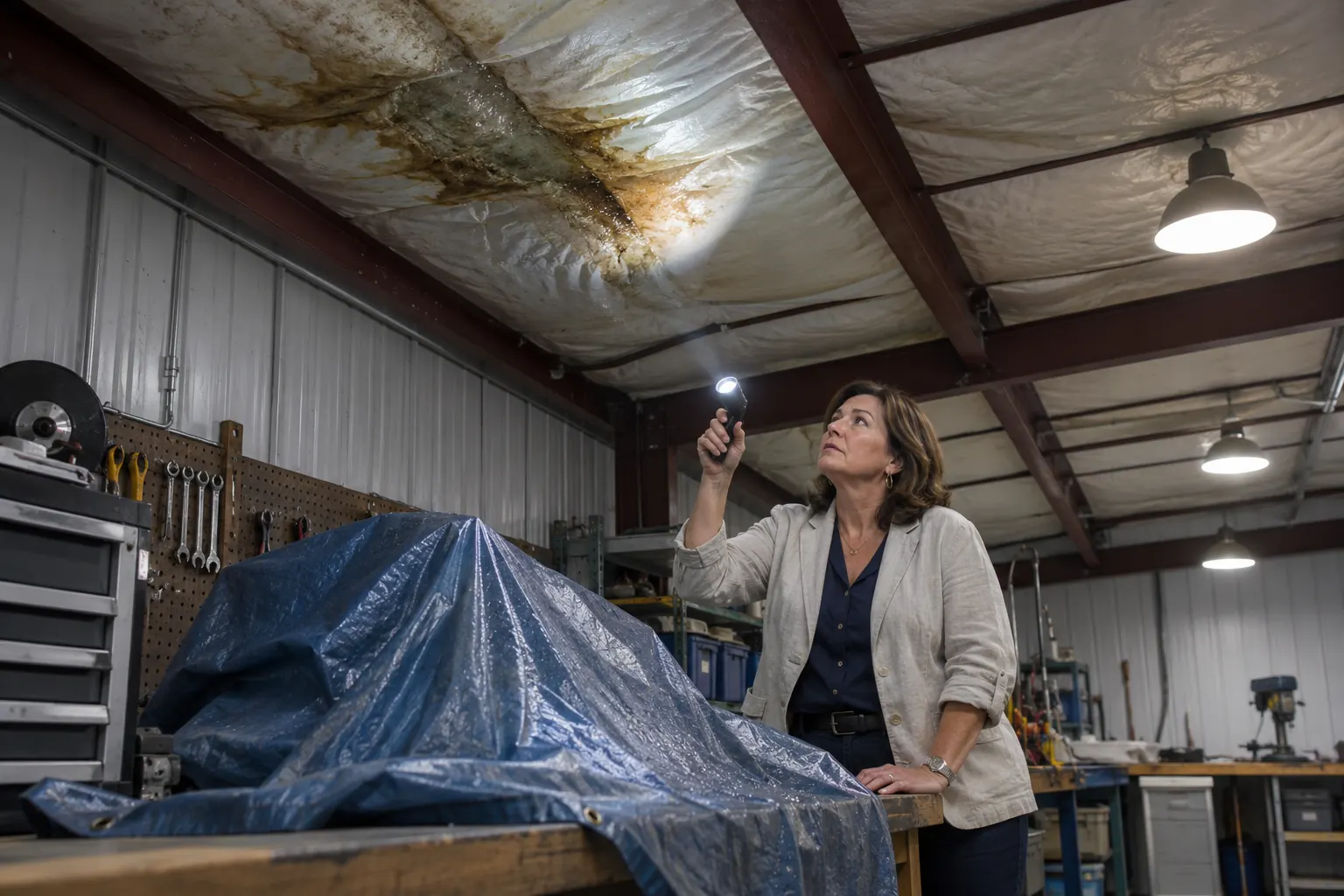
A roofer walks each parapet wall, lifts a sample of coping caps, probes the base flashing, and clears every scupper box to see where water enters and how far it has traveled.
Inside stains on brick walls and ceiling edges are measured and matched to the wall above. Damp plaster high on a wall points to coping, while low stains point to base flashing.
Loose caps come off, rusted cleats are replaced, and the joints get fresh sealant and splice plates before each cap is fastened back down and secured against wind.
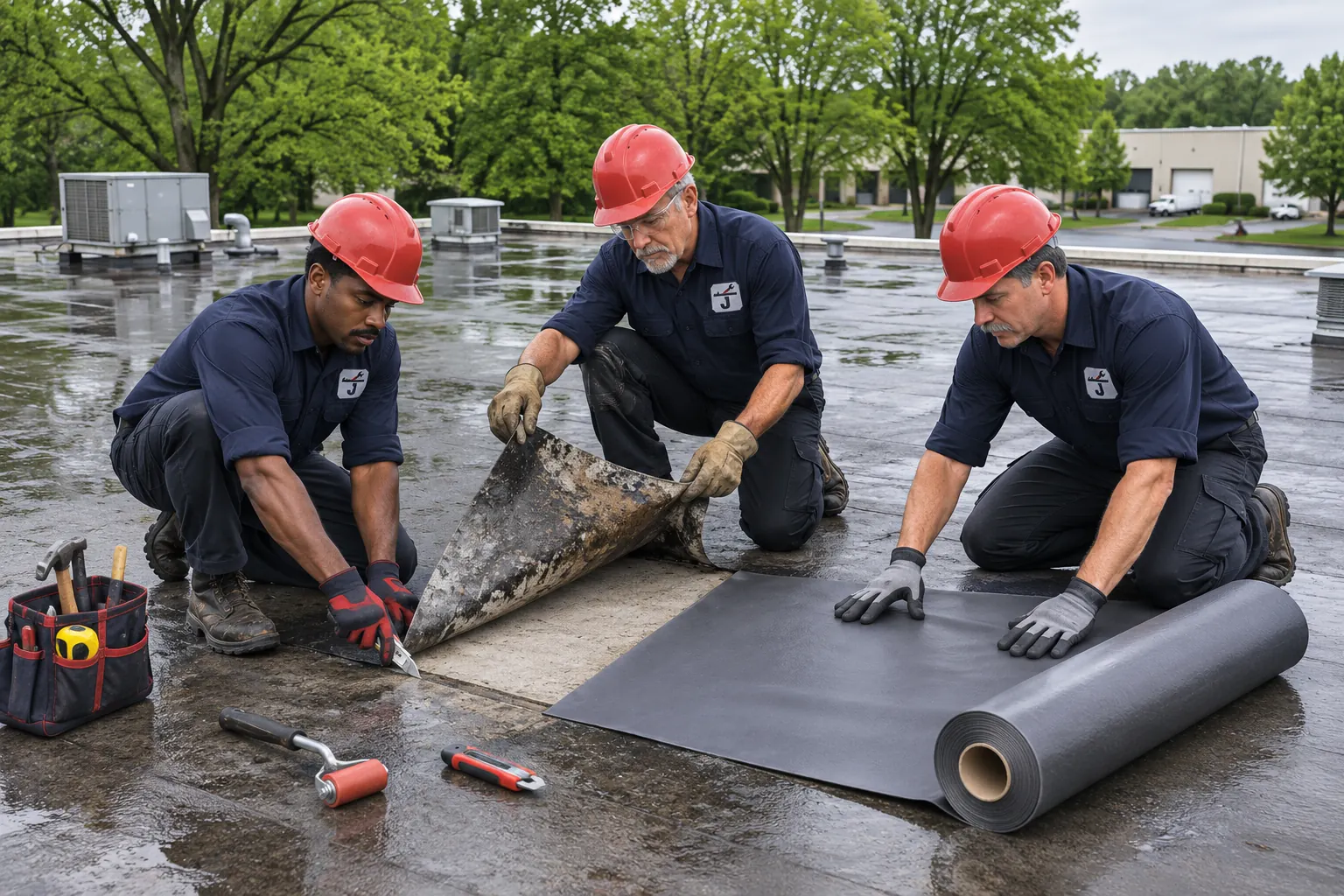
Cracked base flashing is cut back and replaced with matching membrane, and each scupper box is cleaned, resealed, and flashed into the roof so water leaves through the wall.
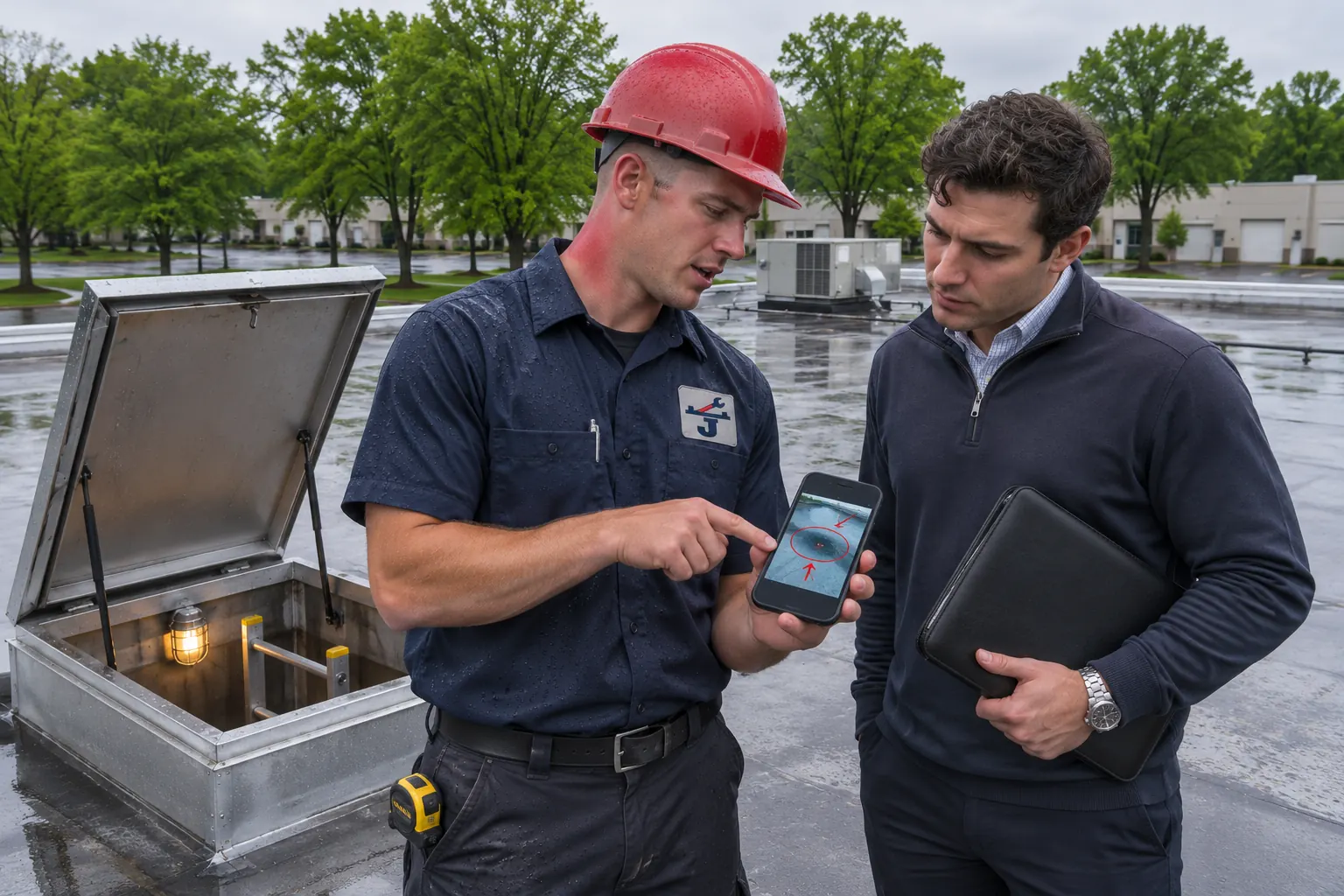
Open mortar joints and soft deck found along the wall go on a list with photos. When a repair grows into wall or deck work, that list goes to Oldham County Building and Inspections first.
Have a building near La Grange? Call us or send us a message and name the town. We also repair commercial roofs in these five places.
Answers about parapets, coping, scuppers, and county permits in La Grange.
Coping joints, wall flashing, and through-wall scuppers fail first, because rain runs along those brick walls before it reaches the roof edge. Common repairs reset loose coping caps, rebuild cracked base flashing, clear and reseal scupper boxes, and repoint mortar where flashing meets brick. Wall or deck work starts with a call to Oldham County Building and Inspections.
Water often enters the wall itself rather than the membrane. Open mortar joints, cracked brick, or a loose coping cap let rain into the wall core, and it drains down behind the base flashing onto the deck. Checking the top and face of the wall finds these leaks faster than searching the field of the roof.
Caps that sit flat on tight cleats get new joint sealant and splice plates. Bent caps, rusted-through caps, and caps loose from rusted cleats get replaced, with new cleats fastened to the wall. The Kentucky Building Code addresses securing replaced coping against wind, so new caps go back on to that standard.
Check them on every roof walk and after heavy rain. Leaves, gravel, and loose debris collect at the box opening, and water then stands against the parapet. A clear scupper with fresh sealant around the box keeps that water moving out through the wall instead of into it.
Repointing belongs in the repair where flashing meets brick. Counterflashing tucks into a mortar joint, and when that joint opens, water gets behind the flashing. Repointing the joints around the flashing closes that path. Wider masonry work across a whole wall is a separate job, and that is the point to call Oldham County Building and Inspections.
Leaks travel before they drip. On older roofs, water runs along the deck or down inside the wall and appears several feet away from the opening. We mark each stain inside, measure it from the walls, and search the roof above and upslope for the matching gap.
Send the address and which wall shows water inside. We will check the coping, flashing, and scuppers on that side first.
Leave a name and number and we will call you about the leak, seam, or panel you are dealing with.
Or call now: (502) 323-6989