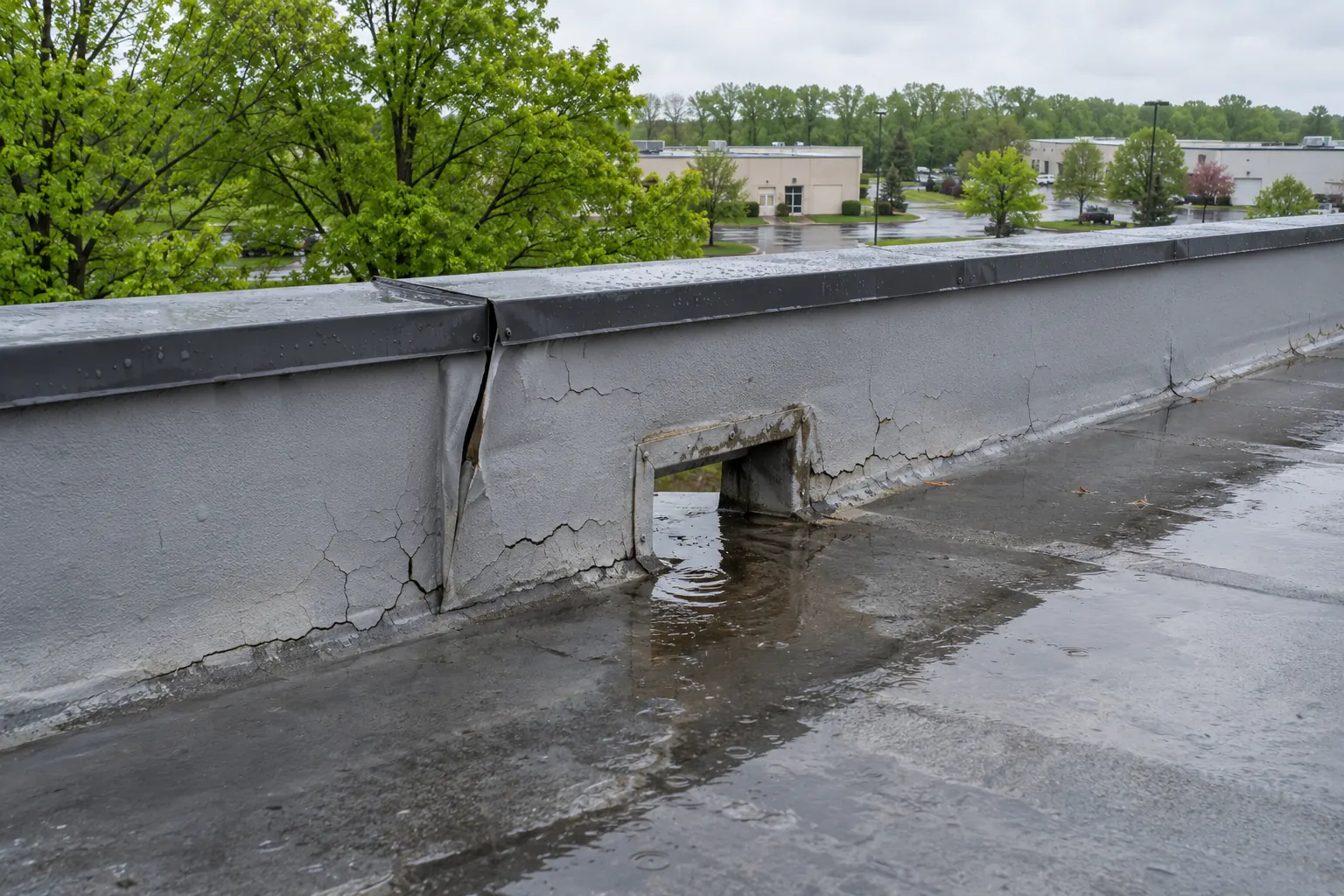
Stall Panels
Rust Over the Stalls
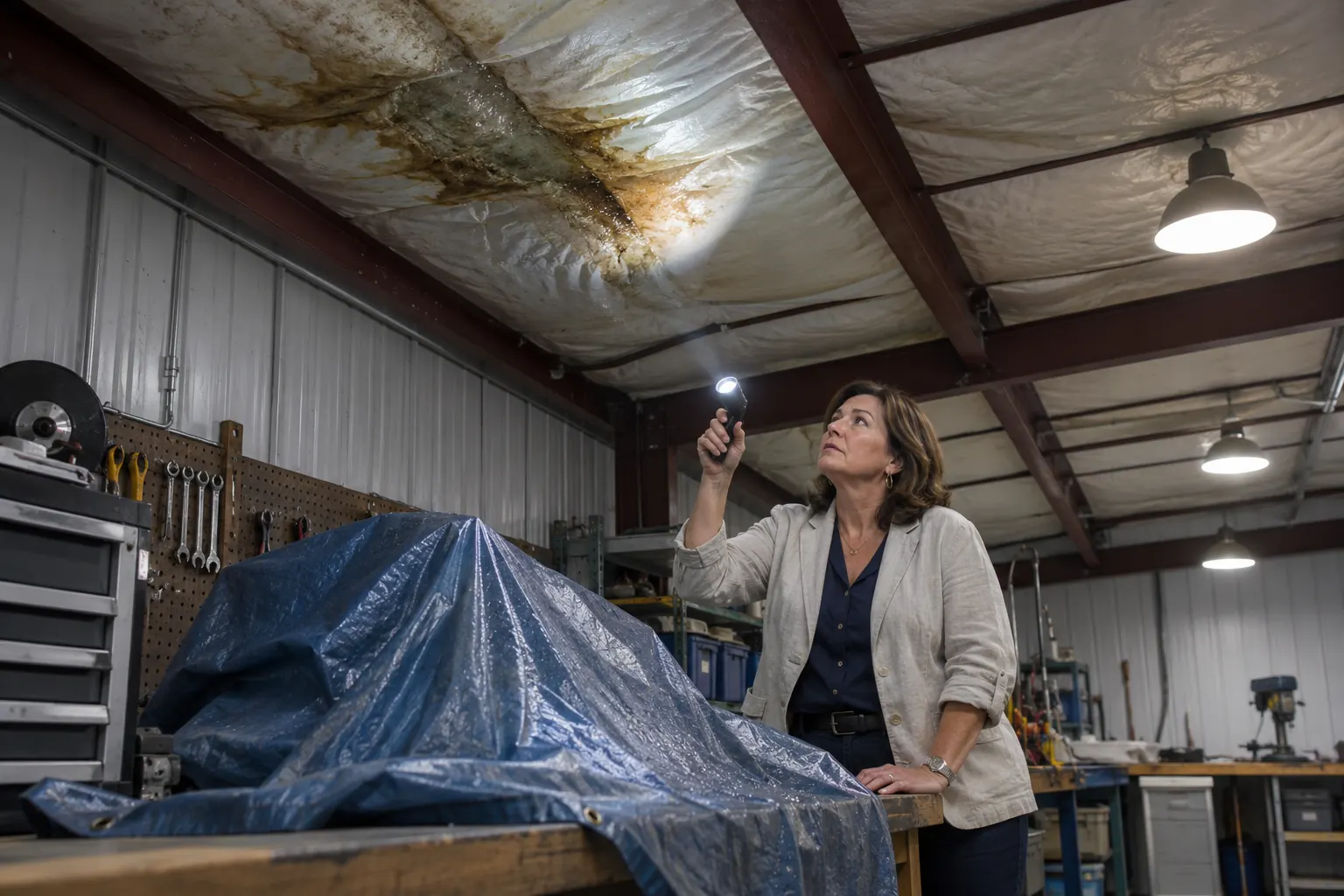
Moist air rising from stalls condenses under the steel and rusts panels from the underside. Once rust eats through, rain drips straight onto bedding and the horses below.
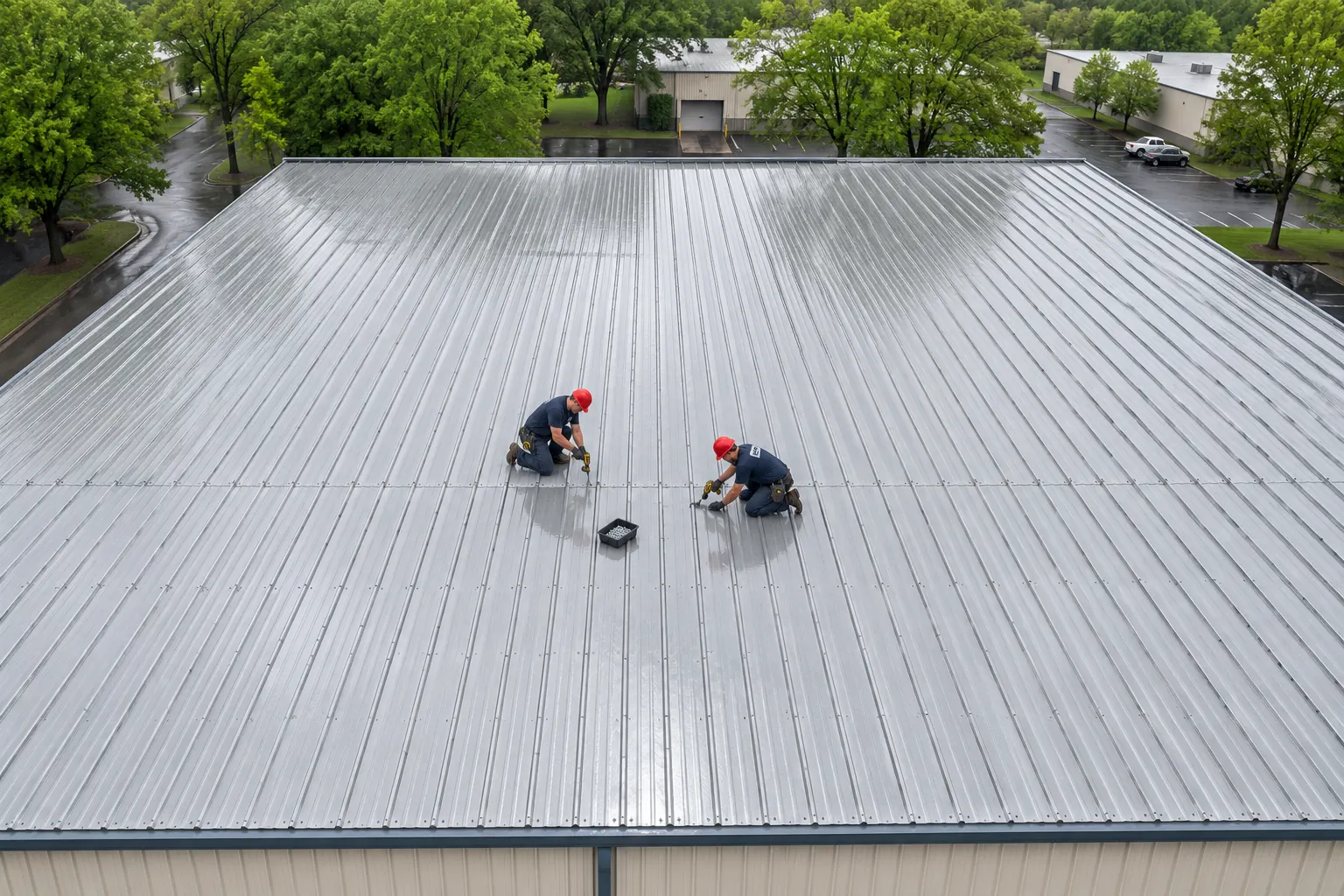
We handle Shelbyville commercial roof repair on metal horse barns and farm buildings, replacing rusted panels over stalls and flashing ridge vents and cupolas.
Shelbyville commercial roof repair often means a metal barn roof over occupied stalls. A 2005 Kentucky General Assembly resolution named Shelby County the American Saddlebred Horse Capital of the World, citing more than 50 Saddlebred farms.
Barn roofs take the same fastener, lap, and panel work as any metal building. The difference is the horses below, plus ridge vents and cupolas that must keep moving air.
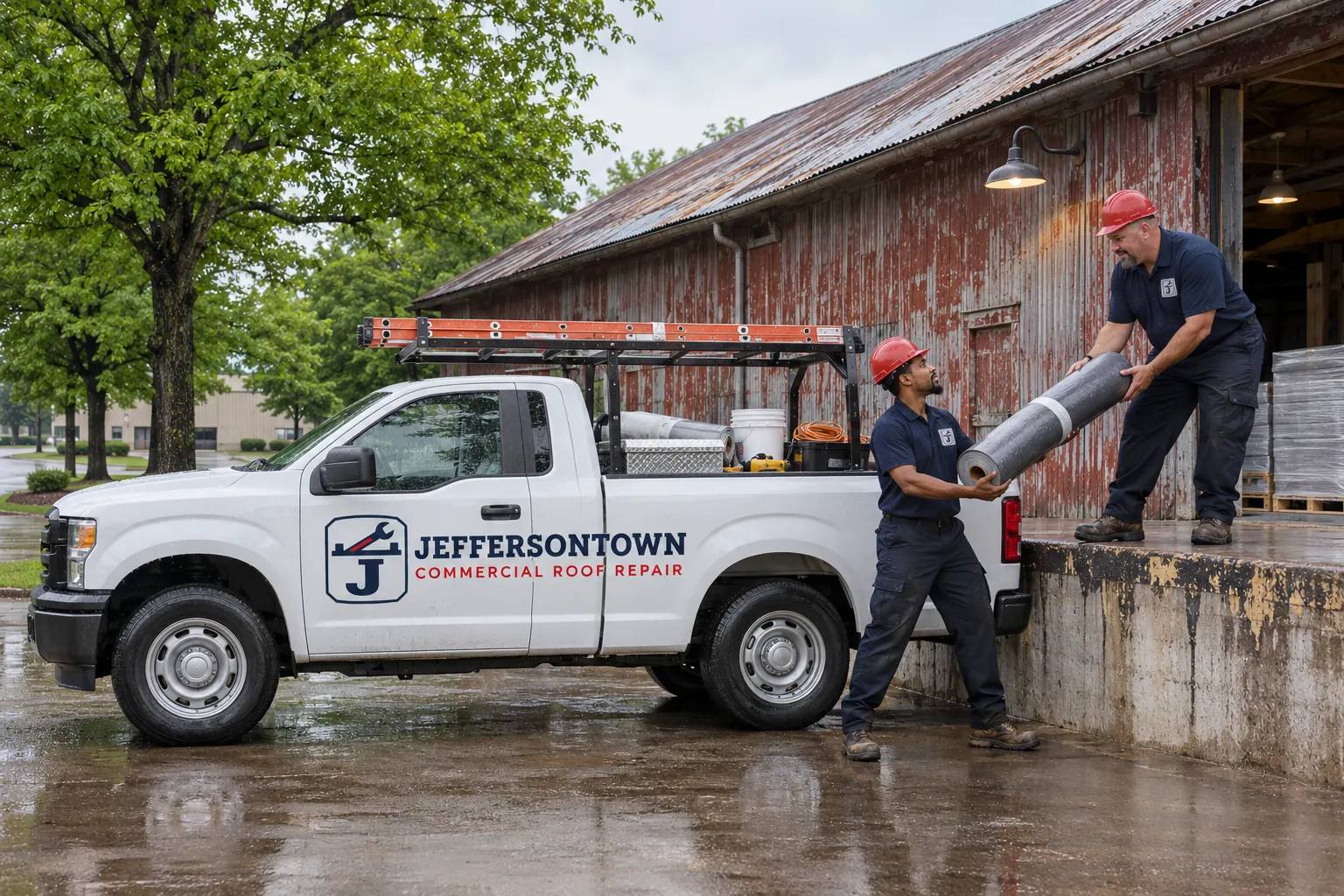
Barn roofs share the usual metal roof weak points, plus a few tied to ventilation and moisture from the stalls.
Moist air rising from stalls condenses under the steel and rusts panels from the underside. Once rust eats through, rain drips straight onto bedding and the horses below.
Ridge vents run the full length of the barn. Shrunken foam closures and loose cap screws let wind-driven rain past the vent baffles and onto the aisle.
Cupolas sit on curbs that cut through the roof panels. Flashing around the base separates from the panel ribs, and water runs down inside the cupola framing.
Gutters above stall doors fill with hay and leaves, then overflow onto the doorway. Bent hangers from ladders and snow leave sections sagging off the eave.
Repairs over a barn protect the horses, the hay, and the frame of the building itself.
Replacing rust-through panels above the stalls ends the drip onto bedding and keeps wet spots out of the aisle.
Flashed ridge vents and cupolas stay open, so stall moisture keeps escaping through the roof.
Sealed laps and screws over the loft keep stored hay dry under the ridge and along the eaves.
Light surface rust gets wire-brushed and primed before it spreads along the panel to the next lap.
Rehung, cleared gutters carry water away from stall doors instead of spilling it across the threshold.
Three services handle most barn roof work. Each card leads to more detail on that kind of repair.
Panel swaps matched to the original rib profile and gauge, end-lap reseals, ridge cap closures, and new screws with washers on barn and shed roofs.
Metal barn roof repairFinding the drip above a stall or aisle and tracing it back along the purlins to the ridge vent, cupola base, or screw row that let water in.
Leak tracing in barns and farm buildingsBay-by-bay surveys of larger farm and equipment buildings, with rusted panels and dry laps numbered on a roof plan and fixed in a planned order.
Large farm building roof surveysCall with the barn location and which stalls are wet. The visit gets planned with the barn manager so horses can be moved or settled first.
Steps move between the roof and the barn below, with the horses in mind. Each is marked where it happens.
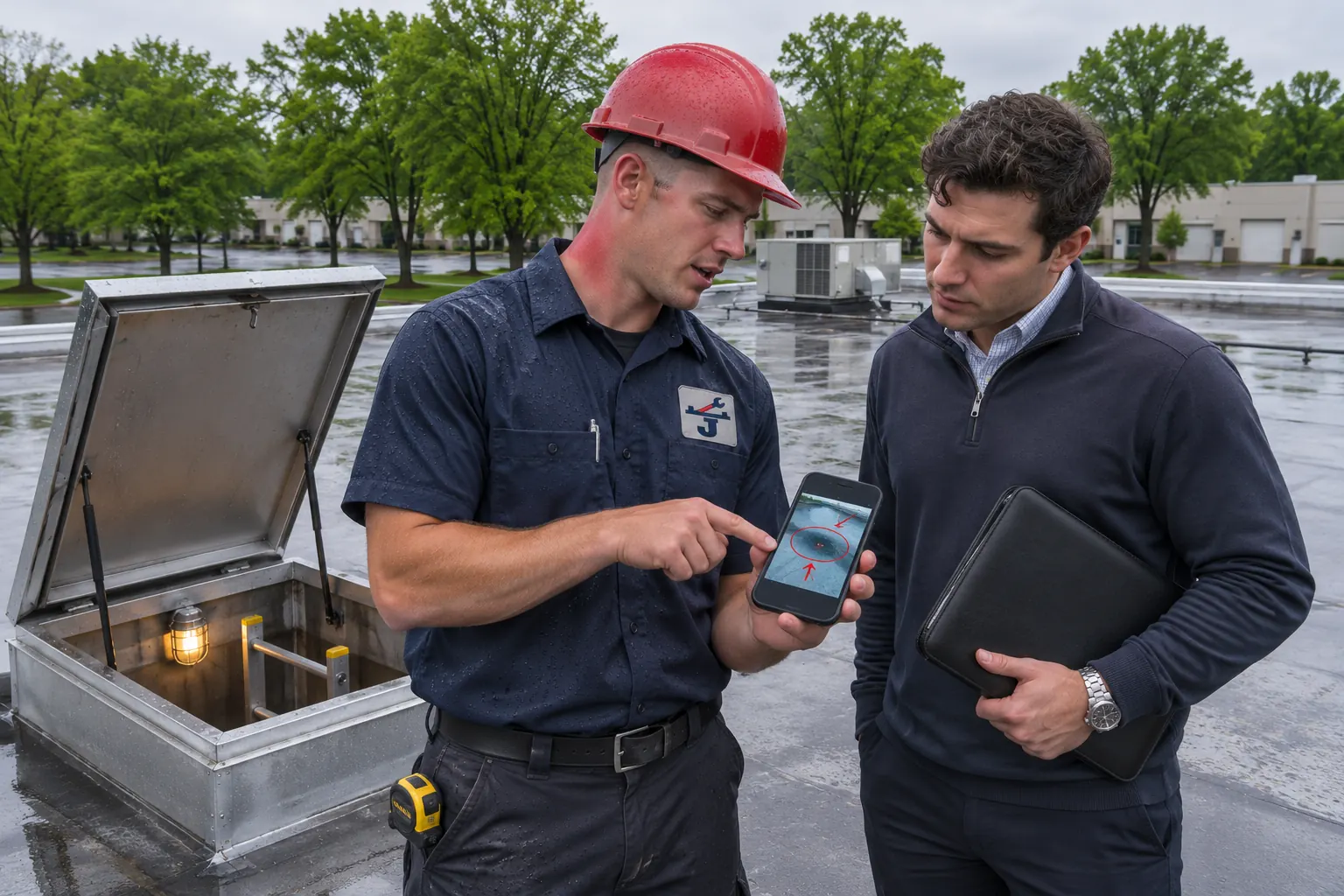
A roofer walks the barn roof along the purlin lines, checks each screw row, end lap, ridge vent, and cupola base, and photographs rust-through panels above the stalls.
The barn manager sets which stalls are empty during the work and when loud steps, like cutting out panels, can happen. Quiet tasks such as sealing laps and fastening fill the other hours.
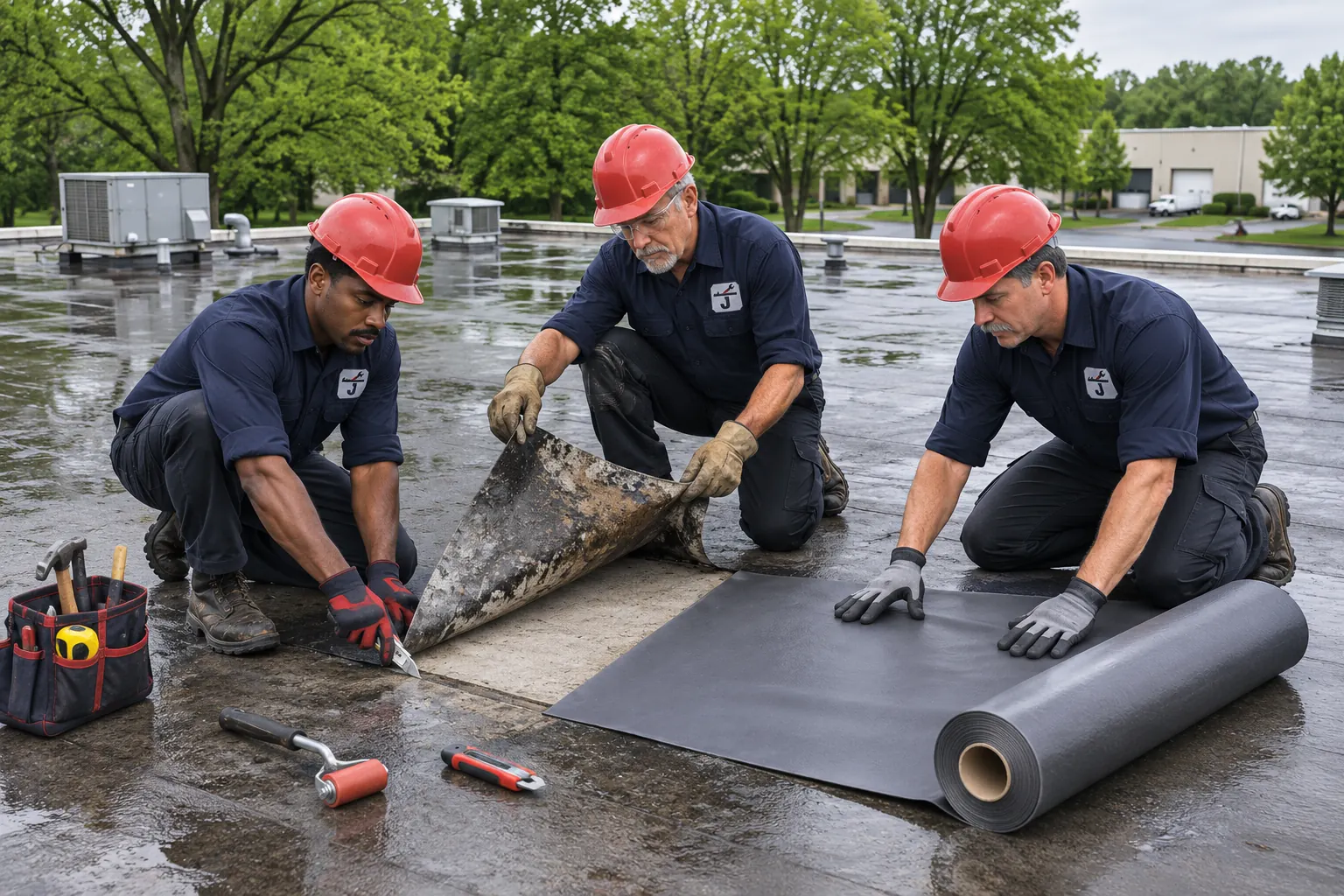
Rust-through panels over stalls come off, and new panels in the same profile and gauge go on with fresh butyl tape at every lap and new screws into the purlins.
Ridge vent caps get new foam closures and screws, and cupola curbs get fresh flashing tied into the panel ribs. Every vent opening stays clear for airflow.
After the next rain, each stall and the aisle under the repairs are checked for drips, and the barn manager gets photos of the finished panel and vent work.
Have a barn or business close by? Call us or send us a message to ask about it. We also repair commercial roofs in these towns.
Answers on metal barn roofs, ventilation, and working around horses in Shelbyville.
They get the same fastener, lap, and panel repairs as any metal building, with added care for airflow and the horses below. Ridge vents and cupolas stay open and get new flashing, rusted panels over stalls are swapped before they drip, and gutters above stall doors are cleared and rehung. Quiet work hours suit barns with horses inside.
Warm, damp air from the stalls meets cold steel and condenses on the underside of the panels. That moisture sits at laps and screw holes and rusts the steel from below, which is why rust-through often shows over stalls first. Open ridge vents and cupolas help that air escape.
Much of it can. Sealing laps, replacing washers, and flashing a cupola make little noise, so that work fits around occupied stalls. Cutting and swapping panels is louder, so those steps are set with the barn manager for times when the stalls under the work are empty.
Inside Shelbyville city limits, ask the city building inspector. Small fastener and sealant work rarely draws a permit, while panel replacement and framing repair often do. Describe the number of panels and any purlin work when you call, so the inspector can tell which applies.
The vent stays in place and keeps working. Loose cap screws are replaced, shrunken foam closures under the cap are swapped, and the cap laps get fresh sealant tape. Vent openings stay uncovered the whole time, so moisture from the stalls keeps leaving the barn.
Clear hay, leaves, and nest material from the gutter and its outlet, then rehang any sagging section at proper hanger spacing. Split seams at end joints get cleaned, resealed, and riveted. A gutter pitched toward its downspout keeps water off the doorway where horses walk in and out.
Send the farm address and which stalls are wet. We will set the work around your horses and barn schedule.
Leave a name and number and we will call you about the leak, seam, or panel you are dealing with.
Or call now: (502) 323-6989